
Free visual inspection and a written scope of work before any mitigation begins - photos, moisture readings, and drying logs go in your claim file
The scope we write is the scope we bill. Anything new gets shown to you, in writing, before we touch it.
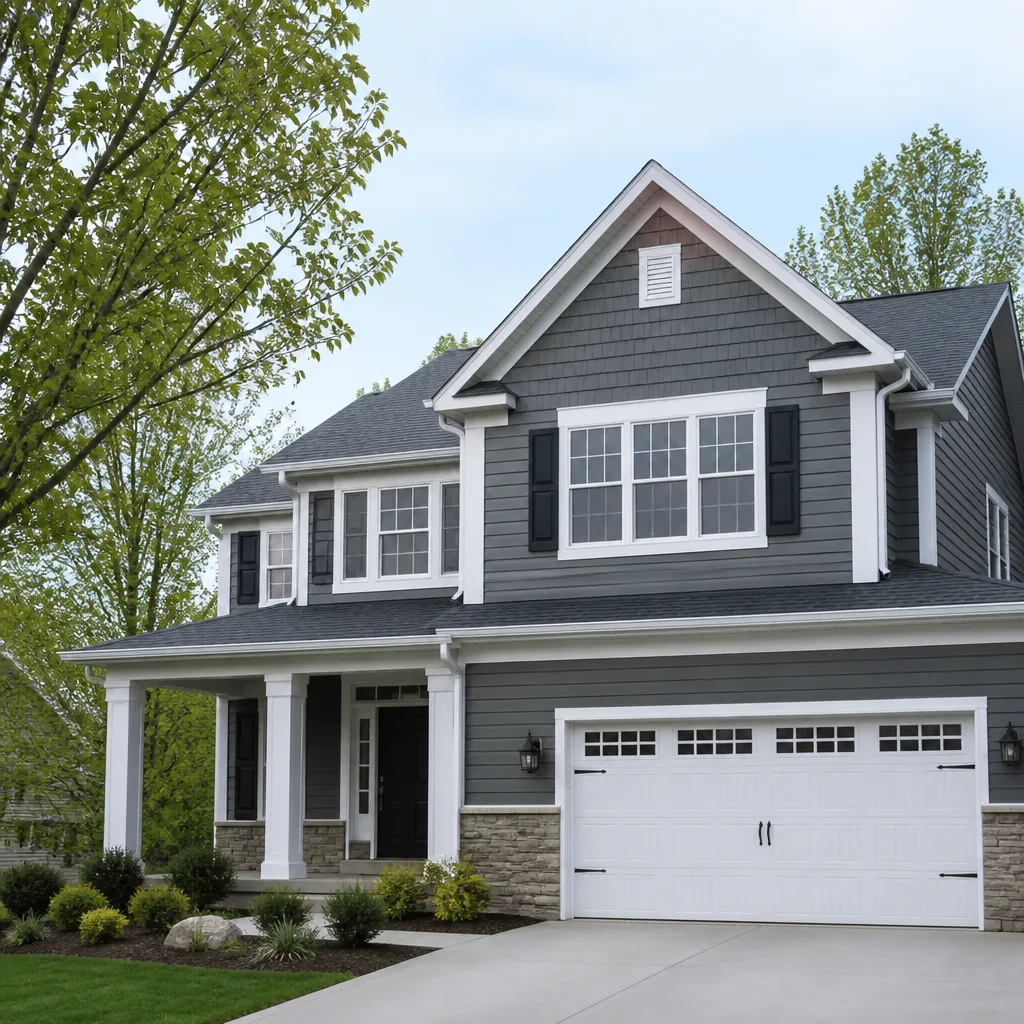
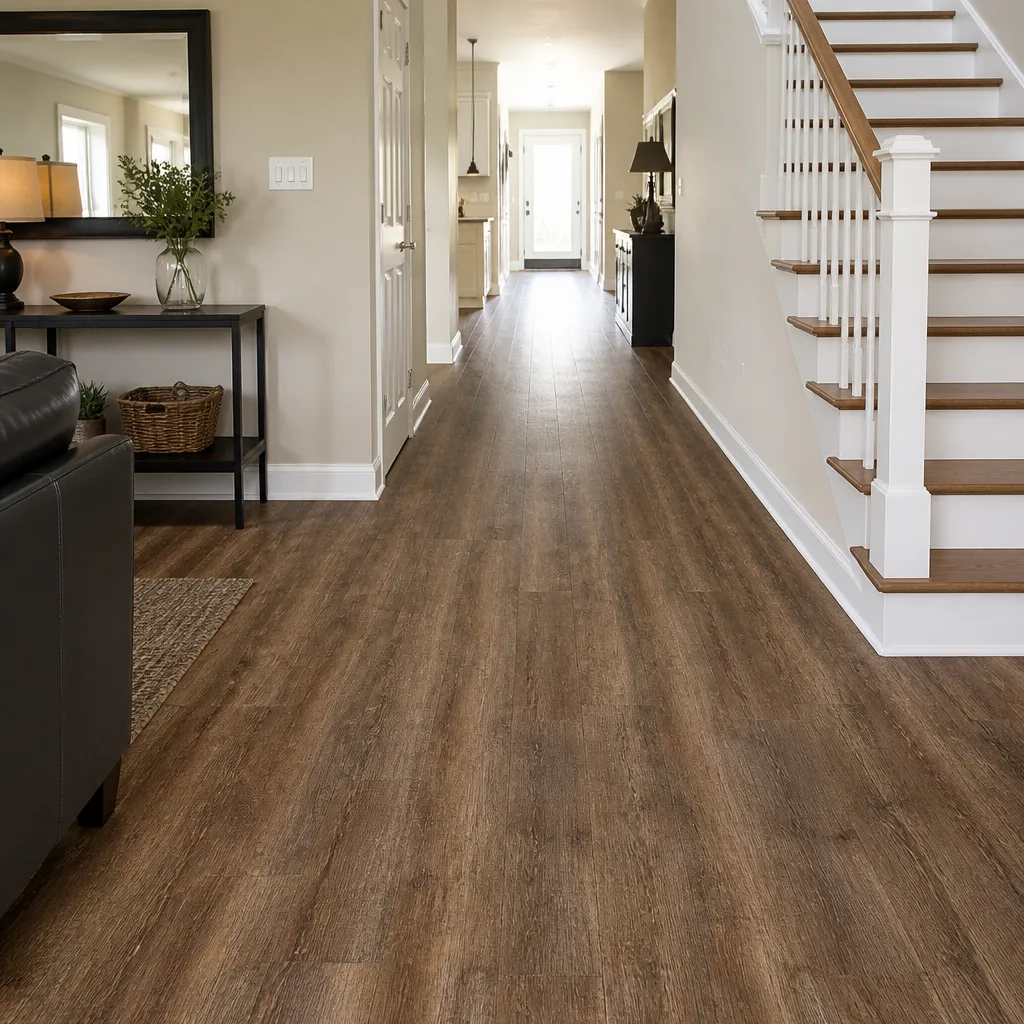
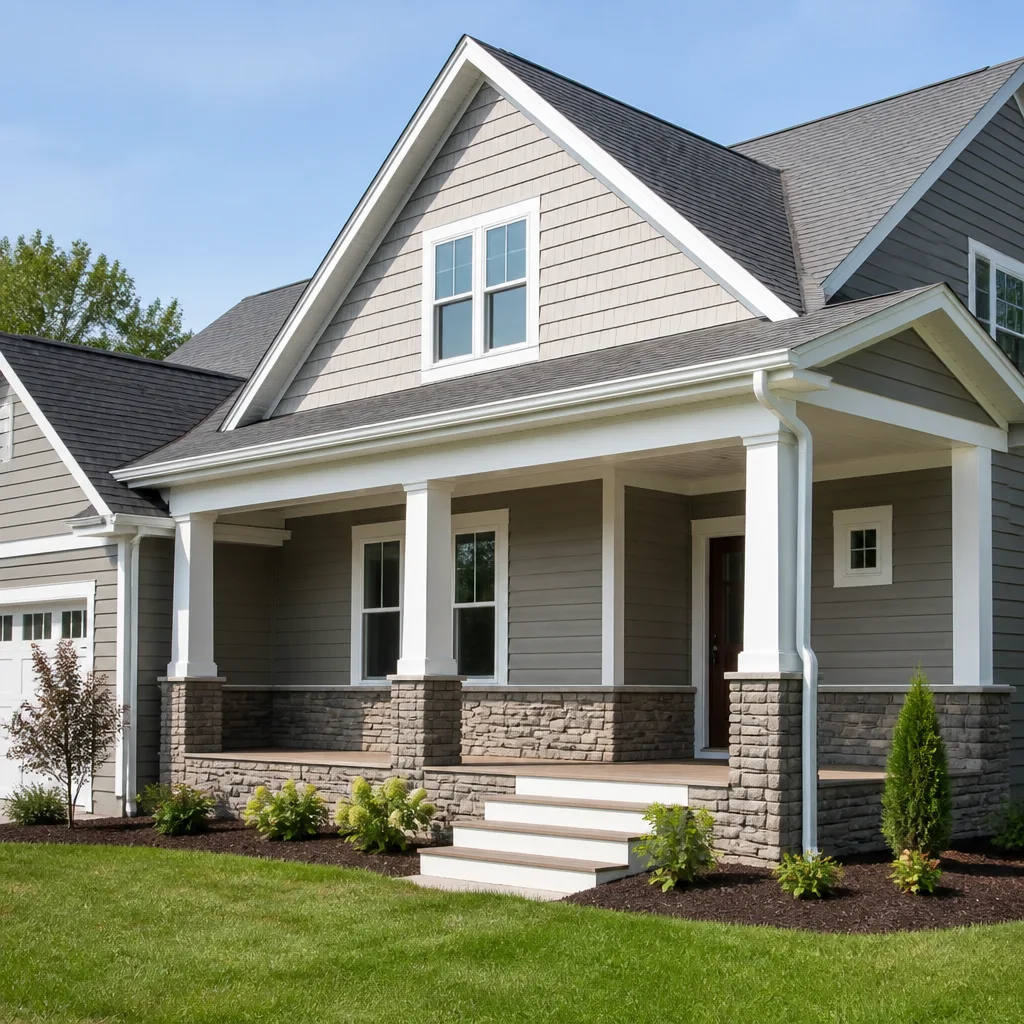
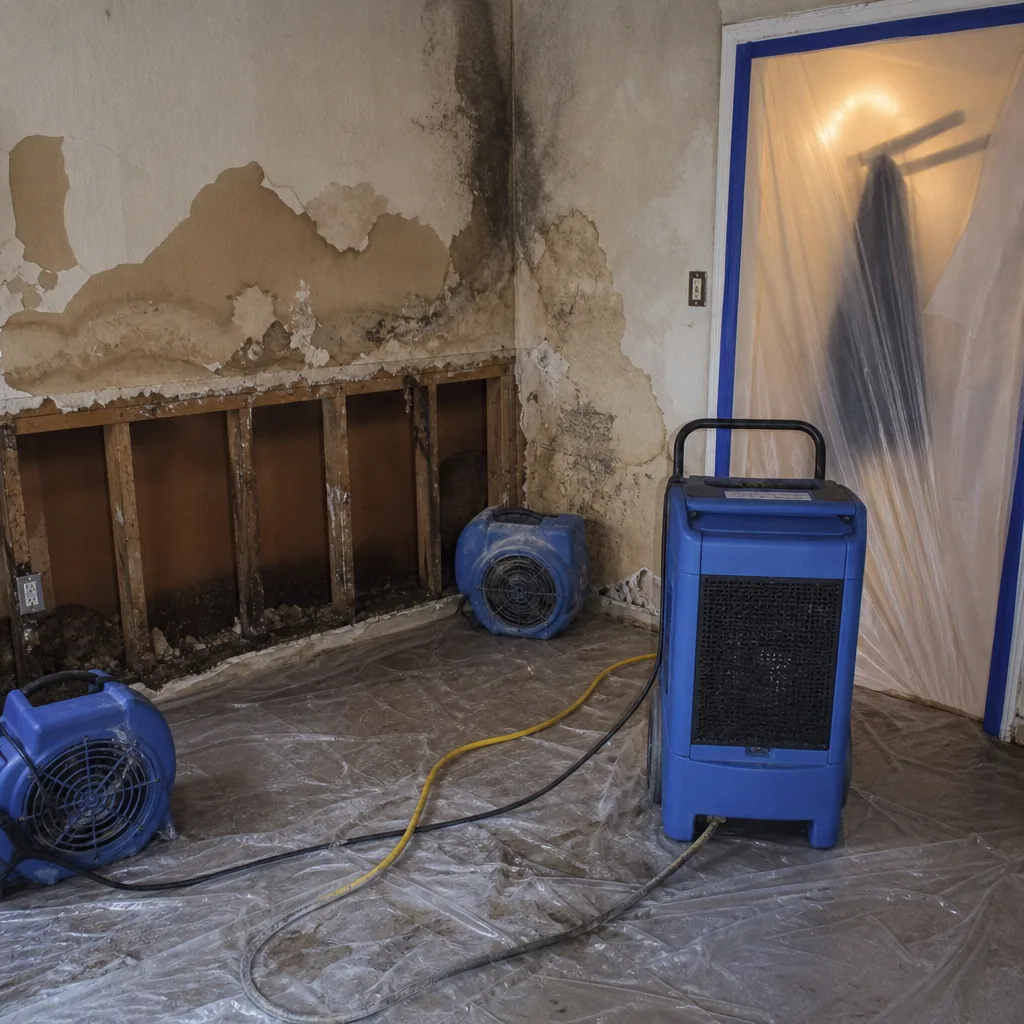 Before
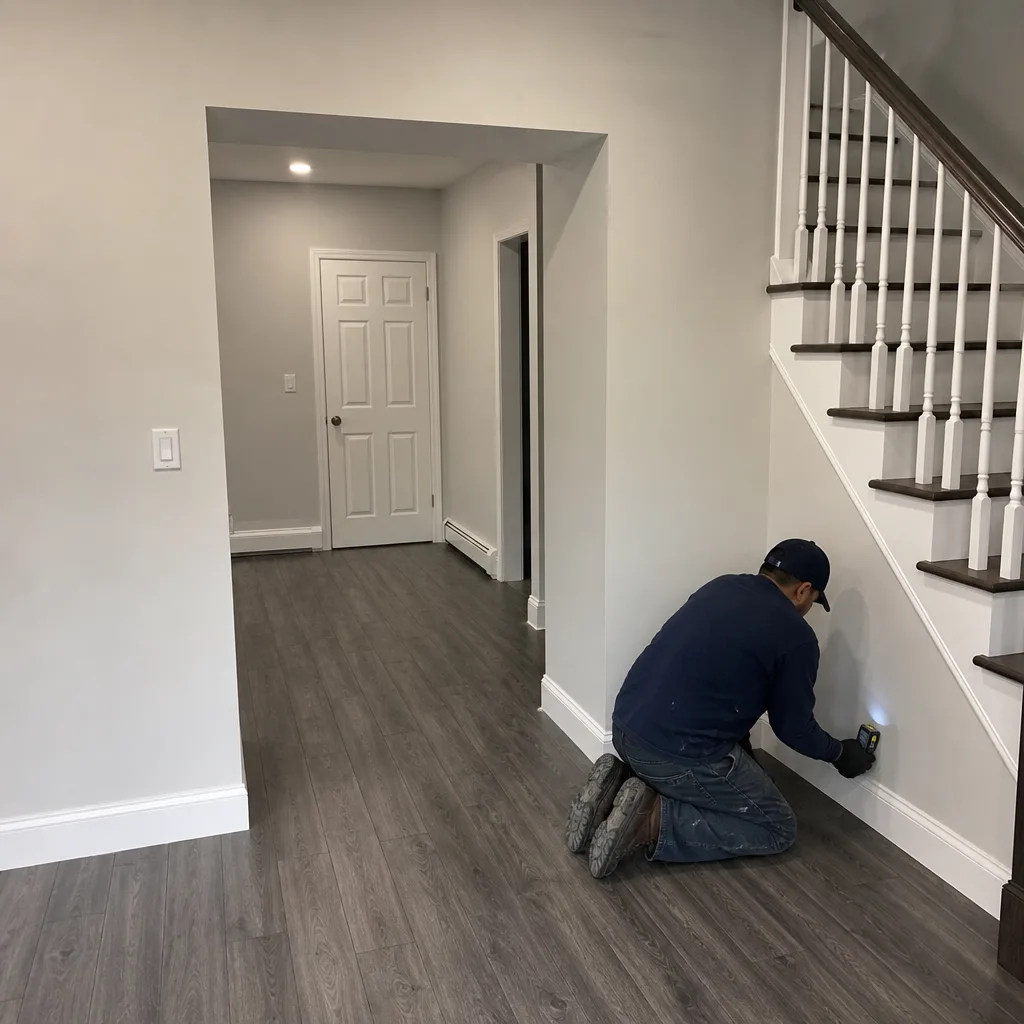 After
After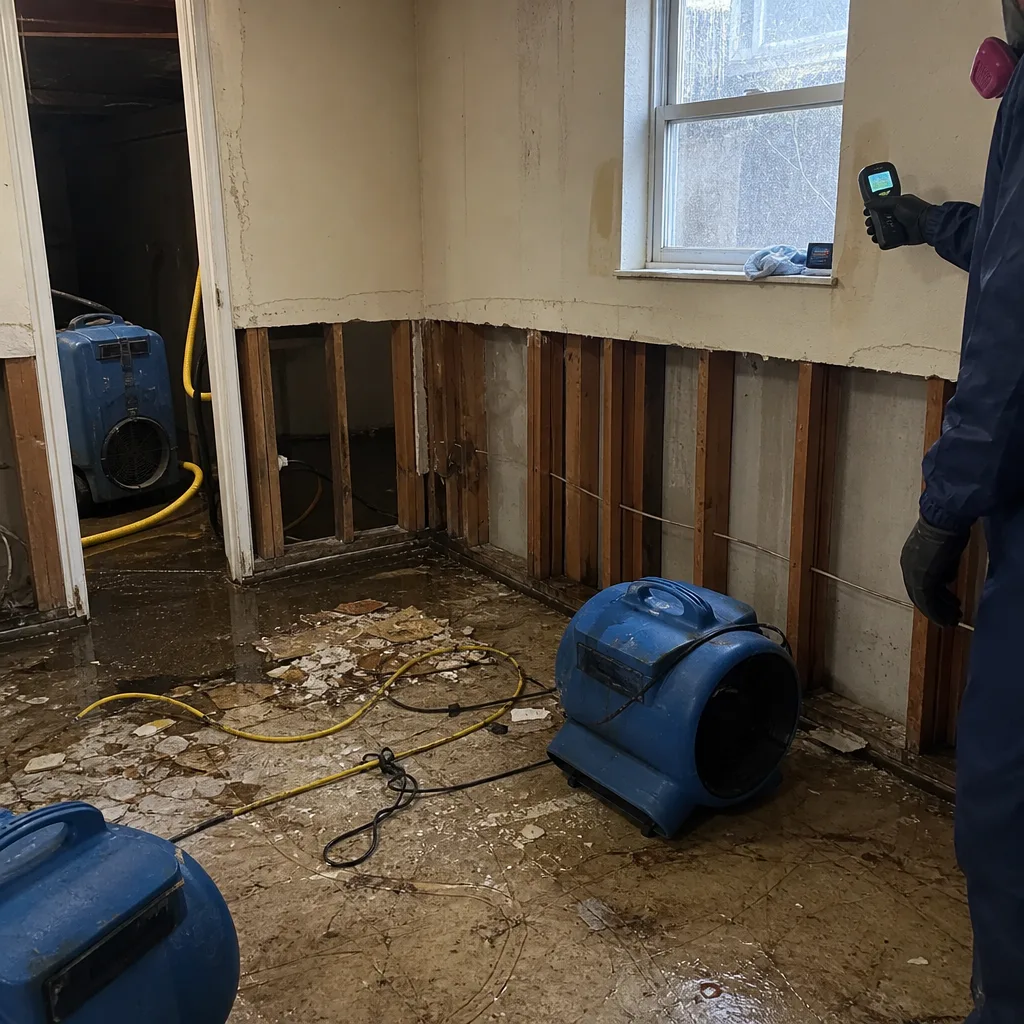 Before
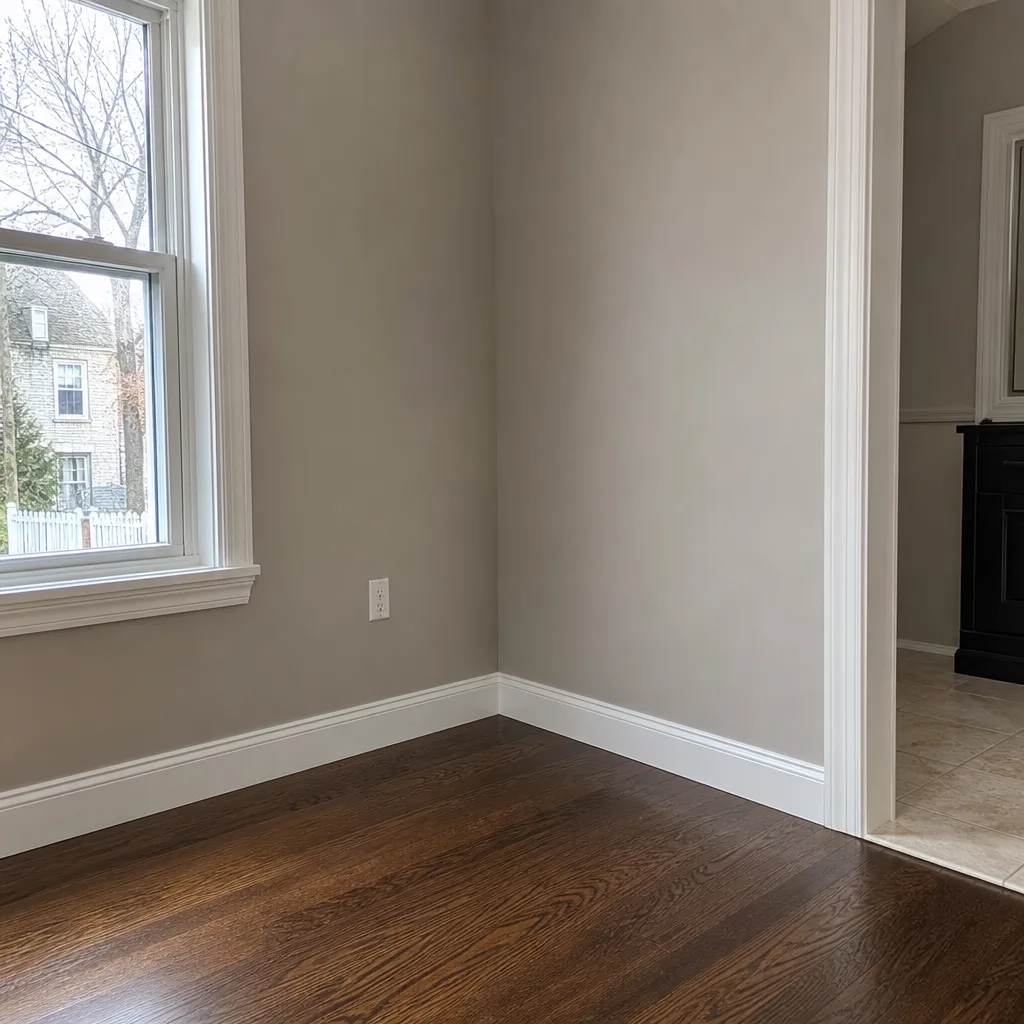 After
After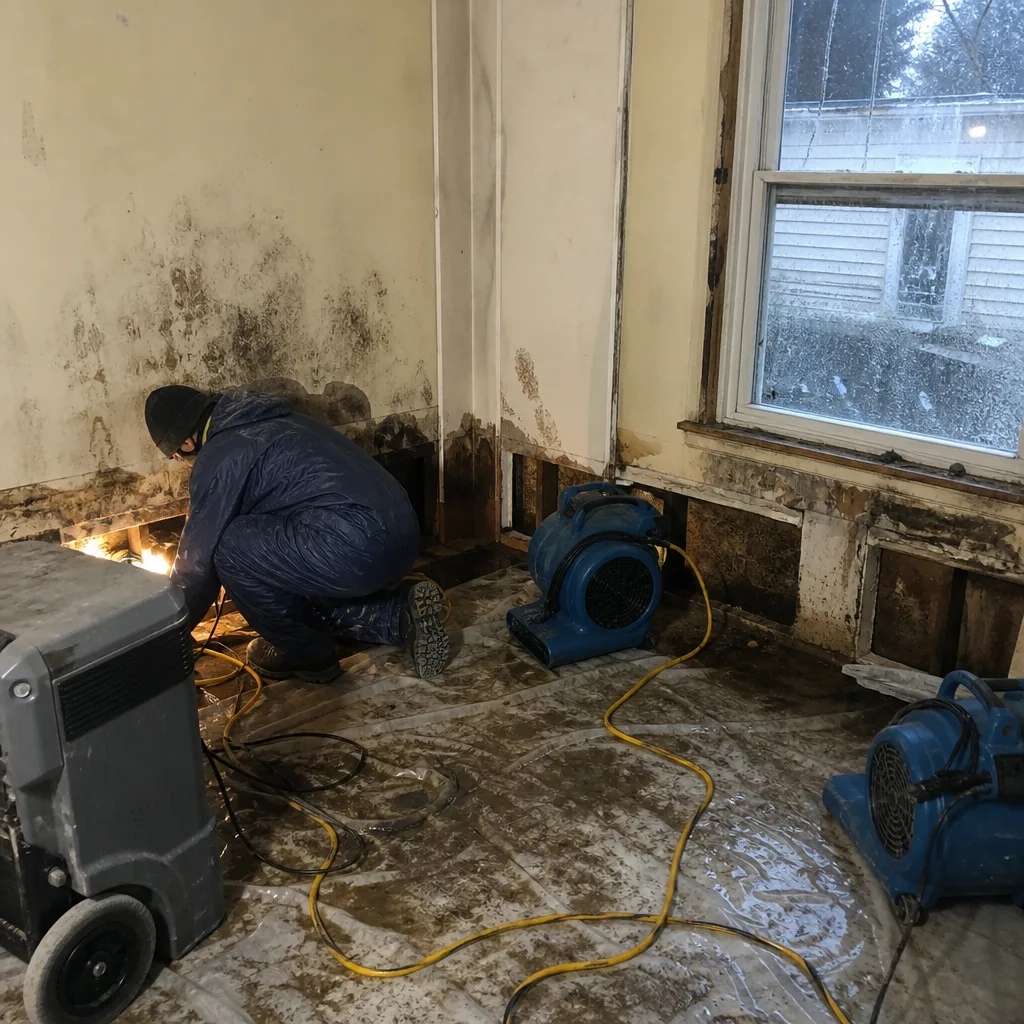 Before
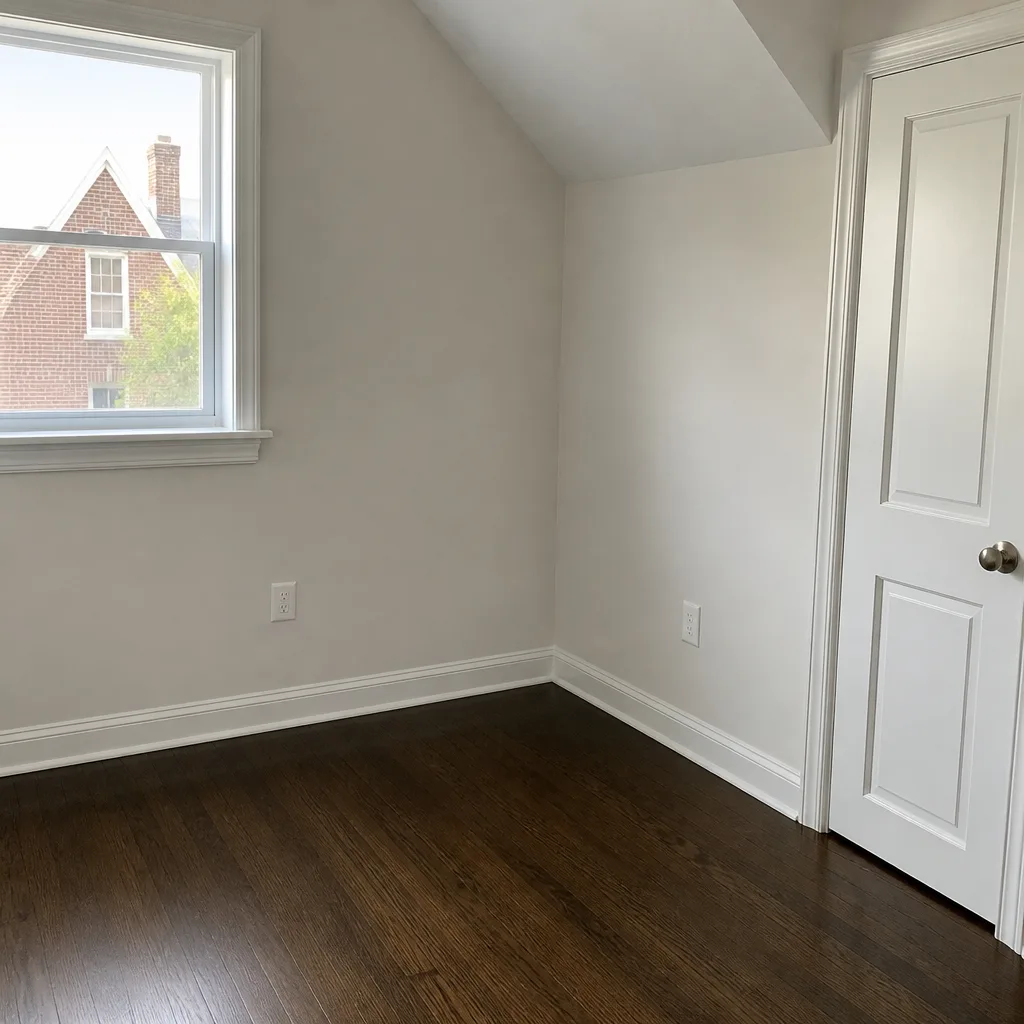 After
After24/7 Emergency Storm & Disaster Restoration in Jamaica
Storm and disaster restoration in Jamaica typically starts the same way: water where it shouldn’t be, often contaminated, always spreading. Our crews answer live at (631) 557-5029, every hour of every day, and we dispatch into Jamaica’s ZIP codes 11405, 11424, and 11425 immediately. The first hour after a nor’easter, flash flood, or sewer backflow determines whether you’re facing a cleanup or a full gut. Call now and a certified technician walks your property, maps the moisture with professional-grade meters, and starts extraction on the same visit. No answering service. No call-back tomorrow. A person picks up, and a crew rolls out.
Understanding Storm & Disaster Restoration Severity in Jamaica Properties
Storm damage in Jamaica rarely begins as clean water. The neighborhood sits on the low-lying southeast Queens plain, and its combined sewer system, built for a density far below what exists today between Sutphin Boulevard and Merrick Boulevard, backs raw sewage into basements during rain events that wouldn’t flood Forest Hills or Kew Gardens. That means the dominant call we answer here is Category 3 water: black water carrying bacteria, pathogens, and whatever the sewer carried with it. Category 1 is a clean supply-line break. Category 2 is gray water from a washing machine or sump failure. Category 3 is the one that requires full biohazard containment, antimicrobial treatment, and cutting out every porous material the water touched. In Jamaica’s attached brick two-family homes, most built between the 1920s and 1950s, that contaminated water wicks through shared party walls into the adjacent unit. What looks like a one-basement call becomes a structural drying project spanning two addresses. Moisture mapping matters here more than almost anywhere else in Queens, because finished basements at or below street-grade sewer line hide water behind drop ceilings, partition walls, and subfloor buildouts until mold has already colonized. That’s why we don’t rely on visual inspection alone. We read the walls with Dri-Eaz and Phoenix meters, log daily moisture readings until the dry standard is hit, and hand that log to you and your carrier.
Why Jamaica Property Owners Choose Floodline Restoration Co.
- 45-minute response commitment: When a sewer backflow or storm surge is actively spreading through your basement, we treat it as the emergency it is. Our Jamaica-area crews are dispatched the moment you hang up, and we commit to arriving within 45 minutes.
- 24/7 live answer, never a recording: Call (631) 557-5029 at 2 a.m. and a live dispatcher picks up. Founded in 2010 by Curt Bowman, Floodline Restoration Co. built our operation around a dispatch board, not a sales desk.
- IICRC-certified crews, WRT and ASD codes: Every technician on your property is background-checked, uniformed, and trained to IICRC, RIA, and IFA standards. Water damage and storm restoration work falls under IICRC WRT (Water Restoration Technician) and ASD (Applied Structural Drying) protocols, and we hold those certifications in-house.
- Free visual inspection and a written scope: We walk the property, document what we find with photos and moisture readings, and hand you a line-item scope of work before any demolition or drying begins. No pressure. No surprises.
- Direct insurance billing: We coordinate with your adjuster directly, submit the documentation, and bill the carrier. You never play messenger between Floodline and the insurance company.
- One team from first extraction to finished rebuild: We don’t hand your job to a sub after the water is out. The same certified crew that reads the moisture map on day one handles daily readings, demolition, drying, and reconstruction.
Our Storm & Disaster Restoration Process
Inspection & Assessment
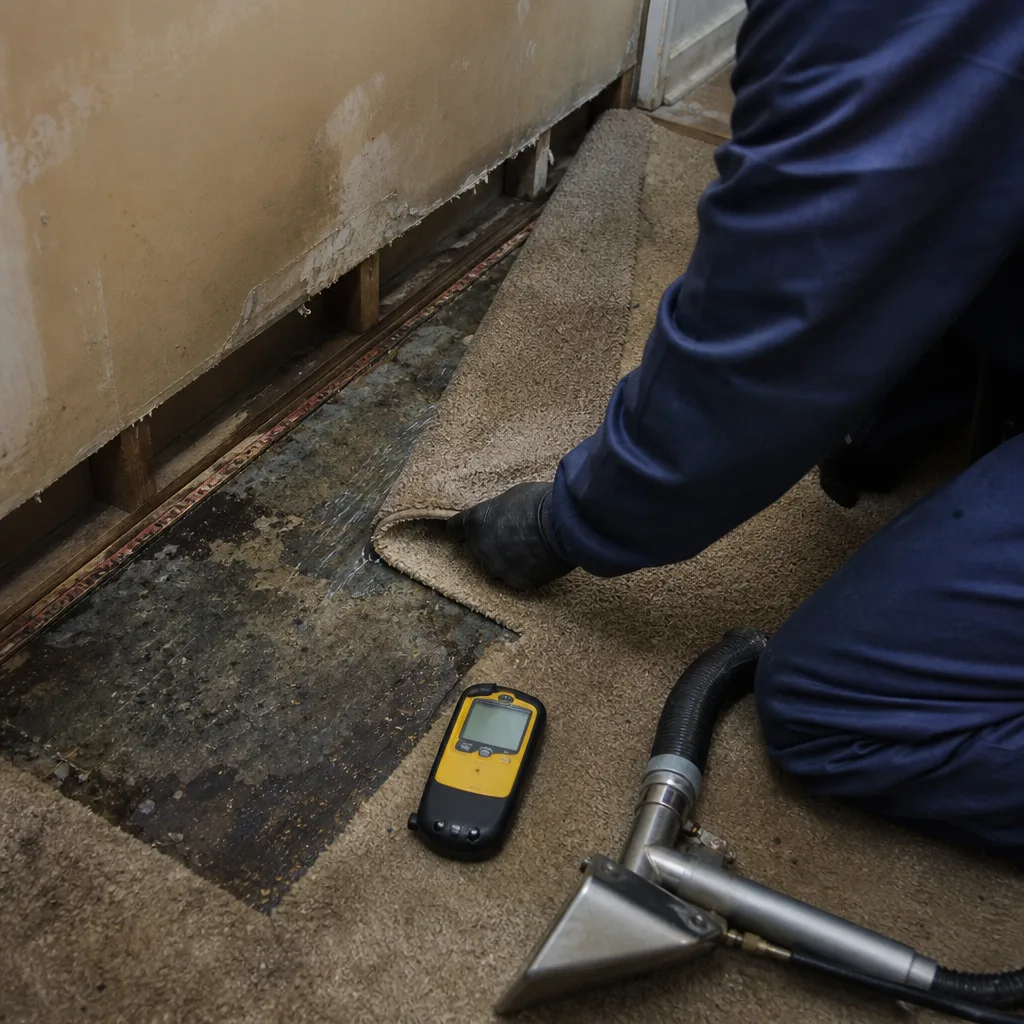
We arrive, walk the entire affected area, and document the loss room by room. Thermal imaging and Dri-Eaz moisture meters tell us what’s wet behind walls and under floors, not just what looks wet. We classify the water category, mark the floodline, and build a drying plan specific to your Jamaica home’s construction.
Extraction & Stabilization
Standing water comes out first, using truck-mounted and portable extraction units. We cut off the water source, board up openings if the storm breached a window or wall, and tarp any roof damage to stop further intrusion.
Drying & Dehumidification
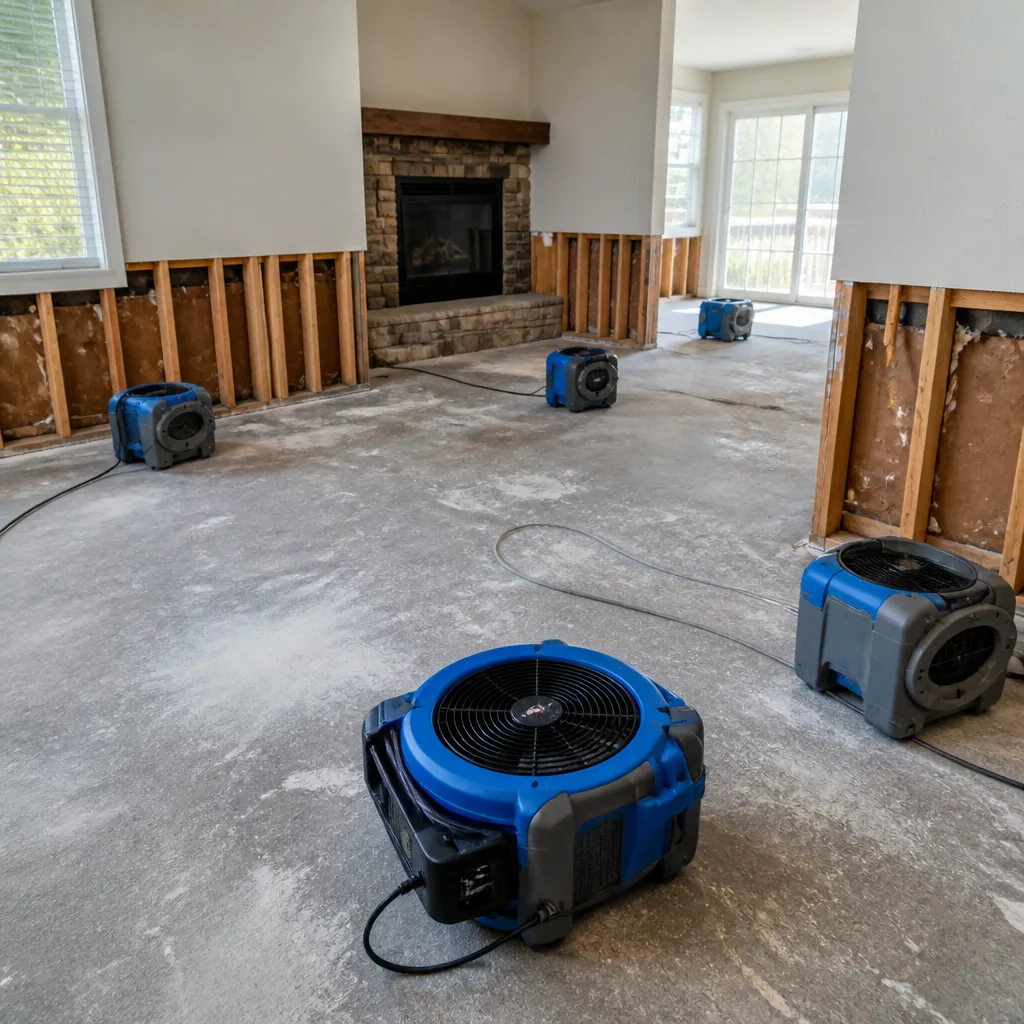
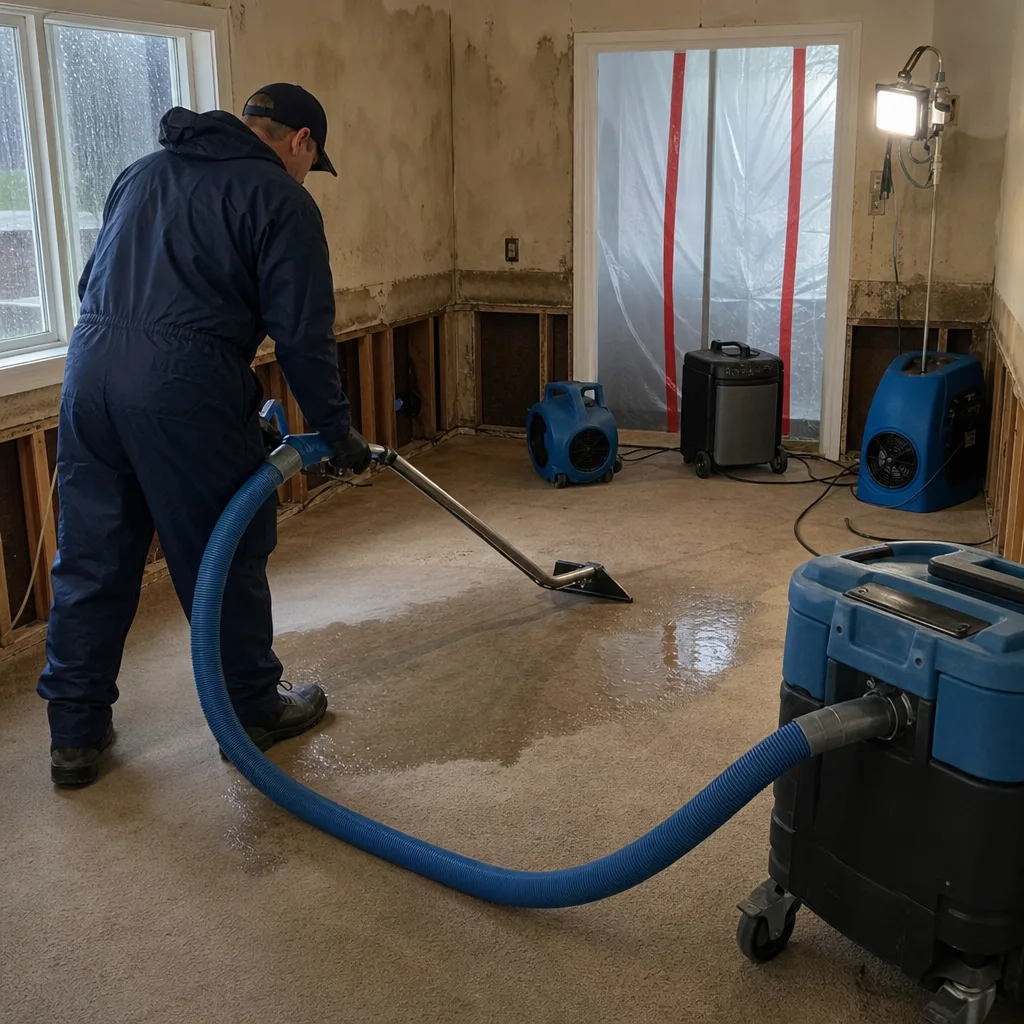
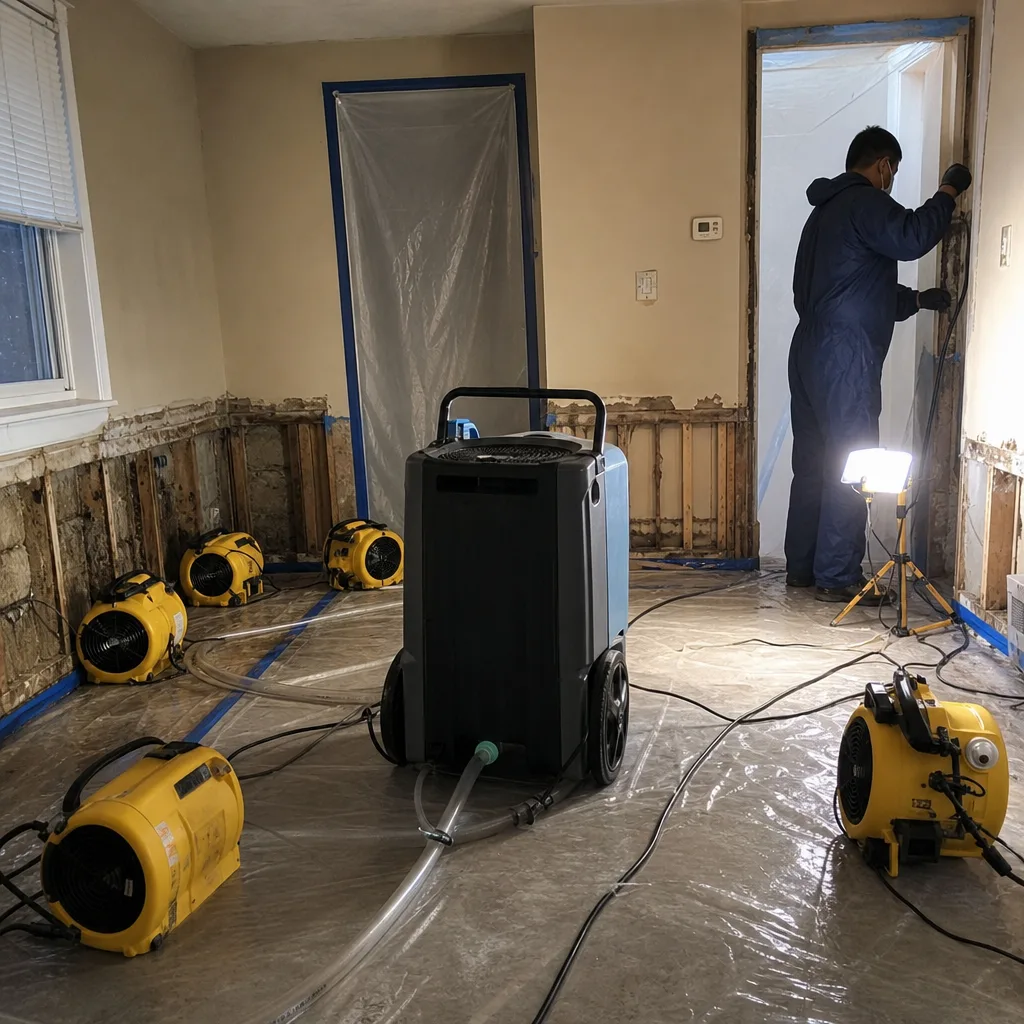
Professional-grade Phoenix, XPOWER, and Dri-Eaz air movers and dehumidifiers go in, positioned based on the moisture map. We take daily readings and adjust the equipment until every affected material reaches its dry standard. The log is yours.
Cleaning & Sanitization
For Category 3 black-water jobs, this step gets serious. We establish containment, run HEPA air scrubbers, remove contaminated porous materials like drywall and carpet, and apply antimicrobial treatments to all affected structural surfaces before any rebuild begins.
Demolition & Removal
Storm debris, waterlogged drywall, ruined insulation, and unpermitted finish materials that trapped moisture all come out. We cut drywall 24 inches above the water line and haul away everything the storm or sewer water compromised.
Repairs & Restoration
Once the structure is dry and verified, we rebuild. Drywall, flooring, trim, paint, whatever was removed goes back. The same crew that did the demolition does the reconstruction, and every job carries the 90-Day Done Right Promise in writing.
Need Emergency Storm & Disaster Restoration in Jamaica Now?
Crews minutes away, answering live 24 hours a day. The sooner we start, the less it costs.
Working With Your Insurance Company
Most storm and disaster restoration in Jamaica involves an insurance claim, and the quality of that claim depends on documentation from the first hour. We photograph every room, every elevation of damage, and every material before we touch it. Moisture readings go on a dated log. The scope of work is line-item and detailed, using the same estimating software your carrier recognizes. Our team talks to your adjuster directly, answers questions about Category 3 protocols, and provides evidence for every dollar of the claim. You don’t chase paperwork. We do. And because we bill the carrier directly, the only number you worry about is your deductible.
What We Provide Your Insurer
- Thorough documentation of the loss
- Photos of all damage, room by room
- Moisture readings and drying logs
- A detailed, line-item scope of work
- Direct coordination with your carrier
Built for Jamaica’s Loss Calendar
Jamaica’s storm season doesn’t follow a tidy calendar the way other parts of the metro do. Here’s what we actually see:
Late winter: Deep freezes snap supply lines in unheated basements and exterior walls, but those are the easy calls. The harder ones happen in February and March when snowmelt and early rain hit frozen ground and the sewers can’t take it. Backflow through floor drains starts in homes that thought they were dry for years.
Spring: The thaw plus steady rain saturates soil around foundation walls. Jamaica’s nearly flat topography and high percentage of impervious surface mean the water has nowhere to go. Catch basins overflow. Sump pumps run nonstop. Some fail. We see a lot of basement seepage in April and May on the blocks between Jamaica Avenue and Hillside Avenue.
Summer: Thunderstorms drop two inches in an hour, and the combined sewer system, undersized for today’s density, backs up raw sewage into basements. The 11432, 11435, and 11405 ZIP codes catch the worst of it because they sit on the lowest ground.
Autumn: Nor’easters and the tail ends of tropical systems push coastal surge up from Jamaica Bay. Saltwater and storm debris enter homes far from any catch basin. This is when we run the most emergency board-ups and roof tarps alongside water extraction.
Storm & Disaster Restoration Across Jamaica’s Neighborhoods
Jamaica is dense, its blocks tight, its housing stock uniform in ways that shape how we respond. Around Sutphin Boulevard, the attached two-family brick homes sit close to the street, basements at or below the sewer grade, and the calls skew heavily toward Category 3 sewer backflow after even modest rain. We stage containment quickly here because neighboring units share walls, and water in one basement is water headed toward the one next door.
Over near Merrick Boulevard, the mix shifts toward semi-detached homes with driveways and slightly deeper setbacks, but the same undersized sewer mains run under the street. Storm debris accumulates in narrow side yards, and wind damage to flat roofs and older window frames drives emergency tarping and board-up calls after coastal events.
South toward Baisley Pond and the blocks near 11434, we see a different pattern. Proximity to Jamaica Bay means storm surge pushes saltwater into basements during serious coastal storms, carrying silt and debris that complicates extraction and drying. Saltwater is corrosive; it requires aggressive rinsing of structural wood and a longer drying curve than fresh water.
Through the residential blocks around Jamaica Center and along Hillside Avenue, the prewar building systems are the weak point. Galvanized supply lines, cast-iron drains, and decades-old sump pumps fail during heavy rain events, and because so many basements here are finished rentals, the damage hides behind drywall and drop ceilings until the odor gives it away.
Specialized Storm & Disaster Restoration Services We Offer in Jamaica
Flood Damage Restoration
The core of what we do in Jamaica, because flooding here is rarely clean water. We handle Category 1 through Category 3, establish containment where black water is present, and run structural drying until moisture meters read the dry standard. Most jobs are completed in a single visit, using Dri-Eaz, Phoenix, and XPOWER equipment.
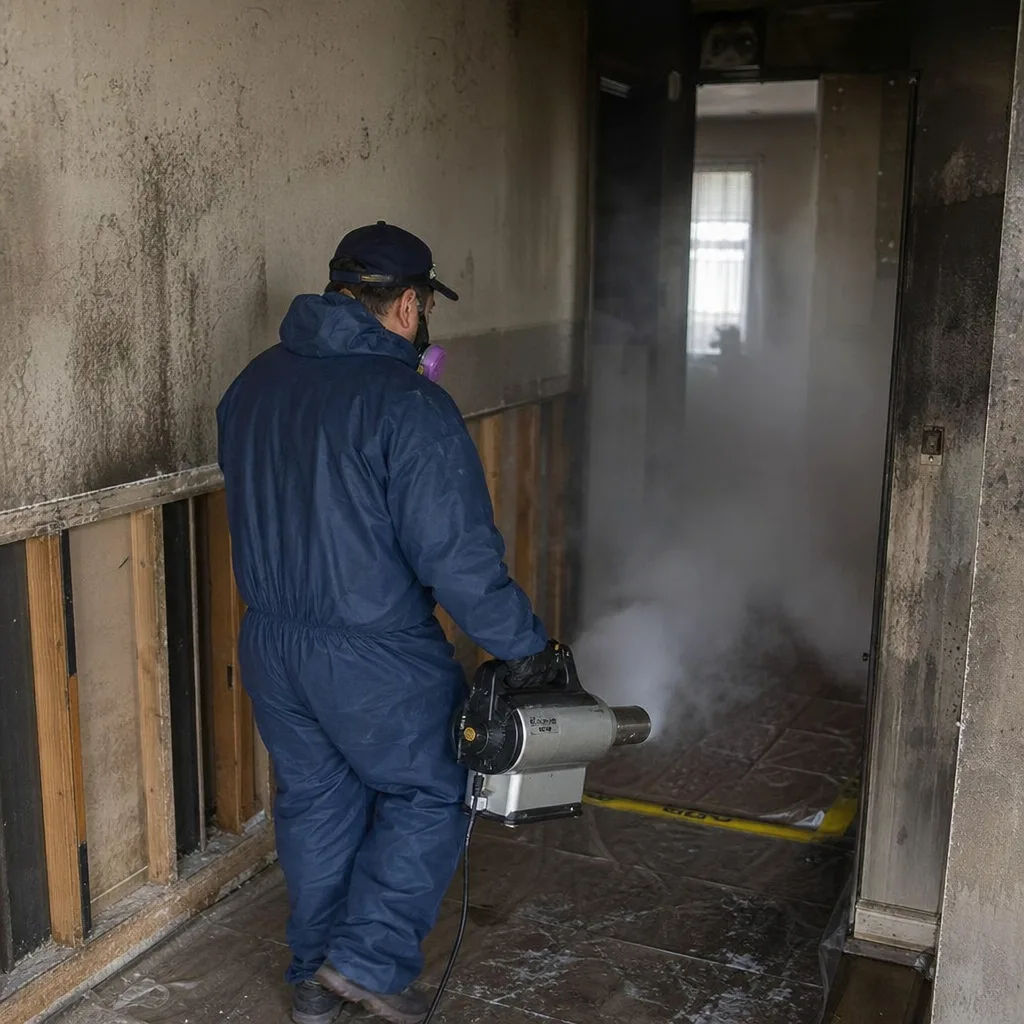
Storm Damage Cleanup
After a nor’easter or coastal event, the water isn’t the only problem. Storm damage cleanup in Jamaica means removing waterlogged drywall, soaked insulation, ruined flooring, and whatever the storm carried in. We cut out contaminated materials, sanitize structural surfaces, and haul the debris away in the same visit.
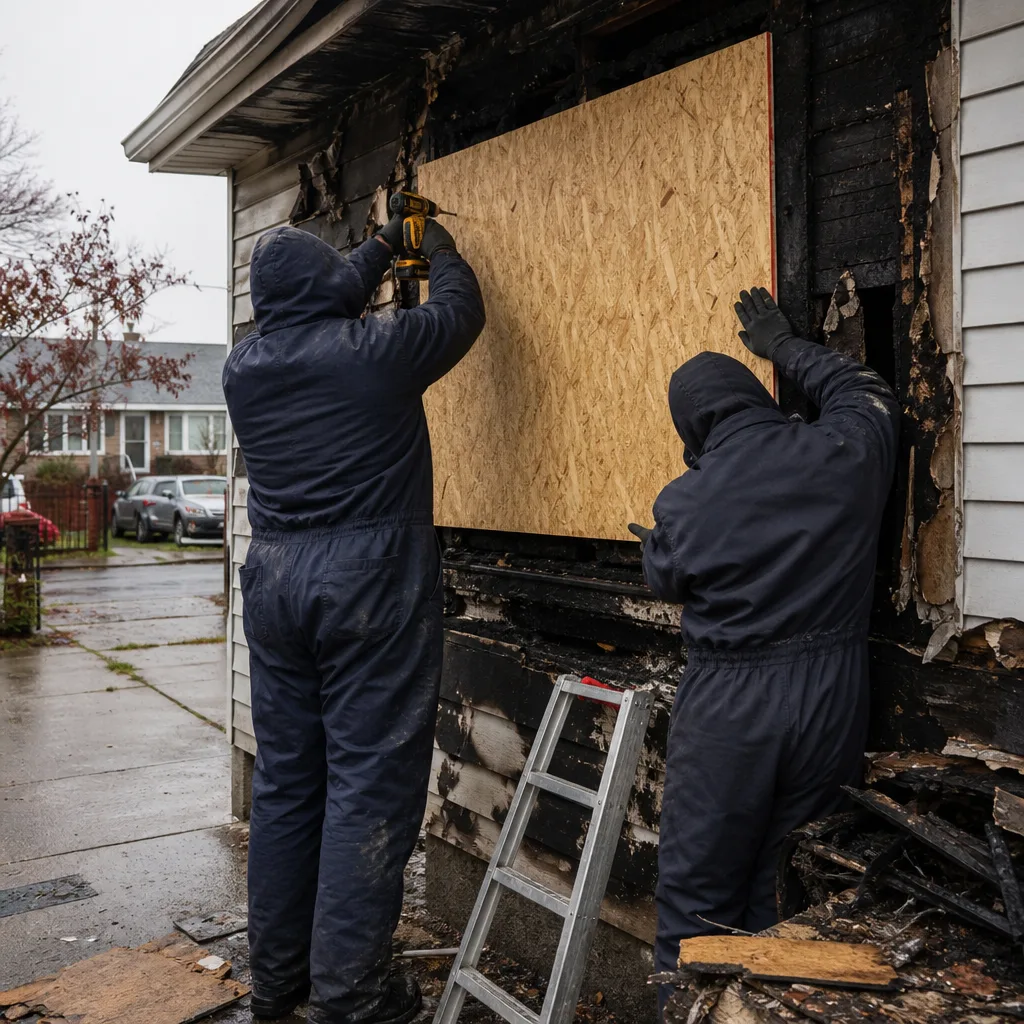
Emergency Board-Up
Broken windows and breached walls after high wind need to be secured before more rain gets in. We board up openings with plywood, tarp damaged roofs, and make the structure watertight enough to stop further loss while the full scope is written and the claim moves forward.
Roof Tarping
Wind-driven rain through a compromised roof ruins ceilings and insulation fast. We tarp the damaged area with reinforced poly, secured to hold against continuing wind, and document everything for your carrier. It buys you the time to get a full roof repair scheduled without the interior getting worse.
Debris Removal
Coastal storms push debris into yards and against foundations. We remove storm debris, downed branches, damaged building materials, and anything else the event left behind, then assess what the debris was hiding. Water intrusion often starts where debris pressed against a wall or blocked a drain.
What happens when you call
- 1
A real person answersNo phone trees - you reach a local pro.
- 2
You get an upfront price rangeHonest numbers before anyone is dispatched.
- 3
A background-checked tech heads outLicensed & insured, dispatched right away.
- 4
You approve before work beginsNothing starts until you say go.
Storm & Disaster Restoration Costs in Jamaica, NY
What you’ll pay for storm and disaster restoration in Jamaica depends on the water category, the square footage affected, and what hidden damage the moisture map reveals. A Category 1 clean-water extraction and dry in a 500-square-foot basement with no demolition typically runs $1,800 to $3,400. A Category 3 sewer backflow in that same basement, with containment, antimicrobial treatment, drywall cut-out to 24 inches above the water line, and full structural drying, runs $4,500 to $9,800. Whole-basement gut-and-rebuild after a major coastal surge event can reach $18,000 to $40,000 depending on finishes and whether unpermitted buildouts complicate the demolition. The free visual inspection is how we turn those ranges into a firm, line-item price for your specific loss. Call (631) 557-5029, and we’ll walk the property and put the number in writing before any work starts.
Serving Jamaica, NY - Our Local Coverage Area
We’re based in the Jamaica area and know this community well. Use the map below to see our service coverage - if you’re nearby, we can almost certainly help.
Jamaica Storm & Disaster Restoration Questions, Answered
How quickly should I call after a sewer backup in Jamaica?
Call immediately, the moment you see water or smell sewage. Category 3 water carries bacteria and pathogens that multiply fast, and every hour it sits in your basement means more porous material that has to be cut out. Our crews answer live at (631) 557-5029 and can be at your Jamaica address within 45 minutes.
Does Floodline Restoration handle Category 3 sewage backups specific to Jamaica’s combined sewer overflows?
Yes. This is the most common call we answer in Jamaica, and we handle it with full biohazard protocols: containment, HEPA air scrubbing, removal of contaminated porous materials, antimicrobial treatment, and daily moisture logging until the structure is dry. Our IICRC-certified crews are trained specifically for black-water remediation.
My basement rental unit flooded but I don’t see much damage. Why is moisture mapping necessary?
Because in Jamaica’s finished basements, the water hides behind drywall, under flooring, and above drop ceilings. What looks dry can hold 40% moisture content and be colonizing mold in the wall cavity. We run Dri-Eaz meters across every affected surface, mark the waterline, and cut out everything that can’t be saved, not just what’s visibly wet.
Can you dry out a finished basement that had a nor’easter surge instead of ripping it out?
Sometimes, if the water is Category 1 or light Category 2 and we get to it fast. But a nor’easter surge pushing through a floor drain in Jamaica is almost always Category 3, and that water is contaminated. Porous materials like drywall and carpet absorb it and can’t be reliably sanitized. We save what can be saved, cut out what can’t, and rebuild to match.
How does Floodline Restoration handle storm debris removal after a coastal event in Jamaica?
We remove storm debris as part of the full restoration scope, not as a separate yard-cleanup service. Debris that’s pressed against a foundation, blocking drains, or breached a window gets cleared and hauled in the same visit as the water extraction and board-up, then documented for your insurance claim.
Will my insurance cover sewage backup and storm damage?
Most homeowners policies cover storm damage, but sewage backup coverage often requires a separate rider. We document everything, classify the water correctly, and work directly with your adjuster so every covered dollar is claimed. We also bill the carrier directly, so you’re not fronting the full cost while the claim processes.
How long does restoration take after a storm disaster in Jamaica?
Extraction starts on the first visit. Structural drying typically takes 3 to 5 days with daily moisture readings. Demolition and Category 3 sanitization add a day or two depending on scope. Full reconstruction of a finished basement can take 2 to 4 weeks, but most emergency mitigation is done within the first week, and the house is safe and dry much sooner than that.
What should I do in the first 30 minutes after flooding or sewer backup?
Call (631) 557-5029. Then shut off electricity to the affected area if you can do so safely without standing in water. Don’t enter standing water if there’s any chance it’s Category 3, and don’t run fans or try to vacuum it up yourself, that just spreads contamination. Document what you can from a safe distance, and stay out of the water until our crew arrives.
Written by Curt Bowman, Owner at Floodline Restoration Co., serving Jamaica, NY and surrounding Queens communities since 2010.