
Free visual inspection and a written scope of work before any mitigation begins - photos, moisture readings, and drying logs go in your claim file
The scope we write is the scope we bill. Anything new gets shown to you, in writing, before we touch it.
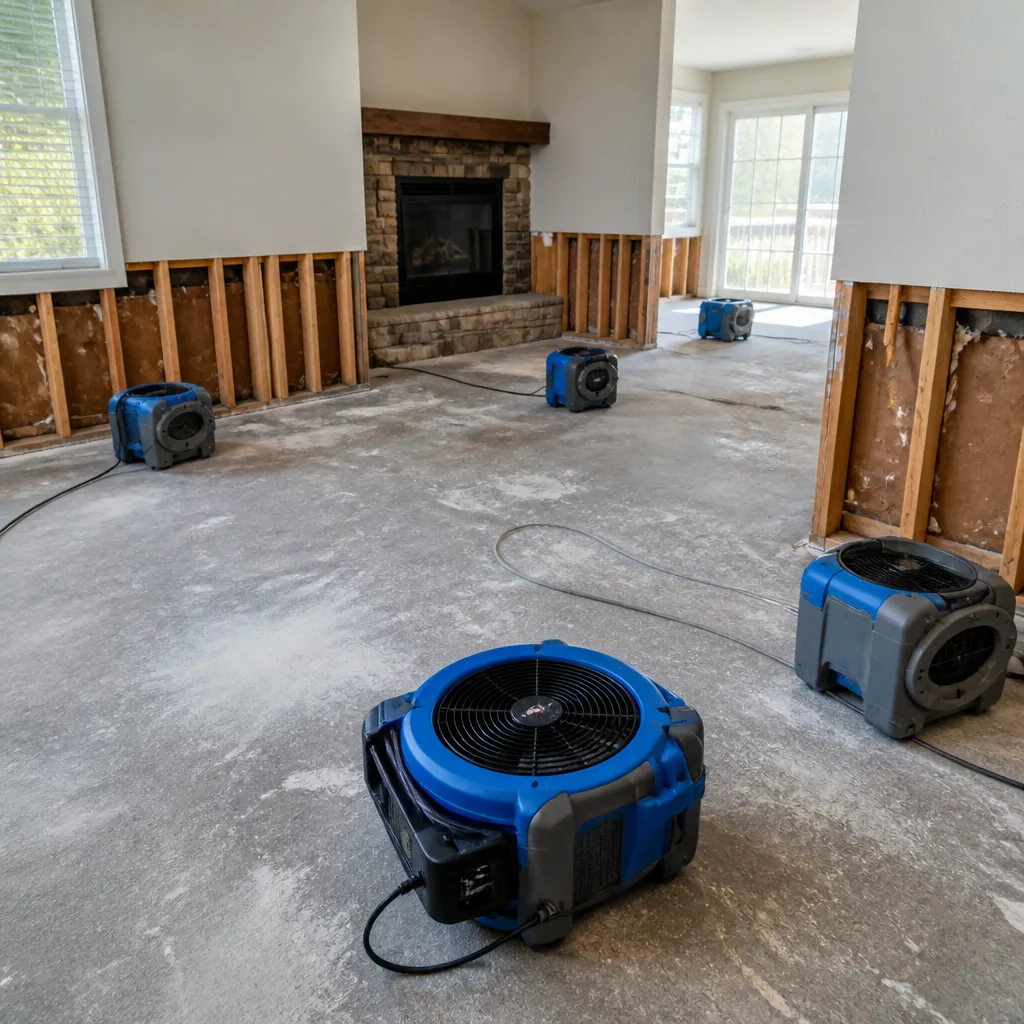
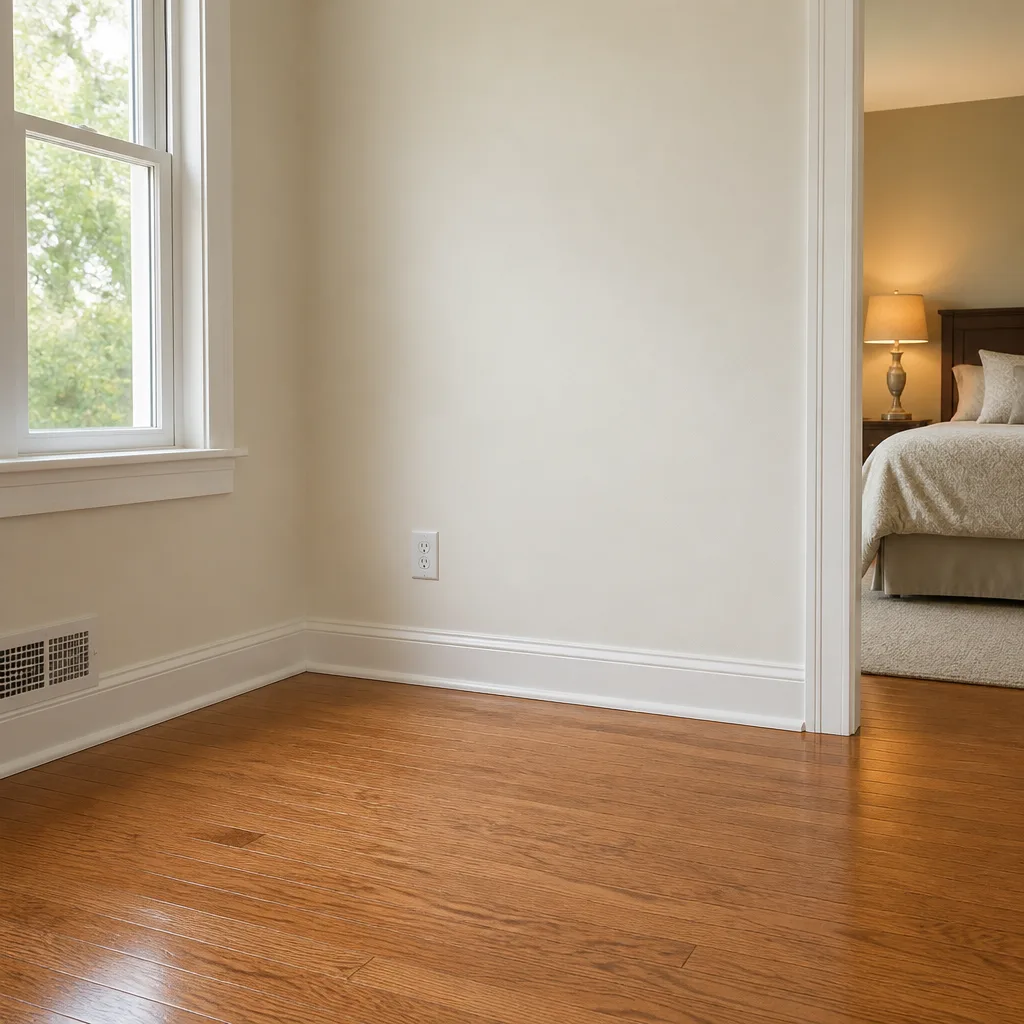
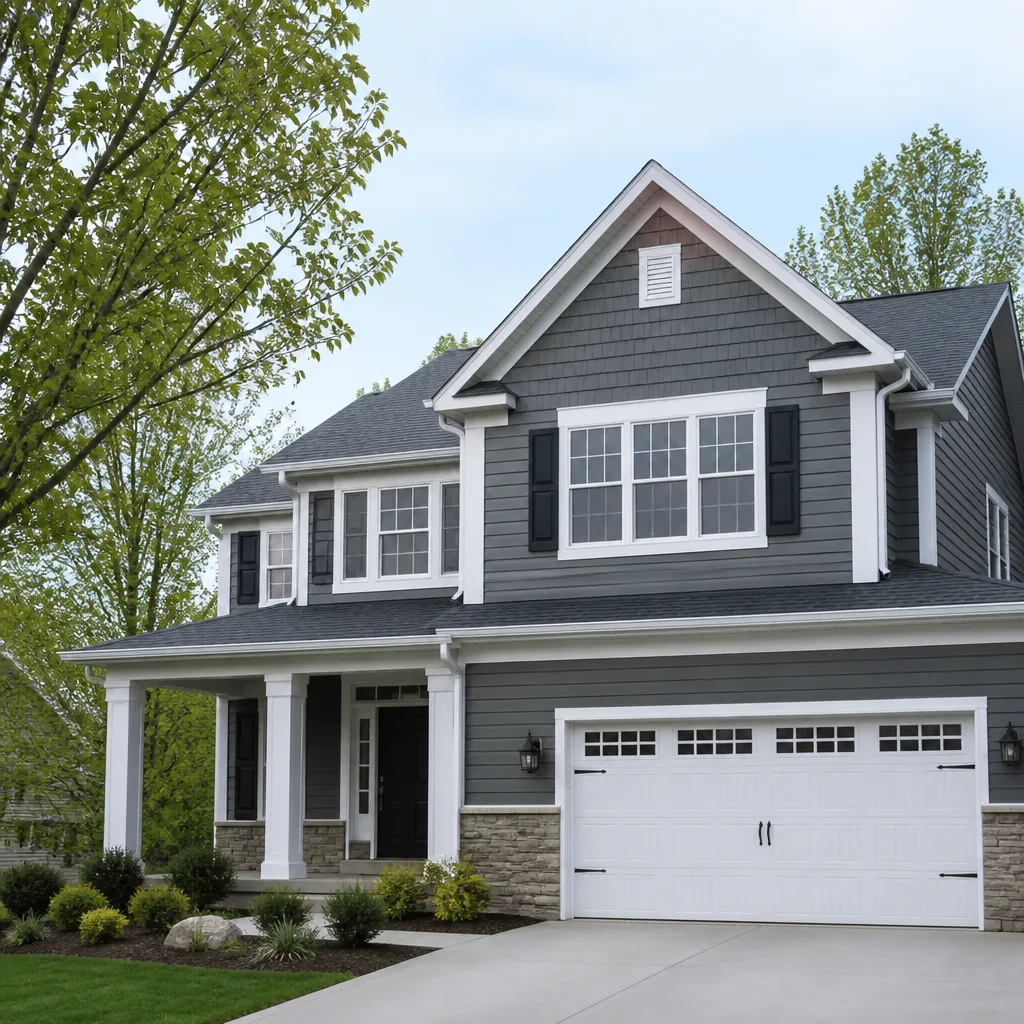
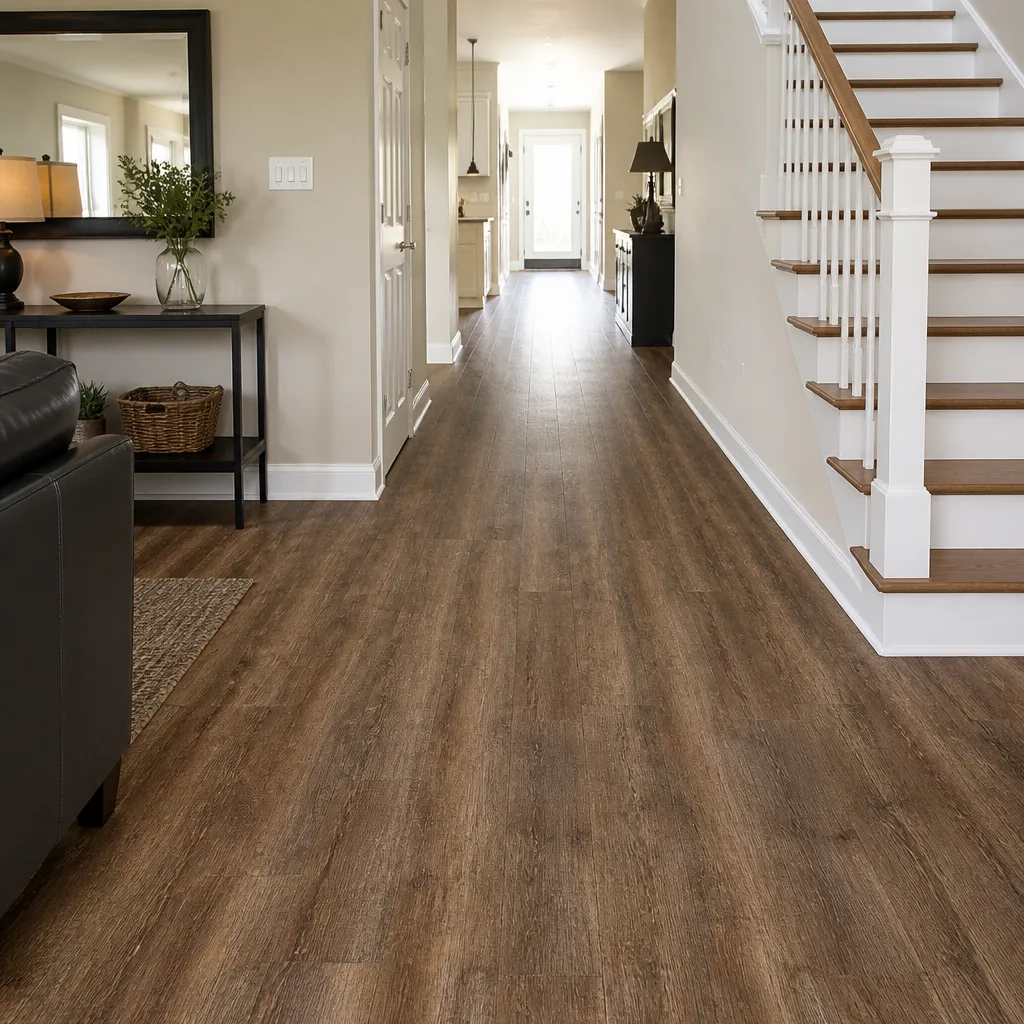

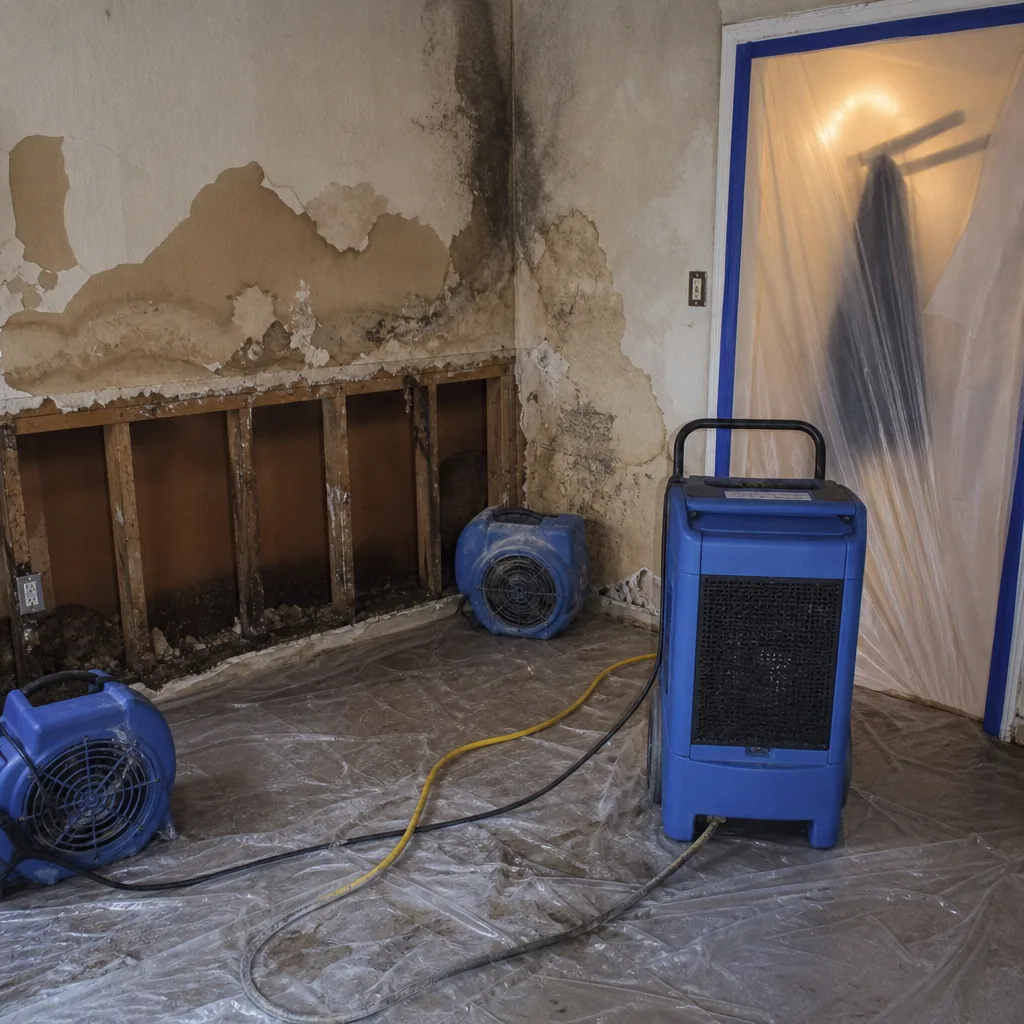 Before
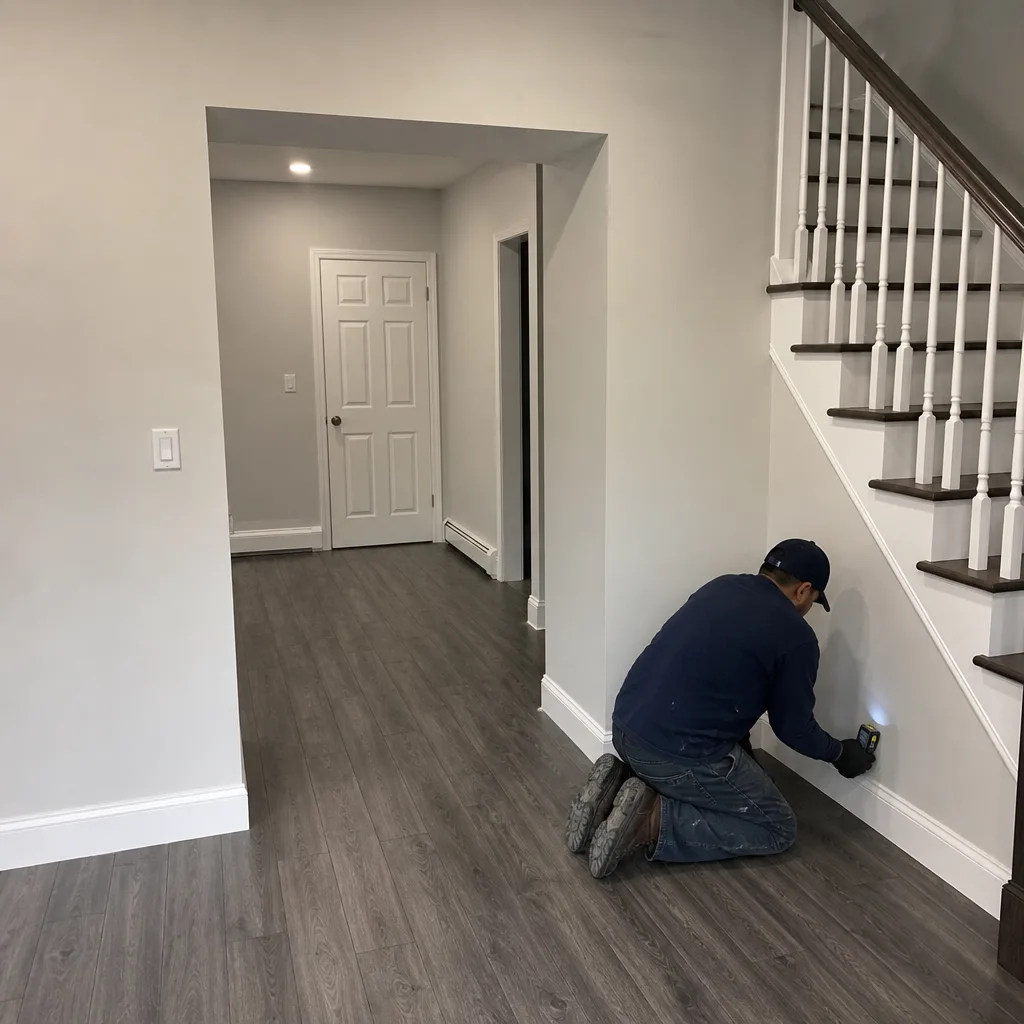 After
After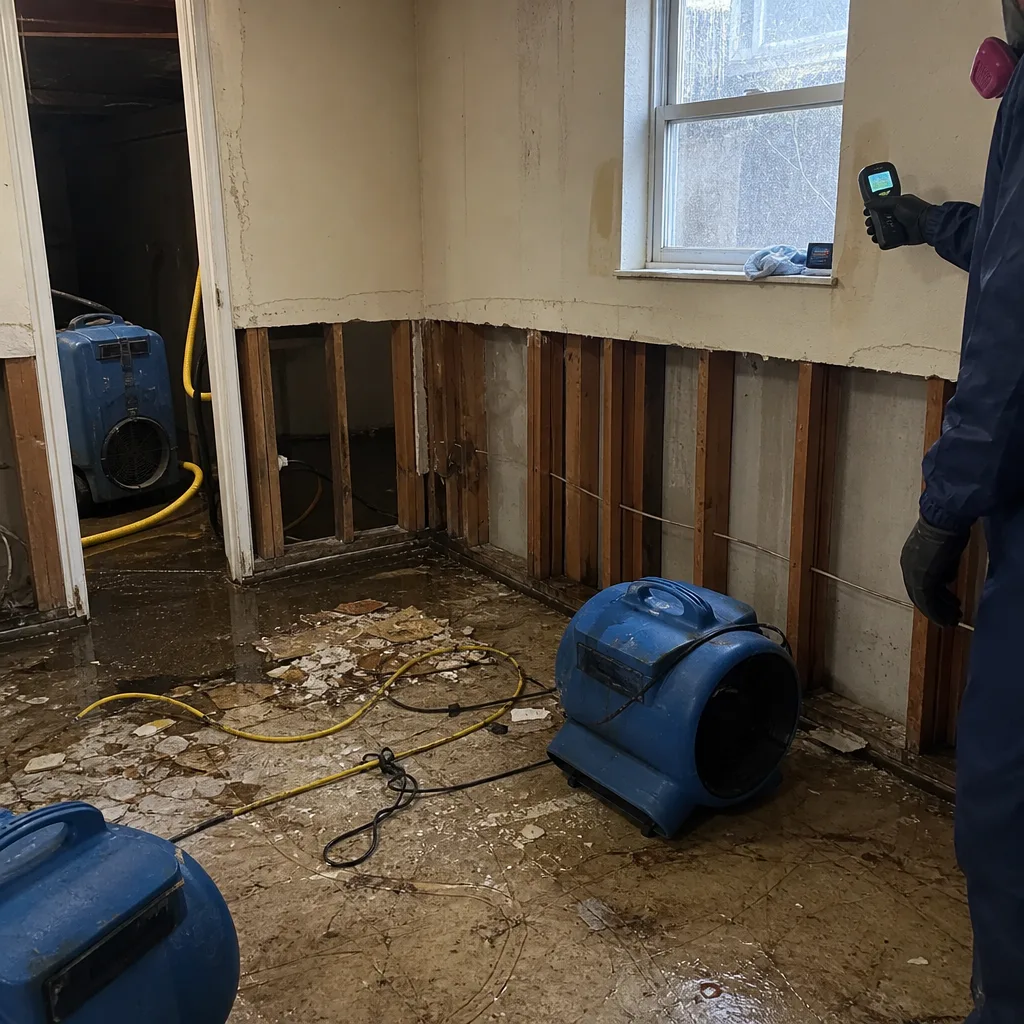 Before
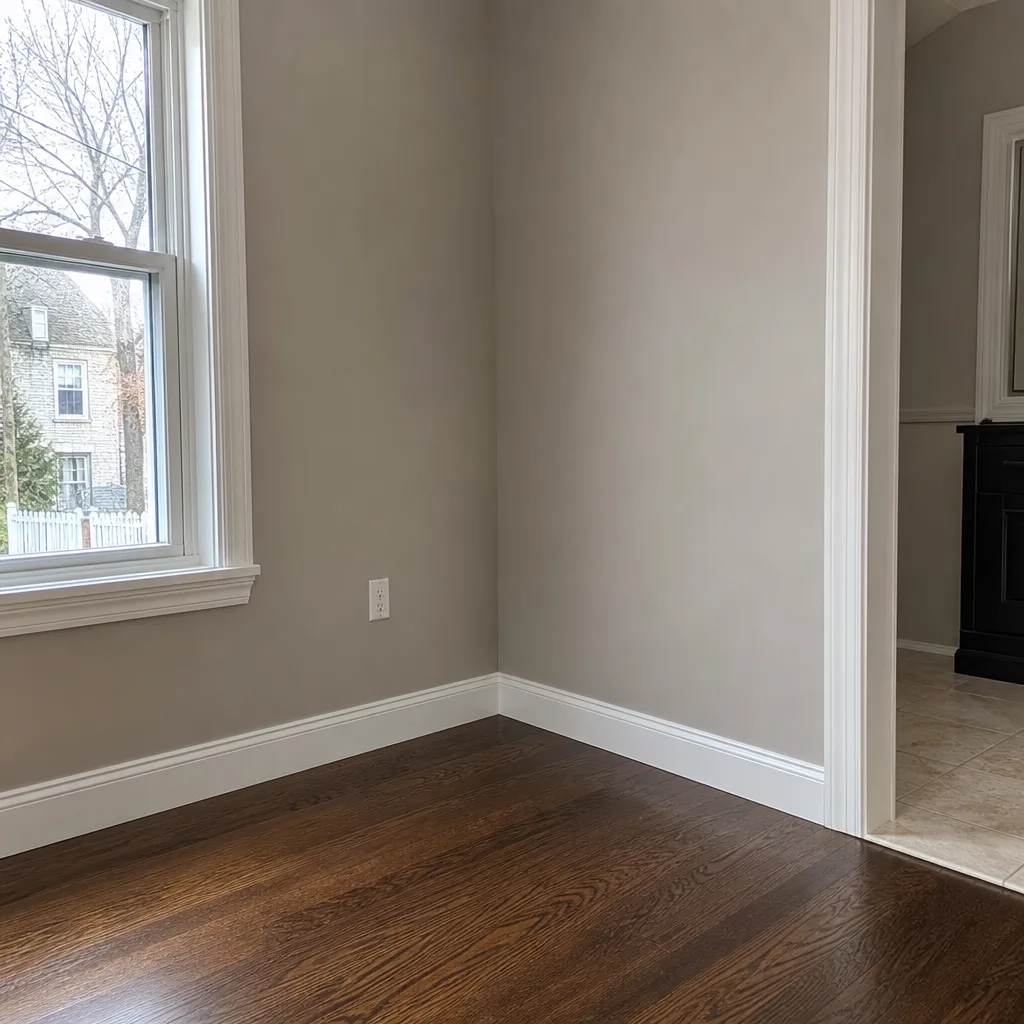 After
After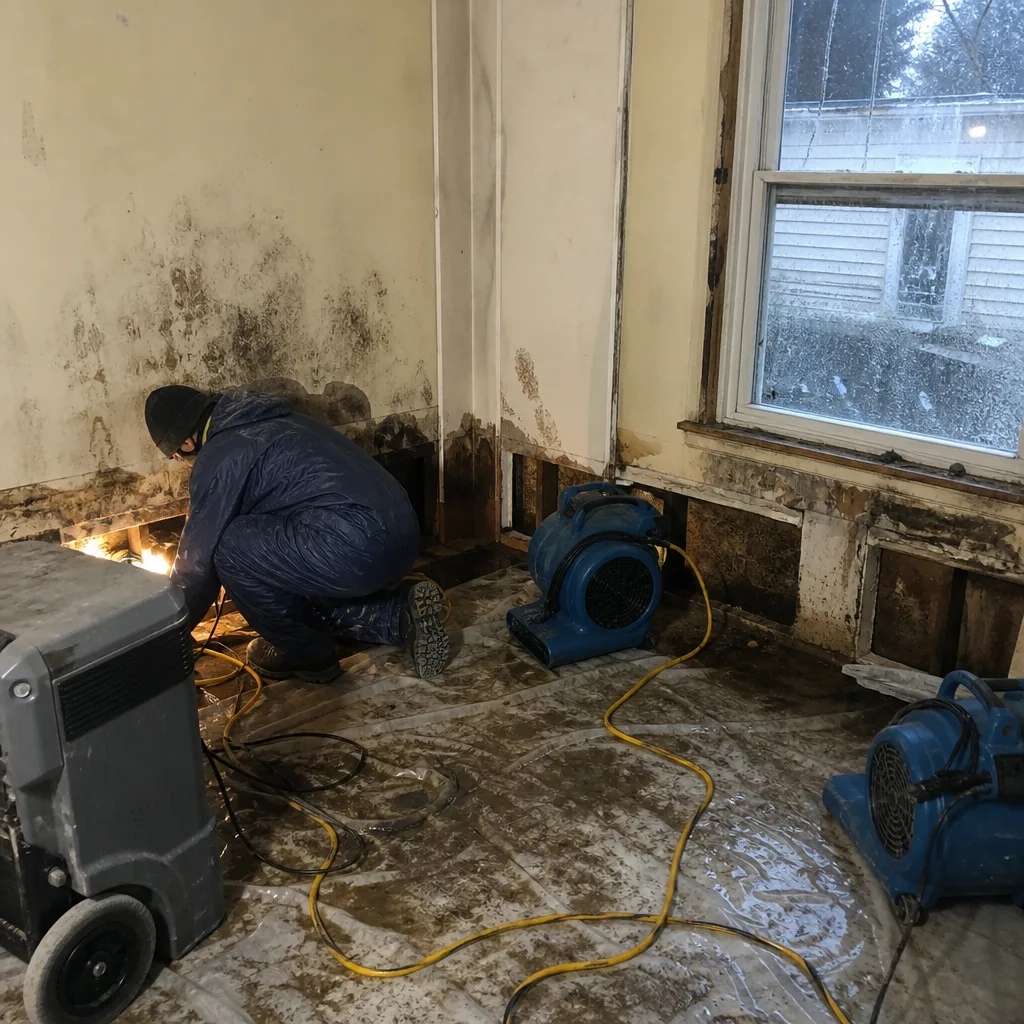 Before
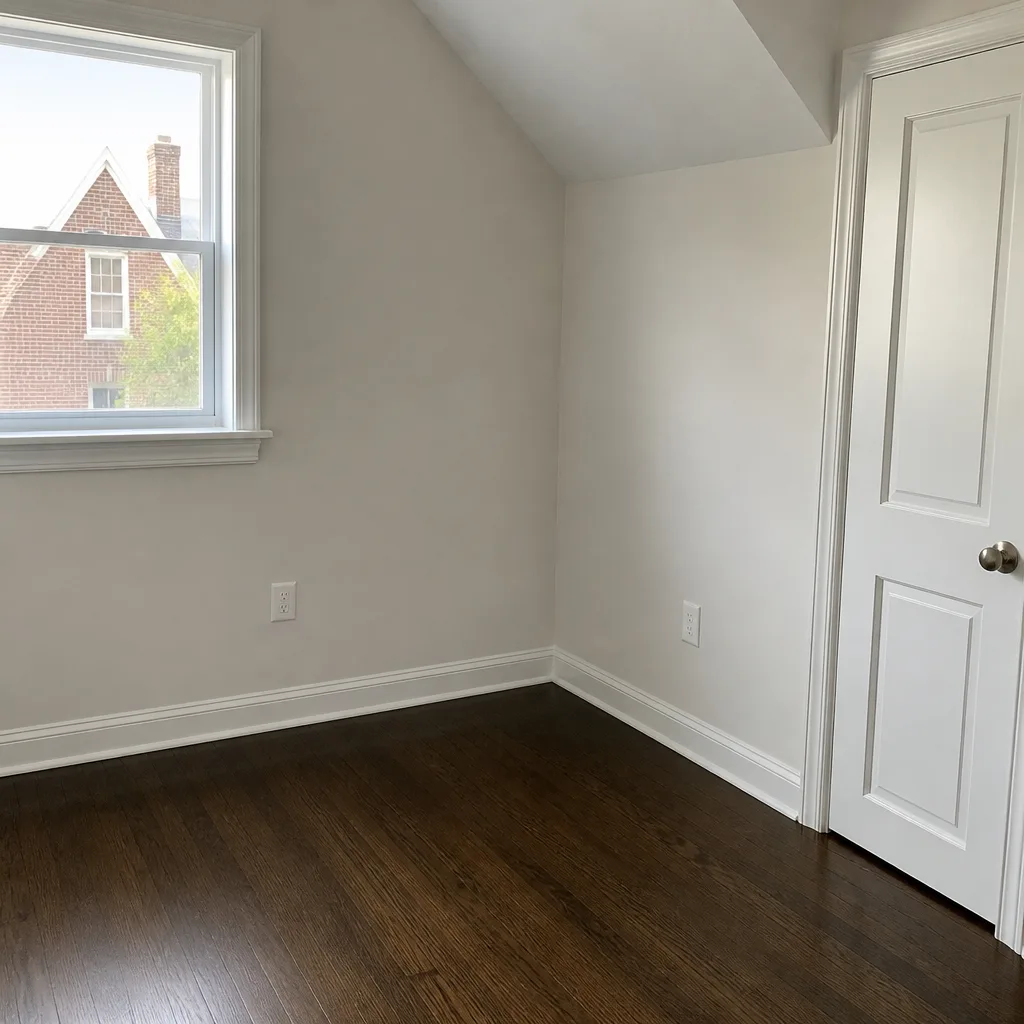 After
After24/7 Emergency Storm & Disaster Restoration in Floral Park
Storm damage in Floral Park doesn’t wait for business hours, and neither do we. Our crews are dispatched around the clock, every day of the year, and a live person answers when you call (631) 557-5029, even at two in the morning. Wind-driven debris, flash flooding, and collapsed tree limbs escalate quickly, which is why we commit to an emergency response that reaches Floral Park homes fast, often within 45 minutes of your first call. The first hour after a storm is when secondary damage starts: water wicking up plaster walls, mold taking hold in humid Long Island air, and exposed openings letting in the next band of rain. We perform a free visual inspection, scope the full extent of the loss, and get extraction or stabilization underway the same visit, so a bad night doesn’t become a months-long rebuild.
Understanding Storm & Disaster Restoration Severity in Floral Park Properties
Storm damage in Floral Park carries a specific set of risks tied directly to the village’s housing stock. Most homes here were built between 1920 and 1945, with plaster-and-lath walls that absorb water differently than modern drywall. When a wind-driven leak soaks a plaster ceiling, the horsehair binder can hold moisture for weeks, hiding the true extent of structural saturation. We use thermal imaging and moisture mapping to read what’s behind the plaster, not just what’s visible on the surface. Storm water is classified by contamination level: Category 1 is clean rainwater from a roof or window breach, Category 2 contains significant contamination like sump-pump overflow, and Category 3 carries sewage, pathogens, and storm-sewer backup from overwhelmed combined systems. Floral Park’s aging infrastructure means heavy rain events can push Category 3 water into basements through floor drains. That distinction dictates everything: whether drywall comes out, whether antimicrobial treatment is required, and whether we’re doing structural drying or full containment with HEPA air scrubbing. Getting that classification right on day one is the difference between a two-week drying phase and a full gut-and-rebuild.
Why Floral Park Property Owners Choose Floodline Restoration Co.
- A 45-minute response commitment, backed by live dispatch. We answer the phone with a person, not a recording, and our Floral Park-area crews are on the road immediately.
- 24/7 live answer, every day of the year. A dispatcher picks up at 2 a.m. on Christmas morning. You’ll never leave a message and wait.
- IICRC-certified technicians with WRT, FSRT, and AMRT credentials. Our crews are trained to the standards that matter for water, fire, and mold restoration, and they’re background-checked and uniformed on every job.
- A free visual inspection before any work begins. We tell you what you actually need, not what a sales deck says you should buy.
- Direct insurance billing with no messenger duty for you. We document, photograph, and coordinate with your adjuster from the first hour, so you don’t carry paperwork between parties.
- One team from first extraction to finished reconstruction. The same certified crew that maps your moisture on day one hands you the drying log and rebuilds what needs rebuilding. No mid-job handoff to a sub you didn’t hire.
Our Storm & Disaster Restoration Process
Inspection & Assessment
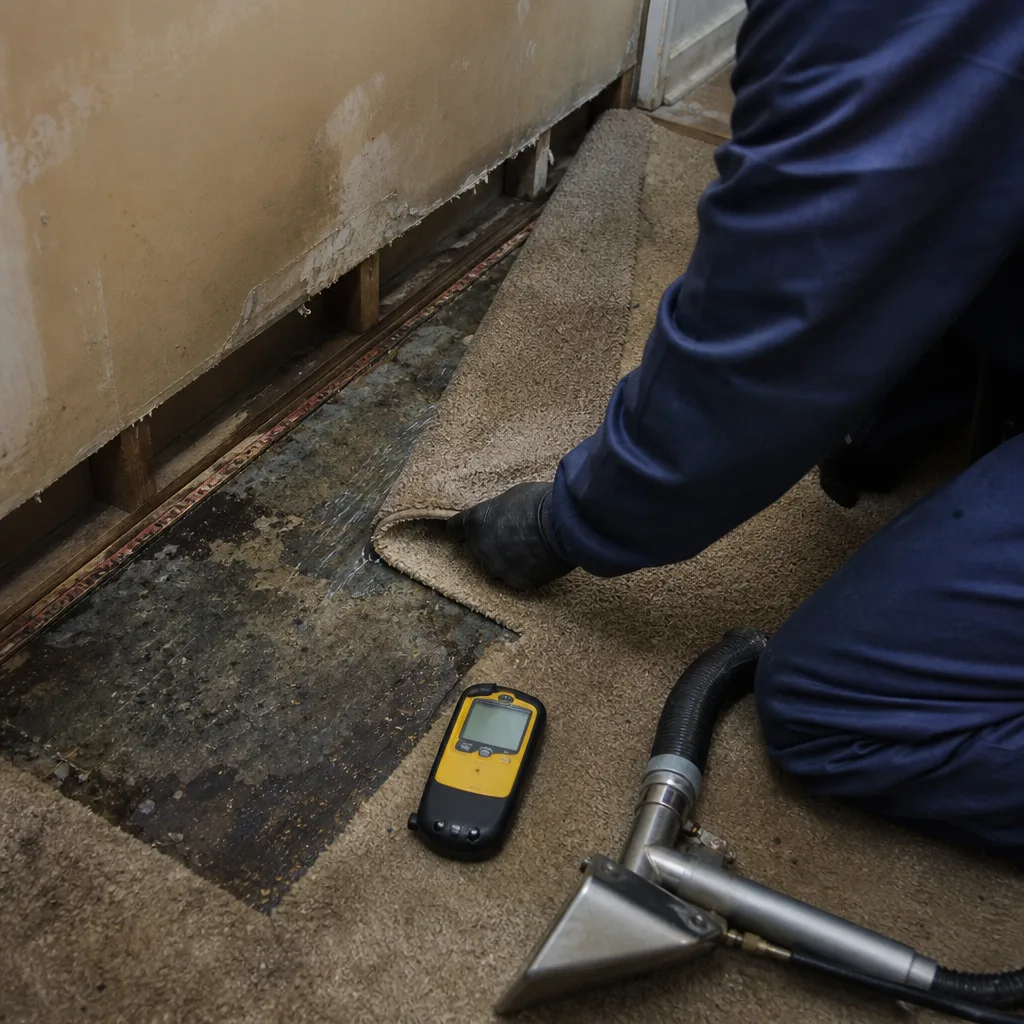
We arrive, walk the property, and identify every point of water entry, wind damage, and structural compromise. Thermal imaging and hygrometers map moisture in walls and floors that look dry to the eye. You get a written scope before any work starts.
Extraction & Stabilization
Standing water comes out with truck-mounted extraction, and exposed openings get covered with emergency board-up or roof tarping. For Floral Park properties, we pull the village permit immediately, because the building department requires its own sign-off before any temporary or permanent repair proceeds.
Drying & Dehumidification
Professional-grade Dri-Eaz dehumidifiers, XPOWER air movers, and Injectidry systems run continuously, pulling moisture from plaster, hardwood, and structural framing. Daily readings are logged until the property reaches the dry standard, and that log goes to you and your carrier.
Cleaning & Sanitization
Storm-contaminated areas receive antimicrobial treatment. We run HEPA air scrubbers during any mold or sewage-influenced loss to protect the rest of the house and our crew.
Wind-Structural Specialty Treatment
Wind-rated doors get inspected for frame compromise, track damage, and panel alignment. Where the village’s wind-load inspection requires specific materials, we install impact-rated units that meet the local standard and pass the village inspector the first time.
Repairs & Restoration
Period-appropriate plaster repair, hardwood refinishing, door and window replacement, and full reconstruction when the loss demands it. The same crew that started the job finishes it, and every phase is backed by our 90-Day Done Right Promise in writing.
Need Emergency Storm & Disaster Restoration in Floral Park Now?
Crews minutes away, answering live 24 hours a day. The sooner we start, the less it costs.
Working With Your Insurance Company
The storm that tore through your roof left a paper trail you shouldn’t have to manage alone. We document from the first hour: photos of every room, moisture readings from the day of loss through the final drying log, and a line-item scope that matches what your carrier expects to see. Our team communicates directly with your adjuster, so you’re not the one interpreting fine print or chasing claim status. If the adjuster revisits the property, our technicians walk the site with them and point out what the photos can’t show: the saturation behind the plaster, the framing that needs replacing, the door frame that looked fine until we pulled the casing. Industry-standard estimating software means the numbers we submit speak your carrier’s language, which keeps your claim moving instead of stalling in review.
What We Provide Your Insurer
- Thorough documentation of the loss
- Photos of all damage, room by room
- Moisture readings and drying logs
- A detailed, line-item scope of work
- Direct coordination with your carrier
Built for Floral Park’s Loss Calendar
Floral Park’s storm damage follows a predictable rhythm, and we schedule our response around it. Late summer and early fall bring the hurricane remnants and nor’easters that push wind and water into pre-war roofs and window frames. Hurricane Sandy is the reference point every Floral Park homeowner older than thirty remembers: flooded basements, weeks without power, and contractors who never picked up the phone. Winter shifts the risk profile: January deep freezes burst supply lines in unheated crawlspaces, and snowmelt finds its way into basements through foundation cracks that have been quietly widening for decades. Spring is when the water table sits highest, and the village’s combined storm-and-sewer system gets overwhelmed by a single heavy downpour, sending Category 3 water up through floor drains in the lowest-lying streets near Plainfield Avenue and Jericho Turnpike. Summer thunderstorms hit fast and hard, with wind gusts that lift shingles, crack window seals, and tear screened porches from their framing. Homeowners on this side of Nassau County plan for these events because they’ve lived through them, and they know the difference between a contractor who shows up prepared and one who shows up chasing a storm. Our Storm & Disaster Restoration team carries the equipment and the local knowledge for every season Floral Park throws at us.
Storm & Disaster Restoration Across Floral Park’s Neighborhoods
Floral Park is a compact village, but each section has its own storm signature. The streets around Floral Park-Bellerose school and the village center carry rows of attached-garage homes built tight together, where wind damage to one roofline can mean water in two or three adjacent basements before the rain stops. The blocks west of Plainfield Avenue, near the Queens line, sit on ground that drains toward the old LIRR embankment, and those homeowners deal with repeat basement flooding during every sustained storm. Over near Centennial Gardens and the streets off Covert Avenue, the larger center-hall colonials have attic scuttles that leak around the flashing, and wind-driven rain finds its way through dormer windows that haven’t been reseated since the Truman administration. The residential streets south of Jericho Turnpike, including the areas near Floral Park Memorial High School, have more driveway-adjacent garages and crawlspace foundations, which means post-storm drying often means running dehumidifiers under the house, not just in it. The permitting layer matters in every one of these neighborhoods: Floral Park’s own building department, not Nassau County and not NYC DOB, reviews every emergency board-up and tarping application, and that review time is a factor in how fast a property gets secured after a storm. Our crews know the village’s inspection calendar and the inspectors’ expectations, because we’ve stood in front of them more times than we can count.
Specialized Storm & Disaster Restoration Services We Offer in Floral Park
Storm Damage Cleanup
Broken glass, downed limbs, soaked insulation, and wind-scattered debris all require removal before restoration can begin. In Floral Park, cleanup often means working around tight lot lines, detached garages, and the kind of mature street trees that predate the village’s incorporation. We extract, haul, and document every layer, so the insurance scope matches what actually came out of the house.
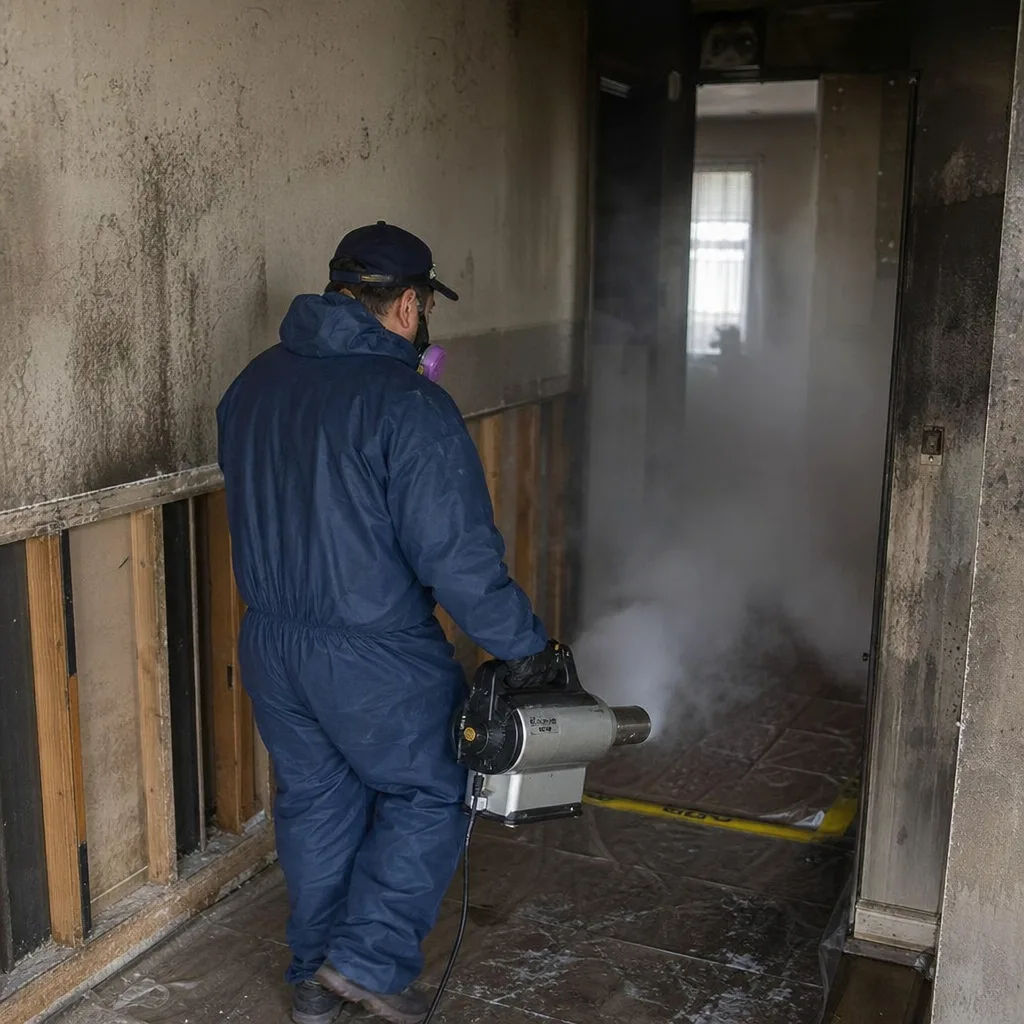
Flood Damage Restoration
Floral Park’s high water table and combined sewer system mean flood water here is rarely clean rainwater. We classify every loss properly, then dry and sanitize accordingly. When Sandy’s flood line is still visible on a basement wall fifteen years later, homeowners ask what we can do to prevent a repeat. That conversation starts with a flood cut, drying to the standard, and rebuilding with materials that hold up to the next event.
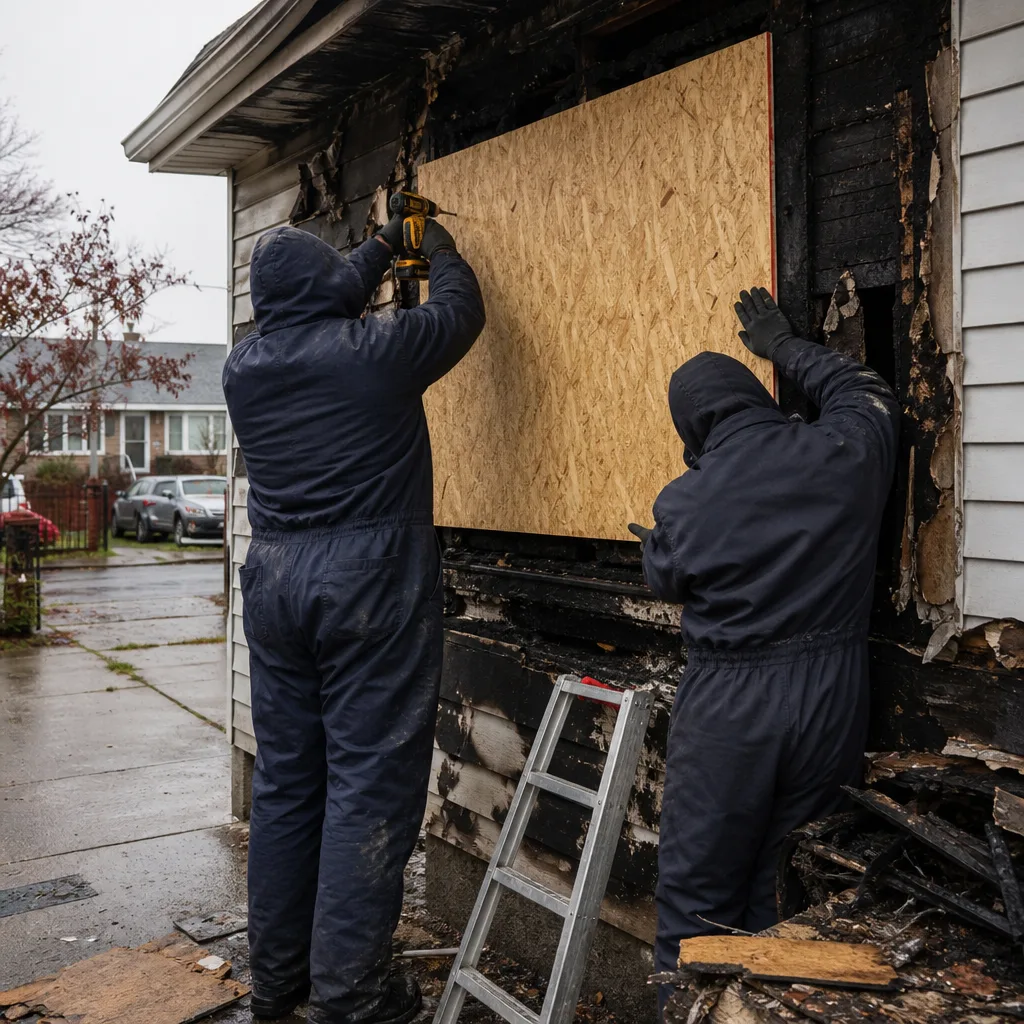
Emergency Board-Up
A breached window on a Floral Park home is an invitation to rain, animals, and opportunistic foot traffic. We board up properly, with the village permit pulled first, and we use materials that hold through the next storm, not the cheapest OSB we can find. If the opening faces Plainfield Avenue or Jericho Turnpike, we make it secure enough to leave unattended while you make longer-term decisions.
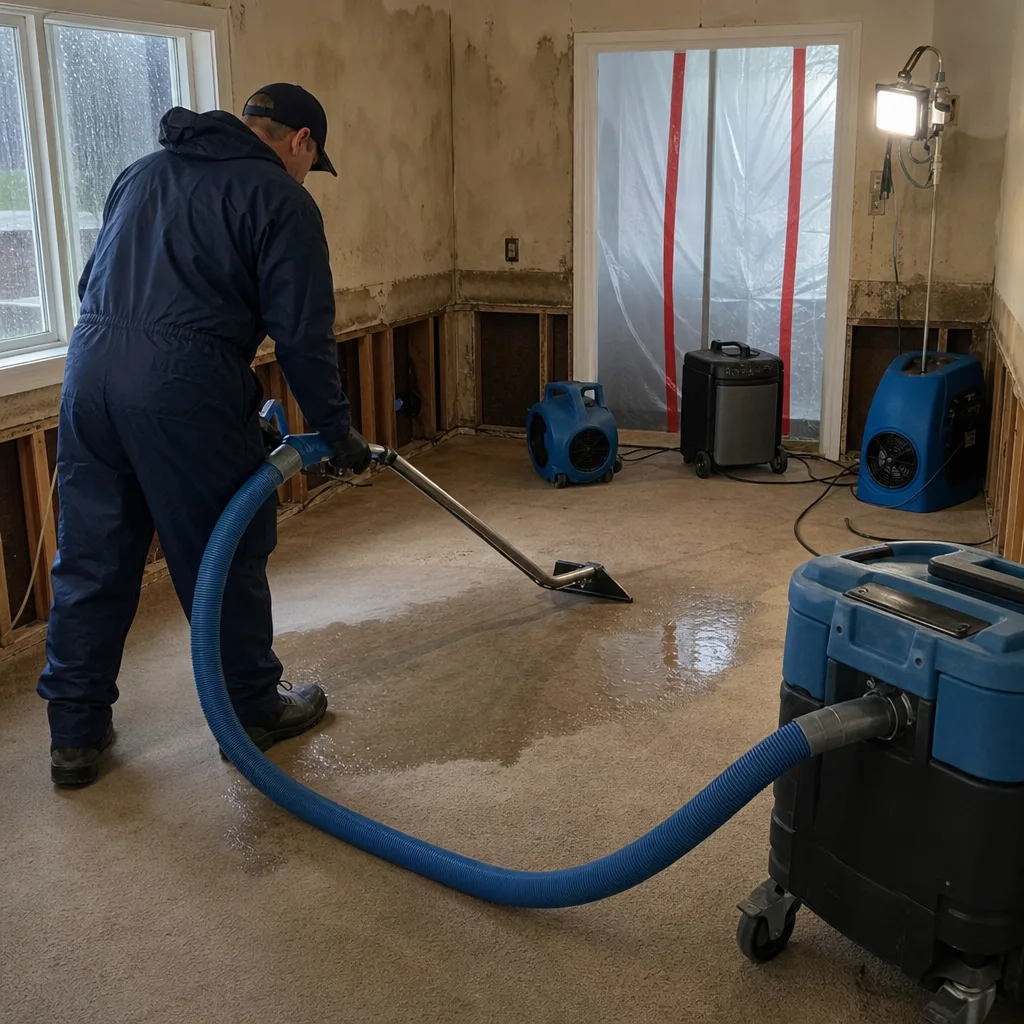
Roof Tarping
Wind-lifted shingles, punctured decking, and missing ridge caps all get tarped immediately, with the edges sealed tight enough to survive a nor’easter. Our roof tarping in Floral Park is accompanied by a written scope of the underlying damage, so your insurance claim accounts for what’s under the tarp, not just what shows in the photos.
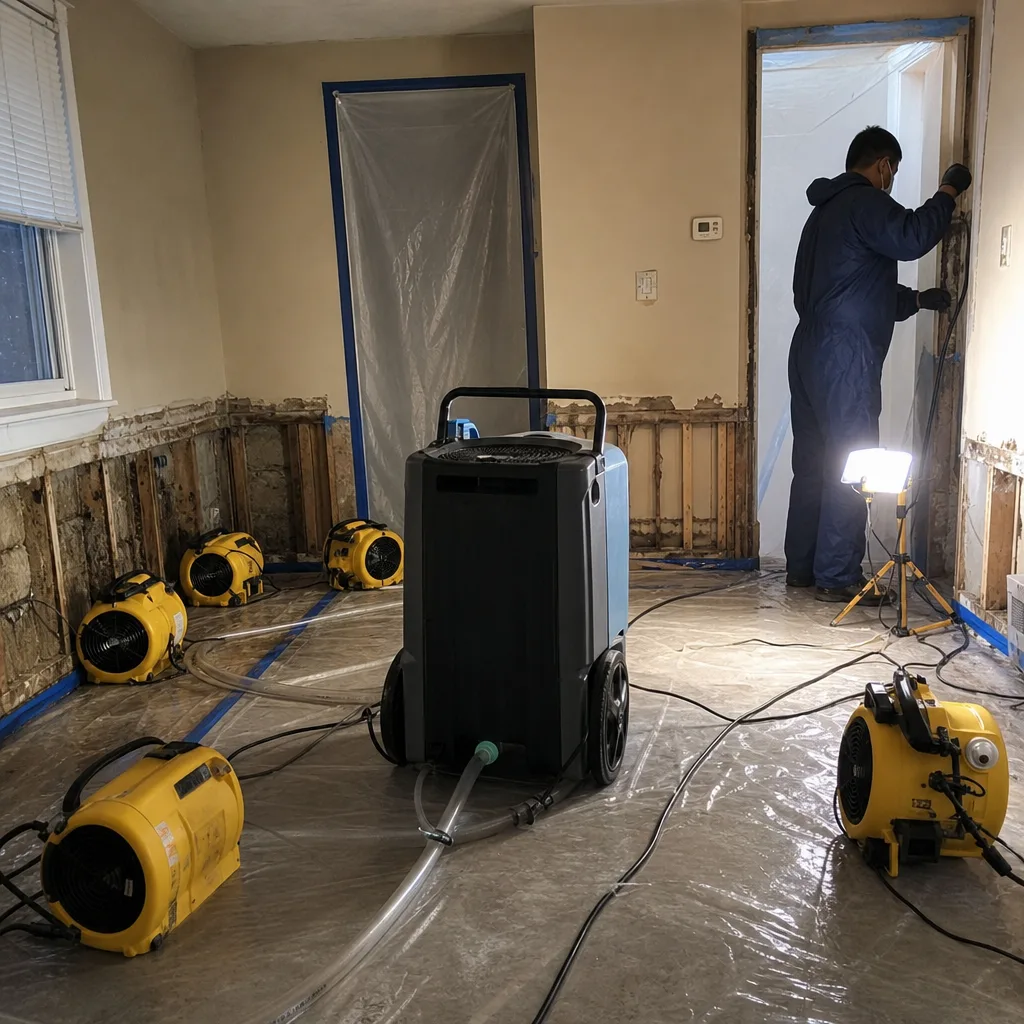
Debris Removal
A maple limb through the porch roof, a fence panel in the neighbor’s yard, shingles scattered across three lots: storm debris in Floral Park has to be hauled quickly, because village code doesn’t give you weeks to clean up a storm-ravaged property. We remove, sort, and document the debris, separating salvageable materials from demolition waste and giving your insurance company a clear accounting.
What happens when you call
- 1
A real person answersNo phone trees - you reach a local pro.
- 2
You get an upfront price rangeHonest numbers before anyone is dispatched.
- 3
A background-checked tech heads outLicensed & insured, dispatched right away.
- 4
You approve before work beginsNothing starts until you say go.
Storm & Disaster Restoration Costs in Floral Park, NY
Storm restoration pricing in Floral Park runs higher than in neighboring New Hyde Park or Elmont because of the village’s older housing stock and its specific permit and inspection process. Emergency board-up for a broken window or door opening typically runs $400 to $900. Roof tarping on a Floral Park home averages $650 to $1,500 depending on roofline complexity and the number of affected planes. Water extraction and structural drying for a basement flood starts around $1,800 and runs up to $5,200 for a fully finished basement with Category 3 contamination. Full wind damage repair, including a replacement impact-rated exterior door with village inspection, starts around $2,800 and can pass $12,000 when framing, period plaster, and flooring are involved. Insurance covers the vast majority of storm losses in Floral Park, and we bill your carrier directly, so your out-of-pocket is usually the deductible and any code upgrades the inspector requires. The free visual inspection is the path to a firm number: we tell you the scope, you approve it in writing, and the number doesn’t move unless the damage does. Call (631) 557-5029 to schedule the inspection, and we’ll give you a square deal in plain English.
We Also Serve Cities Near Floral Park
Our Storm & Disaster Restoration crews serve Floral Park and the surrounding communities, including Bellerose, New Hyde Park, Elmont, and Queens Village. The permitting differs from one side of the border to the next, but the standard of work doesn’t.
Serving Floral Park, NY - Our Local Coverage Area
We’re based in the Floral Park area and know this community well. Use the map below to see our service coverage - if you’re nearby, we can almost certainly help.
Floral Park Storm & Disaster Restoration Questions, Answered
Do I need a village permit before you board up my Floral Park windows after a storm?
Yes, and this is where Floral Park differs from nearly every neighboring community. Emergency board-up and roof tarping within the incorporated Village of Floral Park require a permit from the village’s own building department, not Nassau County’s general office and not NYC’s DOB. We pull that permit before any board-up or tarping work begins, because outside firms that skip this step get stop-work orders that leave the opening exposed through the next storm. Our team knows the village’s specific wind-load and structural inspection sign-offs, which keeps your property protected and compliant. Call (631) 557-5029 if you’re staring at a broken window right now.
How do you dry out a 1920s plaster-and-lath wall after wind-driven rain?
We don’t just point a fan at it. Plaster-and-lath walls from Floral Park’s 1920s through 1940s building era hold moisture in the horsehair binder and the wood lath behind the plaster, so drying requires moisture mapping, targeted air movement, and dehumidification with the right equipment. On a stretch of older attached-garage homes near the village center, a nor’easter tore a wind-rated entry door from its frame while our crew was already moisture-mapping the adjacent basements. We set up containment and structural drying for two homes simultaneously, used our Dri-Eaz dehumidifiers and XPOWER air movers to pull moisture readings back to pre-loss condition, and worked the village’s inspection schedule to replace the door with an impact-rated unit before the next storm.
After Hurricane Sandy, are Floral Park basements more prone to recurrent flooding?
The short answer is yes, but not because Sandy permanently changed the groundwater. Floral Park sits on flat topography with a high seasonal water table, and the village’s combined storm-and-sewer infrastructure was already aging before Sandy. What Sandy did was reveal every weakness in the system: the floor drains that back up, the foundation cracks that admit groundwater, the streets that pond after two hours of steady rain. Homeowners who flooded during Sandy are alert to every subsequent storm, and many of them keep our number in the kitchen drawer. We did not serve Floral Park during Sandy, but we’ve handled the repeat-flooding basements ever since, and we quote prevention work just as readily as emergency response.
Why can’t you just patch my wind-damaged horsehair plaster ceiling with drywall?
Technically, you can, and a lot of crews from outside Floral Park will do exactly that because it’s faster and cheaper. The village inspector will likely fail the work. Floral Park homes built in the 1920s through the 1940s have original plaster ceilings with horsehair binder, and when the village reviews repair work, it expects period-appropriate materials in many cases. The patch also won’t hold the same way: drywall’s moisture response differs from plaster, and a hard seam between the two often cracks within a season. We repair plaster with plaster, matching the original thickness and texture, so the line between old and new disappears and the inspection passes the first time.
What wind rating should my replacement exterior door have in Floral Park?
For a door facing the prevailing storm winds, which in Floral Park means anything exposed to the southwest and northeast, you want an impact-rated door assembly tested to Miami-Dade or ASTM wind-load standards. The practical target is a design pressure rating of at least 50 psf for most residential doors, and higher for double doors or entries with wide glazing. We install doors that meet or exceed the village’s structural inspection requirements, and we handle the inspection scheduling so the door is correctly permitted, correctly installed, and correctly signed off. A door that fails the village inspection is a door you pay for twice.
How fast can someone actually get to my Floral Park home after I call?
In most cases, a certified crew reaches your property within 45 minutes of your call, day or night. That timeline works because we dispatch locally, not from a regional call center a hundred miles away. Our live dispatcher takes the call at (631) 557-5029, confirms your address and the nature of the damage, and sends the nearest available crew. If you’re calling during a major storm event, response may run longer because demand is heavy, but you’ll know that on the phone, not sitting by a window wondering.
Do I really need full storm restoration, or just a cleanup?
The honest answer depends on what the water touched and how long it sat. A wind-driven leak that soaked a plaster ceiling needs more than a mop and a fan: the plaster holds moisture, the lath behind it wicks water into the framing, and mold in a humid Long Island summer colonizes within 24 to 48 hours. A basement flood from storm-sewer backup is Category 3 water, which means the drywall you can’t see is contaminated even if it looks clean from the surface. We’ll do a free visual inspection and tell you straight whether you need full restoration or a targeted cleanup, with a written scope either way. Estimates are free, and we never oversell a job.
Who deals with my insurance adjuster?
We do, with you copied at every step. Floodline Restoration Co. has handled direct insurance billing for its entire history, and our crew works with adjusters on site, showing them the damage behind the plaster, the framing that needs replacement, and the drying log that proves the standard was met. You’re never the middleman carrying messages between us and your carrier. If the adjuster has questions, we answer them. If the scope changes because the damage is deeper than the initial estimate, we submit the supplement with photos and readings attached. Call (631) 557-5029, and your claim stops being your second job.
Written by Curt Bowman, Owner at Floodline Restoration Co., serving Floral Park and Long Island since 2010.