
Free visual inspection and a written scope of work before any mitigation begins - photos, moisture readings, and drying logs go in your claim file
The scope we write is the scope we bill. Anything new gets shown to you, in writing, before we touch it.




 Before
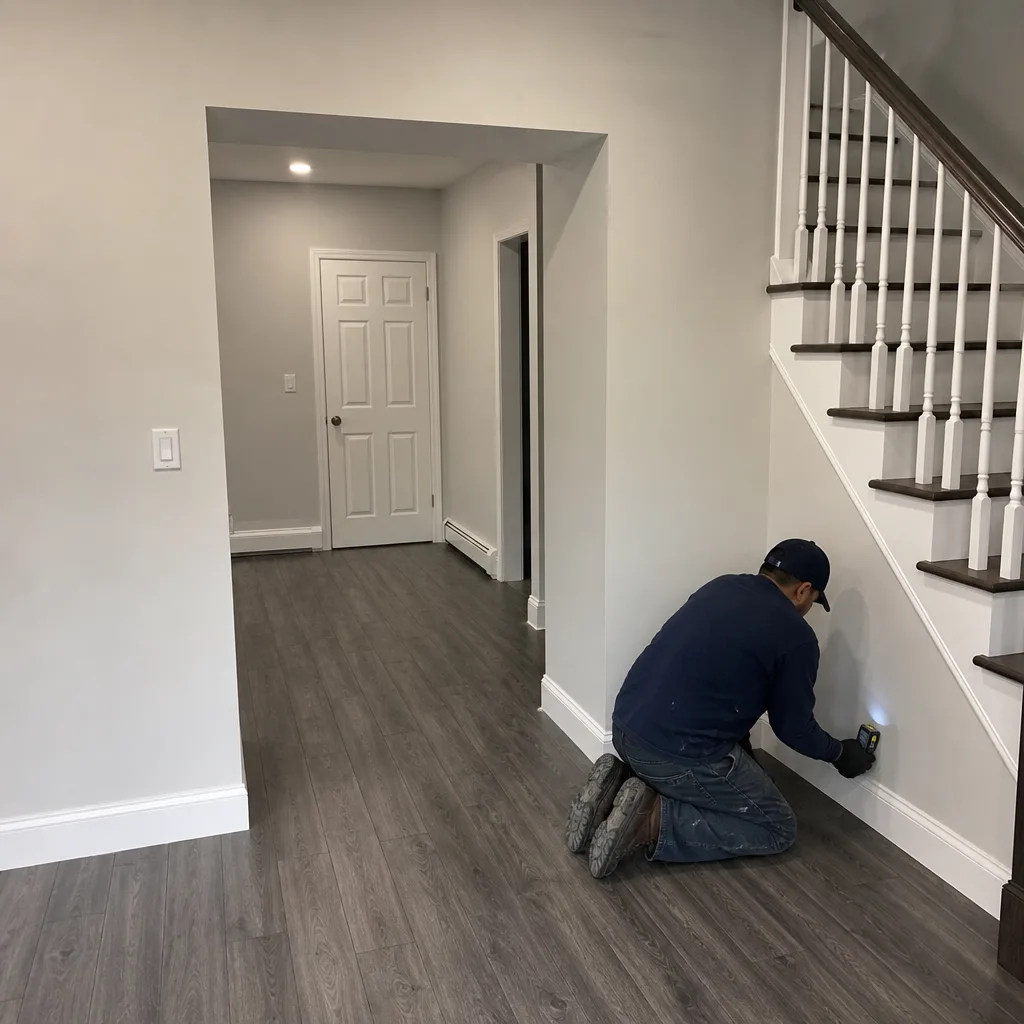 After
After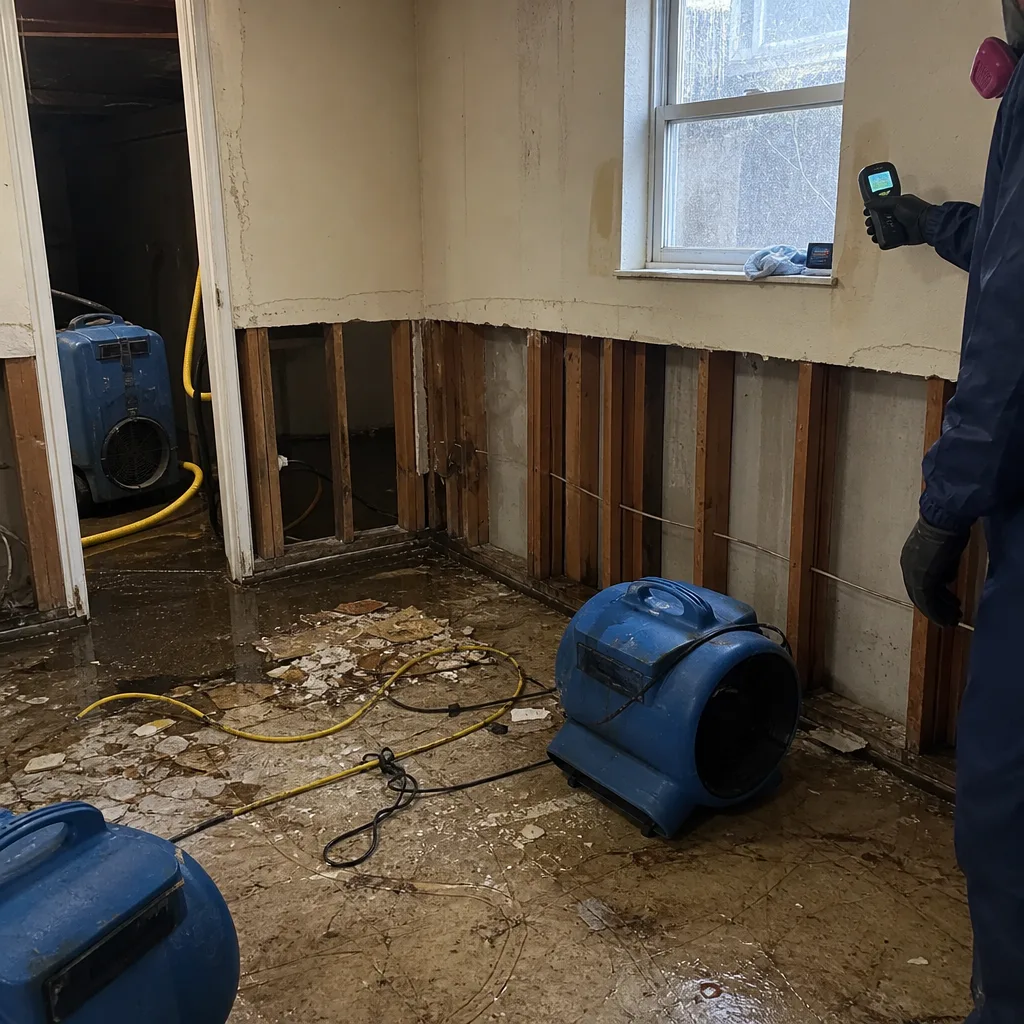 Before
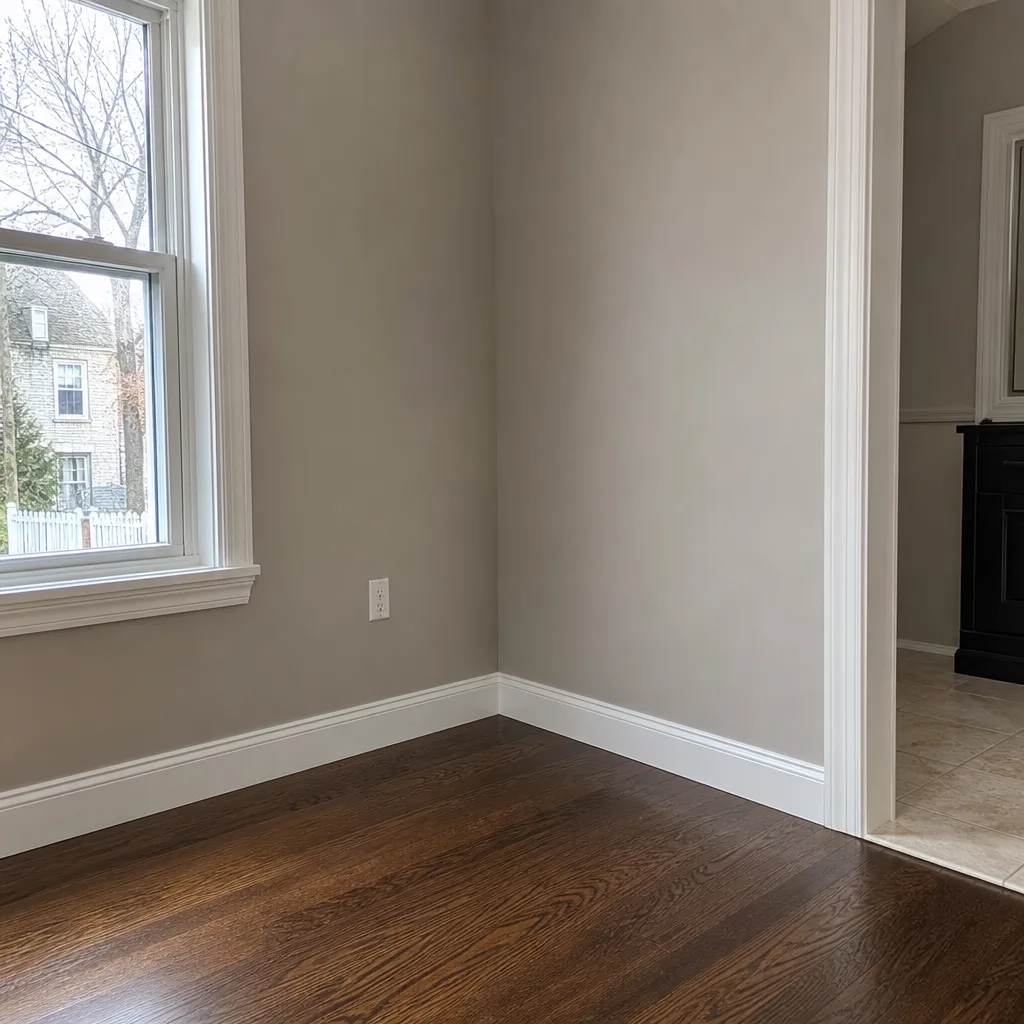 After
After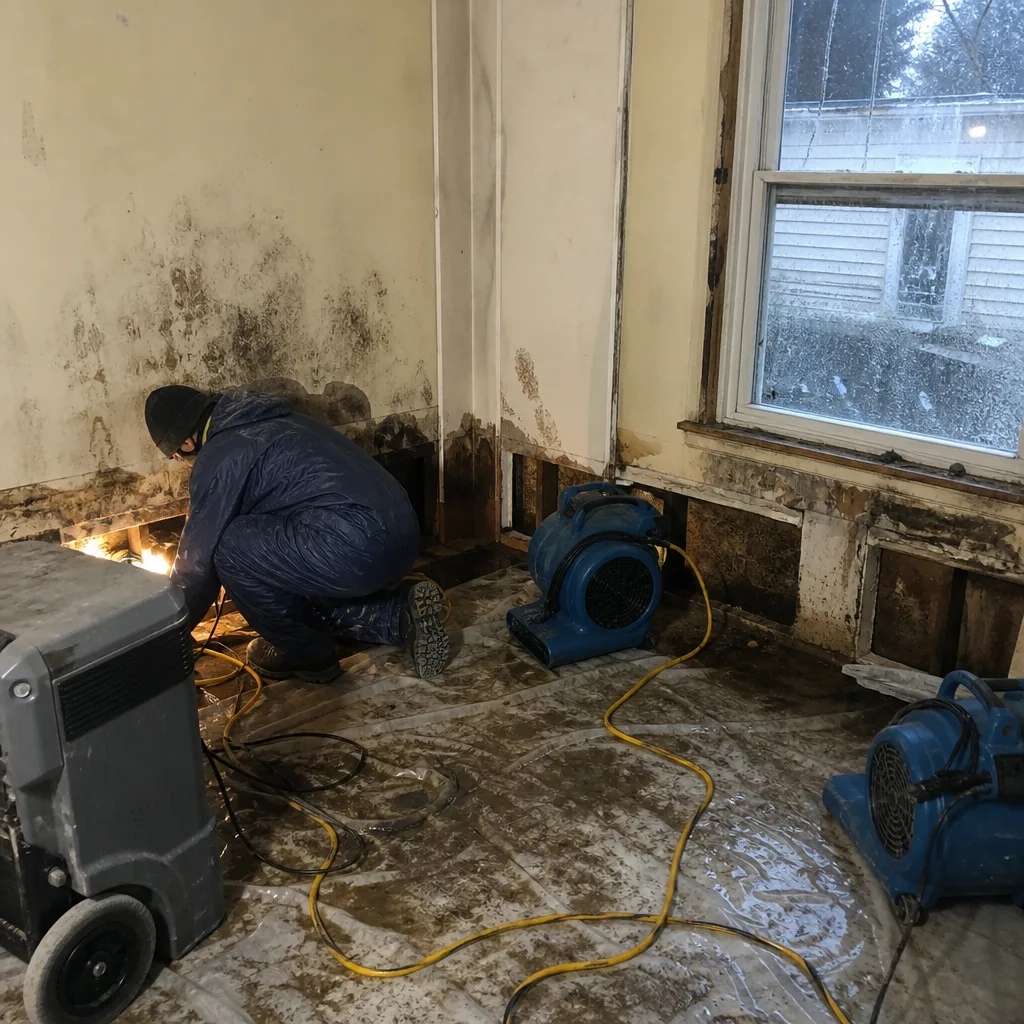 Before
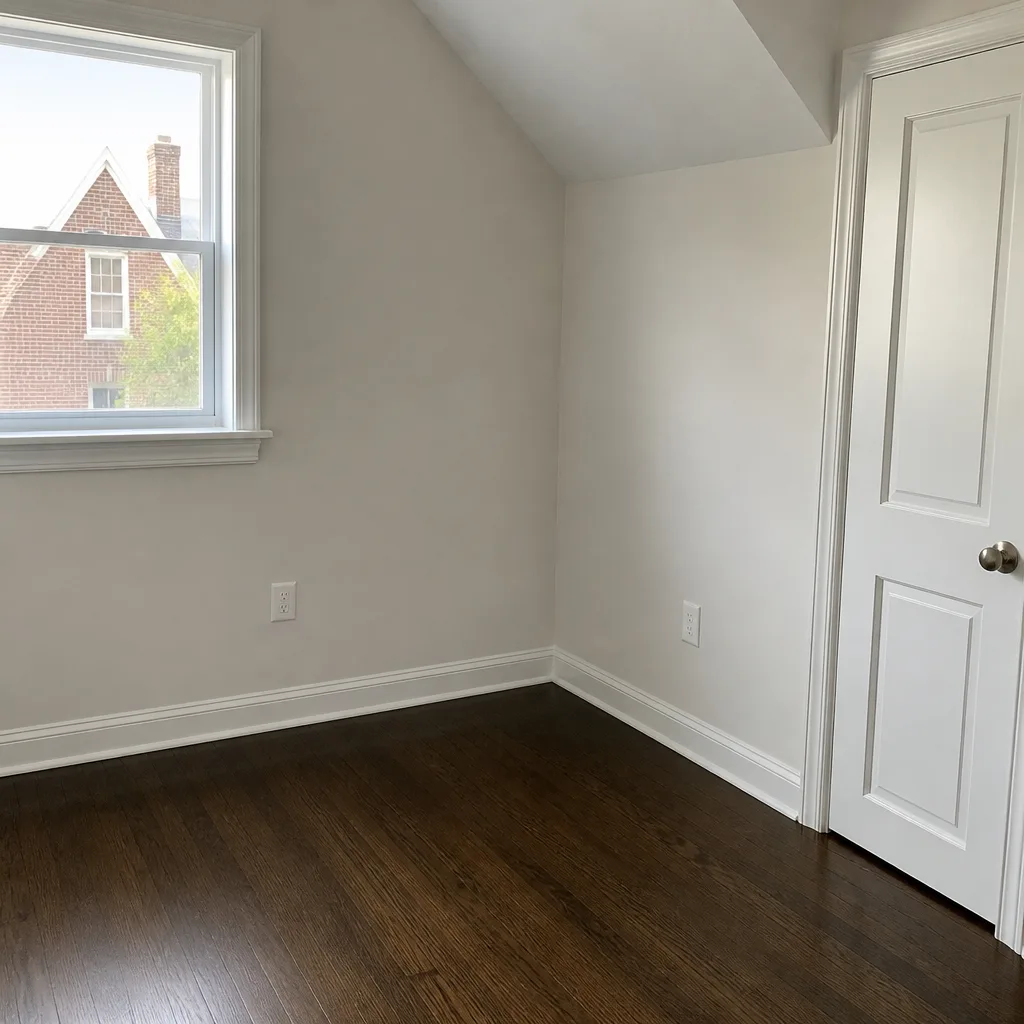 After
After24/7 Emergency Storm & Disaster Restoration in Valley Stream
Storm damage in Valley Stream rarely waits for business hours, and neither do we. Floodline Restoration Co. answers live around the clock with crews already positioned near Valley Stream, ready to start extraction, board-up, or roof tarping the same evening you call (631) 557-5029. The first hour after a nor’easter or a Mill Creek overflow matters because Category 2 and 3 water moves fast through finished basements, behind paneling, and into wall cavities where it stays hidden until mold takes hold. A free visual inspection from our team establishes what’s wet, what’s at risk, and what it’ll take to dry it properly before rot sets in.
Understanding Storm & Disaster Restoration Severity in Valley Stream Properties
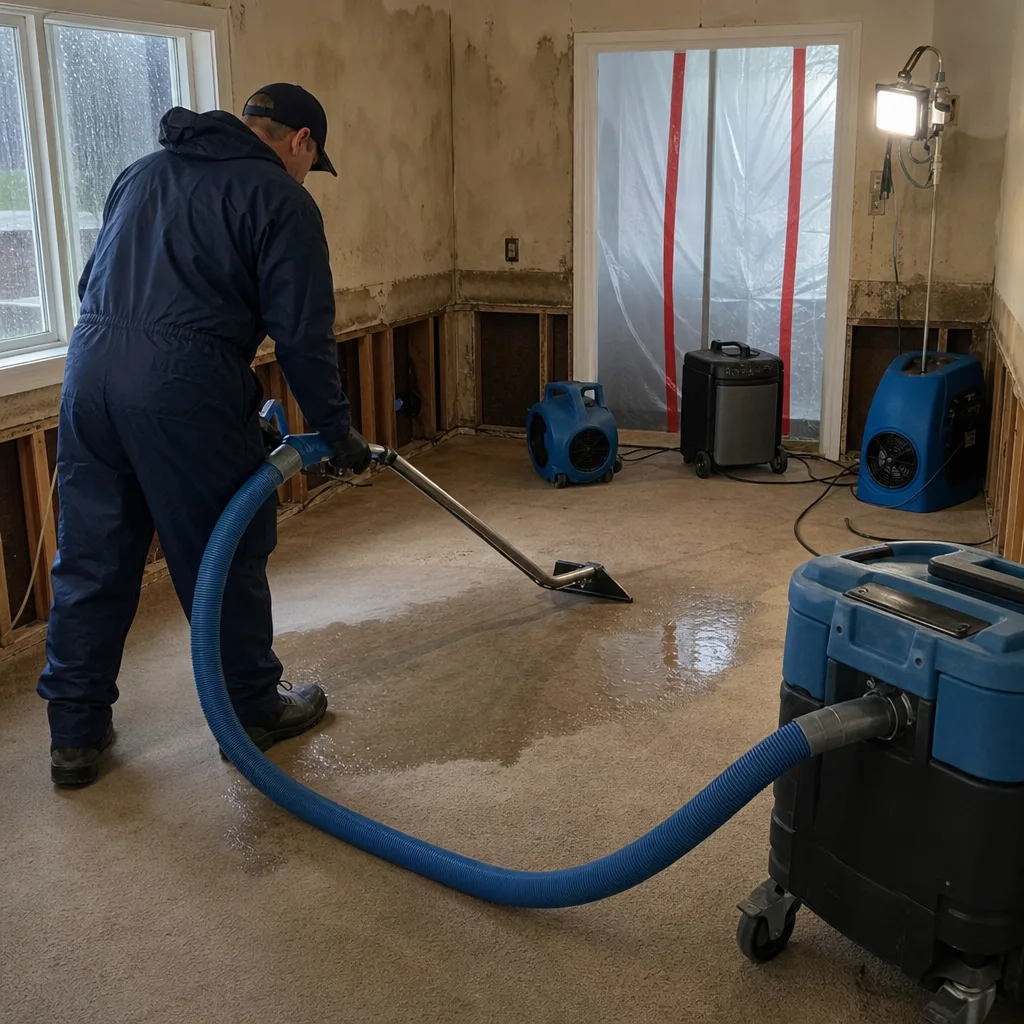
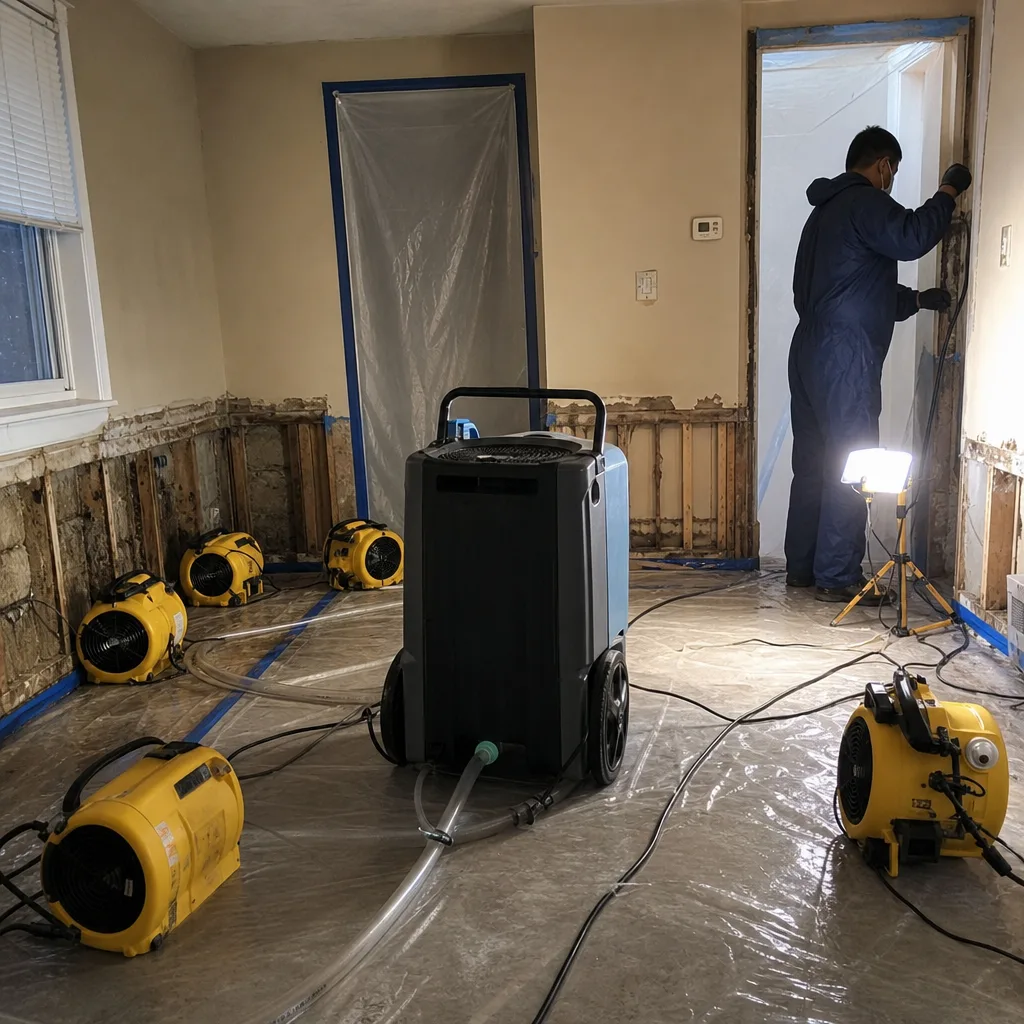
Water from a coastal storm surge or Mill Creek tidal backflow is rarely clean. We classify it Category 2 or 3, meaning it carries silt, sewage, or saltwater contaminants that demand antimicrobial treatment, not just extraction. Inside the 1940s and 1950s Cape Cods and split-levels that fill Valley Stream’s flood-vulnerable blocks, we use moisture mapping and thermal imaging to find what the eye misses: saturated horsehair plaster, water trapped between original wall sheathing and newer drywall, and the hidden framing cavities that stay damp for weeks without proper drying. The flat South Shore topography means water doesn’t drain away, it sits. Without commercial structural drying, that standing moisture becomes a mold colony inside fourteen days. Our crews carry Phoenix and Dri-Eaz dehumidifiers, XPOWER air movers, and hyrgometers to track daily readings until the dry standard is met, not until the floor feels dry.
Why Valley Stream Property Owners Choose Floodline Restoration Co.
- 45-minute response commitment from dispatch. A live person answers at 2 a.m., and a certified crew reaches most Valley Stream addresses within an hour of your call.
- 24/7 live answer, never an automated system. You speak directly to a dispatcher who knows the Valley Stream area and can route a crew immediately, not leave a voicemail.
- IICRC-certified crews with WRT and FSRT training. Our background-checked, uniformed technicians hold water restoration and fire/smoke restoration certifications from the industry’s standards body, plus RIA and IFA training.
- Free visual inspection before any work begins. We assess the damage, identify hidden moisture, and hand you a written scope so you know exactly what’s needed and what it costs before we start.
- Direct insurance billing. We document everything, bill your carrier directly, and speak with your adjuster so you don’t play messenger between us and your claim.
- One team from extraction to reconstruction. The same crew that reads the moisture map on day one handles daily readings, hands the log to your insurer, and rebuilds what needs rebuilding. No mid-job handoffs.
Our Storm & Disaster Restoration Process
Inspection & Assessment
We start with moisture mapping and thermal imaging to find water the naked eye misses, especially behind finished basement walls in older Valley Stream homes. We classify the water category, document the full loss with photos, and give you a written scope before any work begins.
Extraction & Stabilization
Standing water comes out first, using truck-mounted and portable extraction units. If the storm opened the structure, we board up windows and tarp the roof the same visit to stop further weather damage.
Drying & Dehumidification
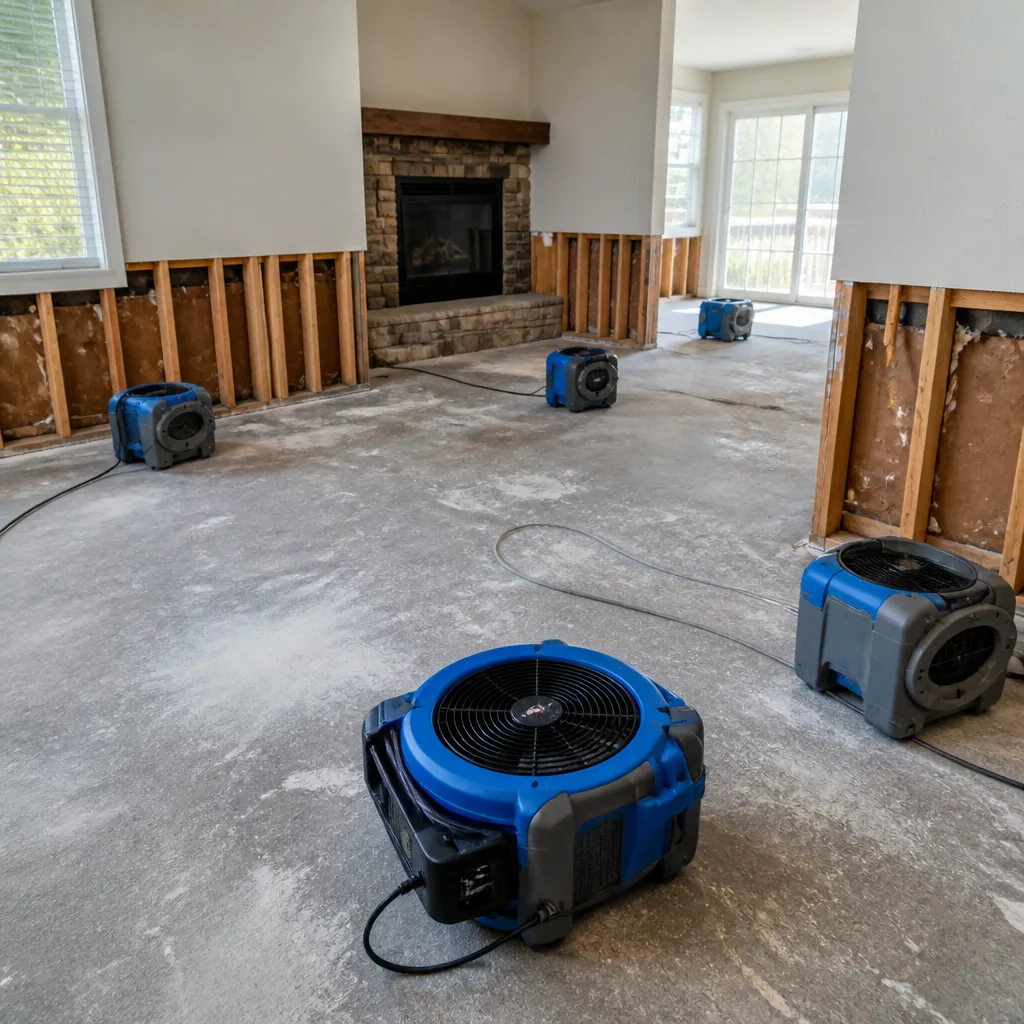
Dri-Eaz dehumidifiers and XPOWER air movers are placed according to the moisture map, not guesswork. We take daily readings with hygrometers and log everything for your carrier and for the 90-Day Done Right Promise.
Cleaning & Sanitization
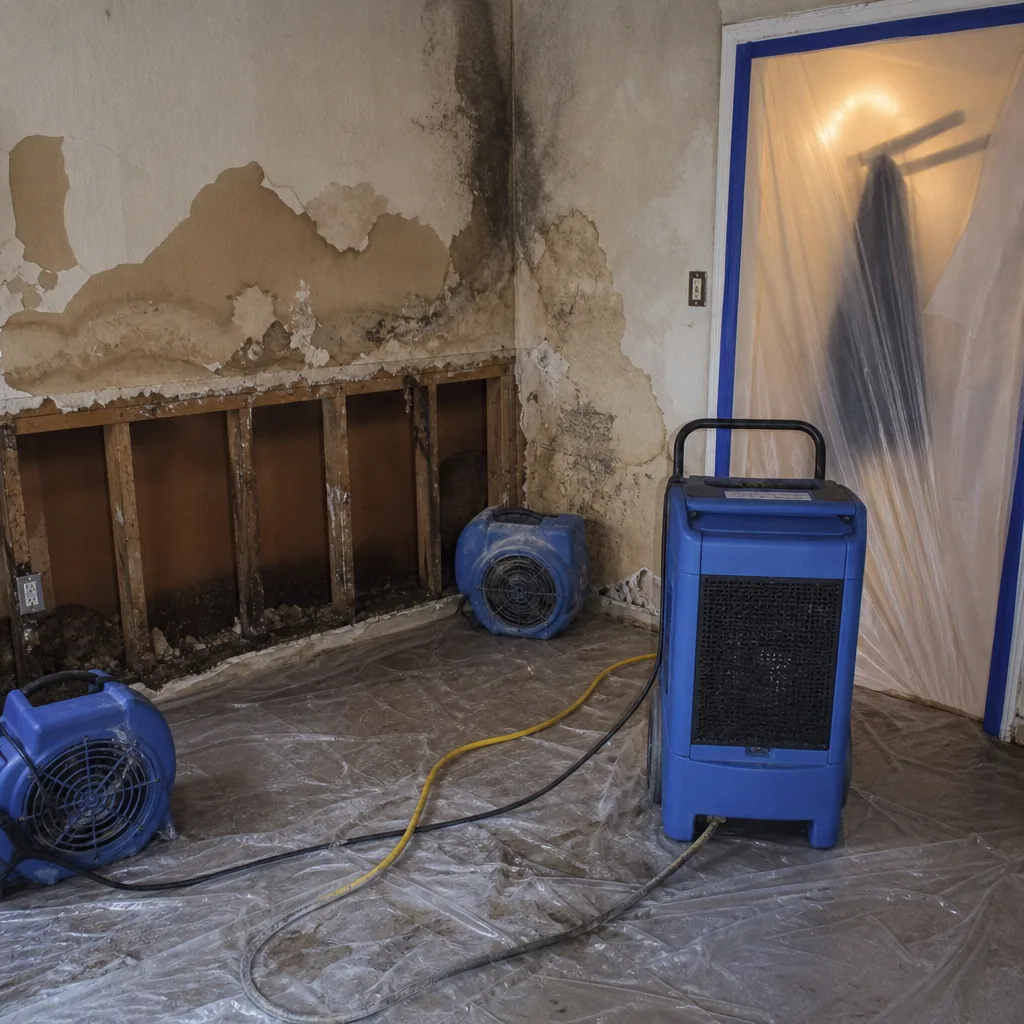
Contaminated materials get removed under proper containment. Every affected surface receives antimicrobial treatment, and we run HEPA air scrubbers to capture airborne spores before they can spread to unaffected rooms.
Mold & Contaminant Treatment
In Valley Stream’s repetitive-loss homes, hidden mold behind paneling and drywall is common. We open what needs opening, treat what can be saved, and remove what can’t under controlled conditions to prevent cross-contamination.
Repairs & Restoration
Once the dry standard is met, the same crew rebuilds. We replace drywall, flooring, and millwork, and restore the space to pre-loss condition. The job is done when your home is done, and it’s backed in writing.
Need Emergency Storm & Disaster Restoration in Valley Stream Now?
Crews minutes away, answering live 24 hours a day. The sooner we start, the less it costs.
Working With Your Insurance Company
We document from the first hour because your claim depends on it. Photos before anything moves, moisture readings before drying starts, and a daily drying log the adjuster can verify. Floodline Restoration Co. speaks directly with your carrier, submits line-item scopes in industry-standard format, and bills insurance directly wherever your policy allows. Valley Stream homeowners with repetitive-loss claims know how much paperwork matters. We handle it so you don’t have to.
What We Provide Your Insurer
- Thorough documentation of the loss
- Photos of all damage, room by room
- Moisture readings and drying logs
- A detailed, line-item scope of work
- Direct coordination with your carrier
Built for Valley Stream’s Loss Calendar
Valley Stream’s storm calendar starts with late-summer tropical systems and coastal lows that push Jamaica Bay water into the Mill Creek watershed. September through November brings the storm surge and flash flooding that fills basements on the south side of Sunrise Highway and near Hook Creek. Then comes winter, when freeze-thaw cycles create ice damming on the shallow-pitched roofs of 1950s ranches and Cape Cods, sending melt water through ceilings and down wall cavities. Late February and March bring the second wave of water intrusion claims as frozen ground thaws and groundwater rises into below-grade foundations. Summer thunderstorms dump inches of rain in an hour, overwhelming storm drains and flooding streets where water has nowhere flat to go. Every season in Valley Stream has a storm signature, and each one demands a different restoration response.
Storm & Disaster Restoration Across Valley Stream’s Neighborhoods
The Mill Brook section near Firemen’s Field sits close enough to Mill Creek that even modest nor’easters push water through finished basements, and we have pulled out more Sandy-era patch jobs there than we can count. North Valley Stream around the Gibson border sees more roof and siding damage from wind-driven rain and freezing rain events, with original 1950s cedar shingles and single-pane windows letting the weather in. Along Rockaway Avenue and near the Southern State corridor, split-levels and larger ranches with finished lower levels take on water from both storm surge and groundwater, the ground being so flat that drainage is slow everywhere. Green Acres and the blocks around Hendrickson Park report debris and tree damage more often than deep flooding, but the older split-levels there still hide moisture behind paneling just as readily as the rest of Valley Stream.
Specialized Storm & Disaster Restoration Services We Offer in Valley Stream
Storm Damage Cleanup
After the wind dies down, the real work starts. We remove storm debris, assess structural damage, and document everything for your claim. In Valley Stream, where older homes carry original building materials, cleanup often means working around asbestos-containing vinyl tiles and horsehair plaster with proper containment, not just hauling out wet carpet.
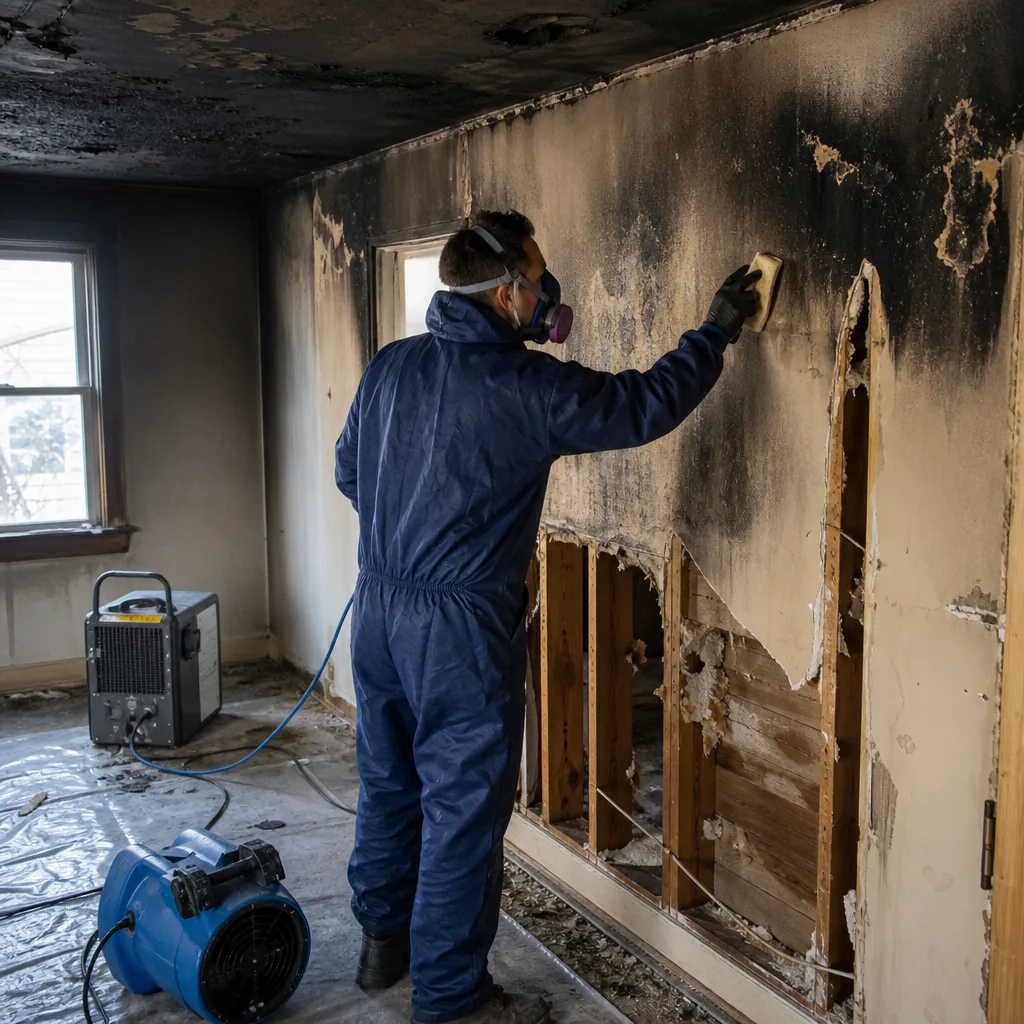
Flood Damage Restoration
Mill Creek-driven flooding is different from a burst pipe. It’s saltwater, silt, and sewage all mixed together, and it percolates through the floor slab into wall cavities in a way clean water never will. Our Storm & Disaster Restoration team classifies the water, extracts, treats, and dries with commercial equipment built for repeated flood events.
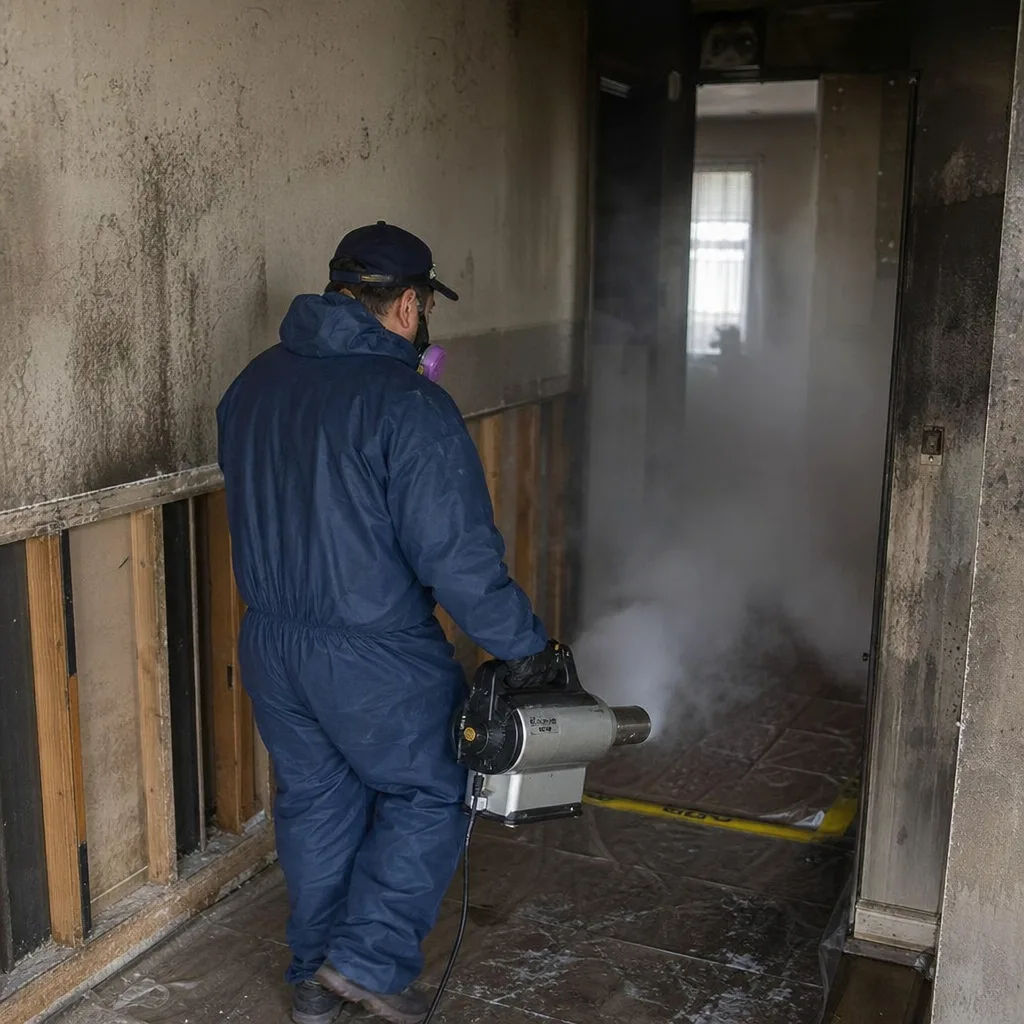
Emergency Board-Up
When a tree limb opens a picture window on a 1950s Cape Cod, the house is exposed to weather and worse. We board up the opening the same visit, tarp where needed, and secure the property so restoration can proceed on a sensible schedule, not a weather-dependent one.
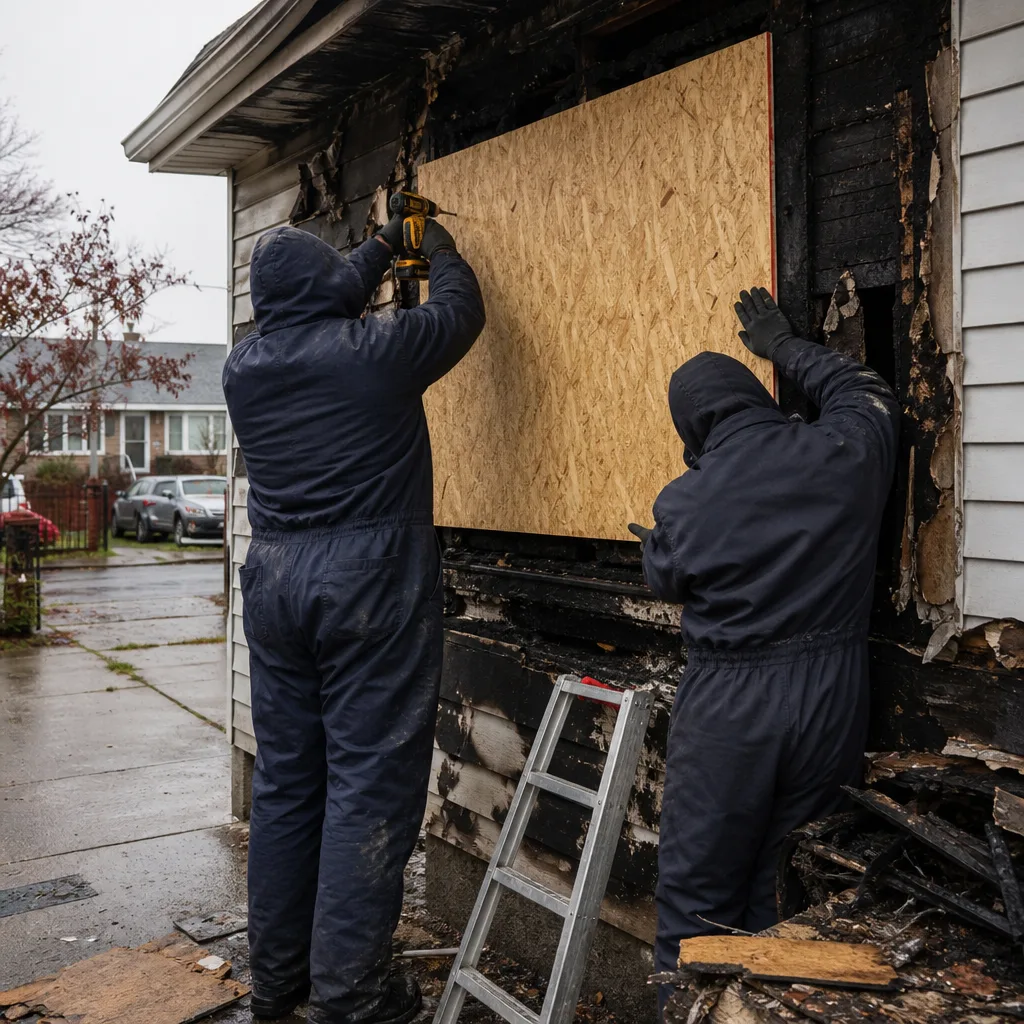
Roof Tarping
Valley Stream’s shallow-pitched roofs are vulnerable to wind lift and ice damming, and a storm can tear off shingles in minutes. We install heavy-duty tarps over damaged sections, sealing the deck to prevent water intrusion while your claim is processed and permanent repairs are scheduled.
Debris Removal
Fallen branches, wind-driven debris, and storm-damaged building materials block access and create safety hazards. Our crews clear the path, haul away what can’t be salvaged, and photograph the full scope before anything moves so your adjuster has an accurate record.
What happens when you call
- 1
A real person answersNo phone trees - you reach a local pro.
- 2
You get an upfront price rangeHonest numbers before anyone is dispatched.
- 3
A background-checked tech heads outLicensed & insured, dispatched right away.
- 4
You approve before work beginsNothing starts until you say go.
Storm & Disaster Restoration Costs in Valley Stream, NY
What you’ll pay for storm restoration in Valley Stream depends on the depth of the damage, not a flat rate. A straightforward storm damage cleanup with extraction and drying in a single finished basement typically runs $3,200 to $7,800. Flood damage restoration with Category 3 water, containment, and antimicrobial treatment ranges from $5,500 to $14,000 depending on how far the water traveled through walls and flooring. Emergency board-up and roof tarping usually costs $450 to $1,200 for materials and labor on a single opening or roof section. If your policy has flood coverage or a named-storm rider, a significant portion is often recoverable, and we bill your carrier directly. The free visual inspection is how you get a firm written scope instead of an estimate that drifts.
We Also Serve Cities Near Valley Stream
Our crews respond daily to storm damage in Valley Stream and the surrounding communities. If you’re in Elmont, Cambria Heights, Floral Park, or New Hyde Park, the same live-dispatch team answers 24/7 and can have a certified crew out to your address inside an hour.
Serving Valley Stream, NY - Our Local Coverage Area
We’re based in the Valley Stream area and know this community well. Use the map below to see our service coverage - if you’re nearby, we can almost certainly help.
Valley Stream Storm & Disaster Restoration Questions, Answered
Why do Valley Stream basements often need more than just water extraction after a storm?
Because Mill Creek and Jamaica Bay water carries silt, salt, and sewage that saturate porous materials like plaster, paneling, and insulation. Extraction removes standing water, but moisture trapped inside walls and under floors stays hidden. Without moisture mapping, commercial drying, and antimicrobial treatment, mold colonizes within two weeks, which is why extraction alone always fails in Valley Stream’s repetitive-loss homes. Call (631) 557-5029 for a free inspection that finds what’s hidden.
How does Mill Creek tidal flooding affect the category of water in my basement?
Mill Creek floodwater is Category 2 or 3 by definition because it contains silt, road runoff, and often sewage backflow. That means it requires not just drying but disinfection, removal of affected porous materials, and proper containment to prevent cross-contamination. We classify the water on arrival and build the scope accordingly.
Why do older Valley Stream capes have more hidden mold after floods than newer homes?
Older capes have horsehair plaster, paneling over original wall surfaces, and multiple layers of renovations from the 1970s onward. Each flood sealed moisture behind another layer of finish material. We routinely find Sandy-era mold colonies still active behind walls that were patched and painted in 2013, then flooded again in Ida in 2021. Newer homes with modern materials don’t trap moisture the same way.
What does roof tarping involve for the shallow-pitched roofs common in Valley Stream?
We secure heavy-duty tarps over the damaged section, sealing the deck and any exposed flashing or underlayment. Shallow-pitched 1950s roofs shed water slowly, so even a small tear lets rain pour into the attic and down wall cavities. Tarping the same evening prevents a roof leak from becoming a full interior restoration.
Can you restore my basement contents after a flood, or do I need to throw everything away?
We offer pack-out and content restoration. Furniture, clothing, documents, and personal items get evaluated, cleaned, disinfected, and stored while your basement dries and is rebuilt. Many items can be saved if they’re treated quickly. We document everything for your insurer, and the pack-out is part of the written scope.
How quickly can a crew actually get to Valley Stream?
Our standard commitment is 45 minutes from dispatch to most Valley Stream addresses. We have crews stationed in the area around the clock, and a live person answers the phone at all hours. For active flooding or a roof opening, we treat it as urgent and move accordingly.
Will my homeowner’s insurance cover storm damage and flood restoration in Valley Stream?
Storm damage from wind, rain, and falling trees is typically covered under standard homeowner’s policies. Flooding from rising water, including Mill Creek overflow, requires a separate flood policy or named-storm rider. We document from the first hour and work directly with your adjuster to maximize what your policy pays. You never play messenger between us and your carrier.
What should I do in the first 30 minutes after storm water enters my basement?
Shut off electricity to the basement at the panel if you can do so safely. Don’t wade through standing water if it may be electrically charged or contaminated. Call us at (631) 557-5029 immediately. Take photos if you can safely, but don’t move anything. The sooner our moisture-mapped drying starts, the less you lose.
Written by Curt Bowman, Owner at Floodline Restoration Co., serving Valley Stream and surrounding communities since 2010.