
Water Damage Restoration What It Really Costs: What Queens Village Homeowners Pay in 2026
The number you’ll find on most restoration cost guides, $1,200 to $5,000, represents work that almost never exists in the real world. In Queens Village, a Category 2 basement flood involving finished walls typically runs $8,000 to $14,000 before a single piece of drywall goes back up. Here’s exactly where that money goes.
We’re Floodline Restoration Co., and we’ve been working in Queens Village basements and kitchens since 2010. If you’d rather not sort through line items yourself, call (631) 557-5029 and we’ll come look, free of charge. But if you want to understand the numbers first, keep reading. This is the breakdown we walk homeowners through every week.
Why National Averages Get Queens Village Wrong
Most online cost guides pull from aggregated claims data across the whole country. A basement flood in a rural Ohio town and a basement flood in Queens Village have almost nothing in common. The borough’s labor rates run 25 to 40 percent higher than national averages. Our homes are older, which means more layers of flooring, more past repairs to work through, and sometimes surprises behind the walls. And the water itself behaves differently here, between the high water table in parts of Queens and the clay-heavy soil that slows drainage around foundations.
We’ve also got real winters. A pipe that freezes and bursts in January dumps water into a finished basement that’s been heated all season, and that warm, damp environment starts growing microbial activity within 48 hours. The same pipe in a milder climate might dry on its own. Here, it won’t.
So when a homeowner in Queens Village calls us after reading a “$1,200” number online, the first thing we explain is that the national figure usually covers a small carpet extraction job in a rental apartment. It doesn’t cover demolition, structural drying, or putting walls back. Those are real costs, and they’re local.
The Real Line-by-Line Cost Breakdown
Let’s walk through a typical Queens Village basement flood at the Category 2 level, meaning water came from an overhead pipe, a washing machine, or a water heater. It’s not sewage, but it’s been sitting long enough to be contaminated. The finished area is around 400 square feet.
What you’re actually paying for, item by item:
- Emergency response and extraction: $900 to $1,800. This covers the crew, the truck, and the portable extraction units pulling out the standing water. It’s priced by volume and time, not by square foot. A finished basement with carpet holds a lot more water than you’d think.
- Demolition and disposal: $1,500 to $3,200. Wet drywall comes out in sections, wet carpet and pad get cut and bagged, and everything goes to a licensed disposal site. In Queens Village, dump fees and hauling run higher than in less dense areas because disposal facilities are farther away and charge by weight.
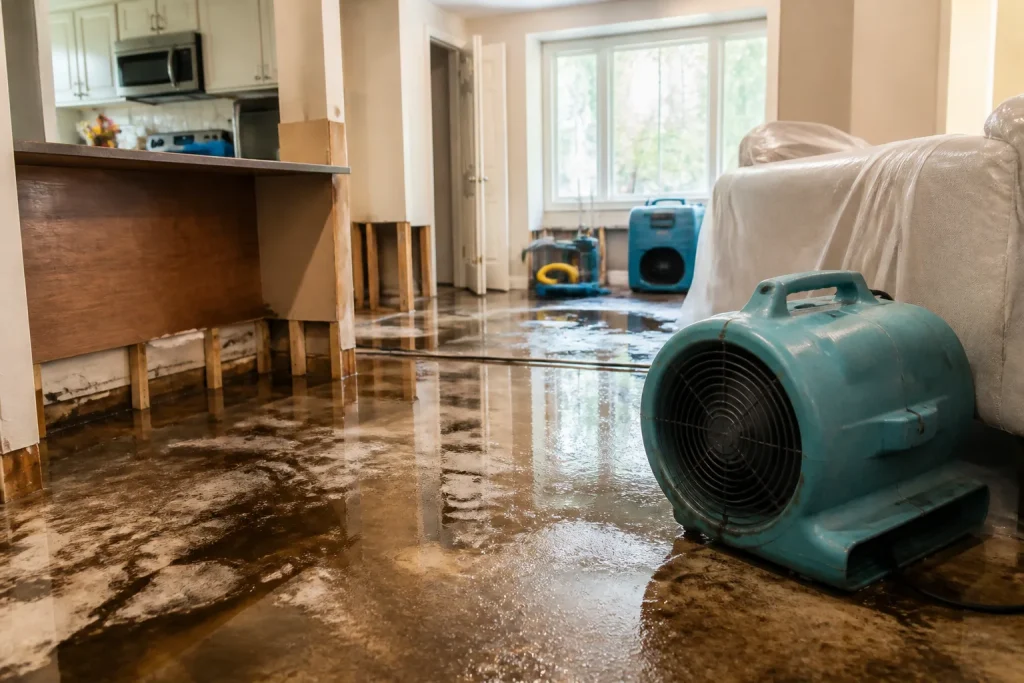
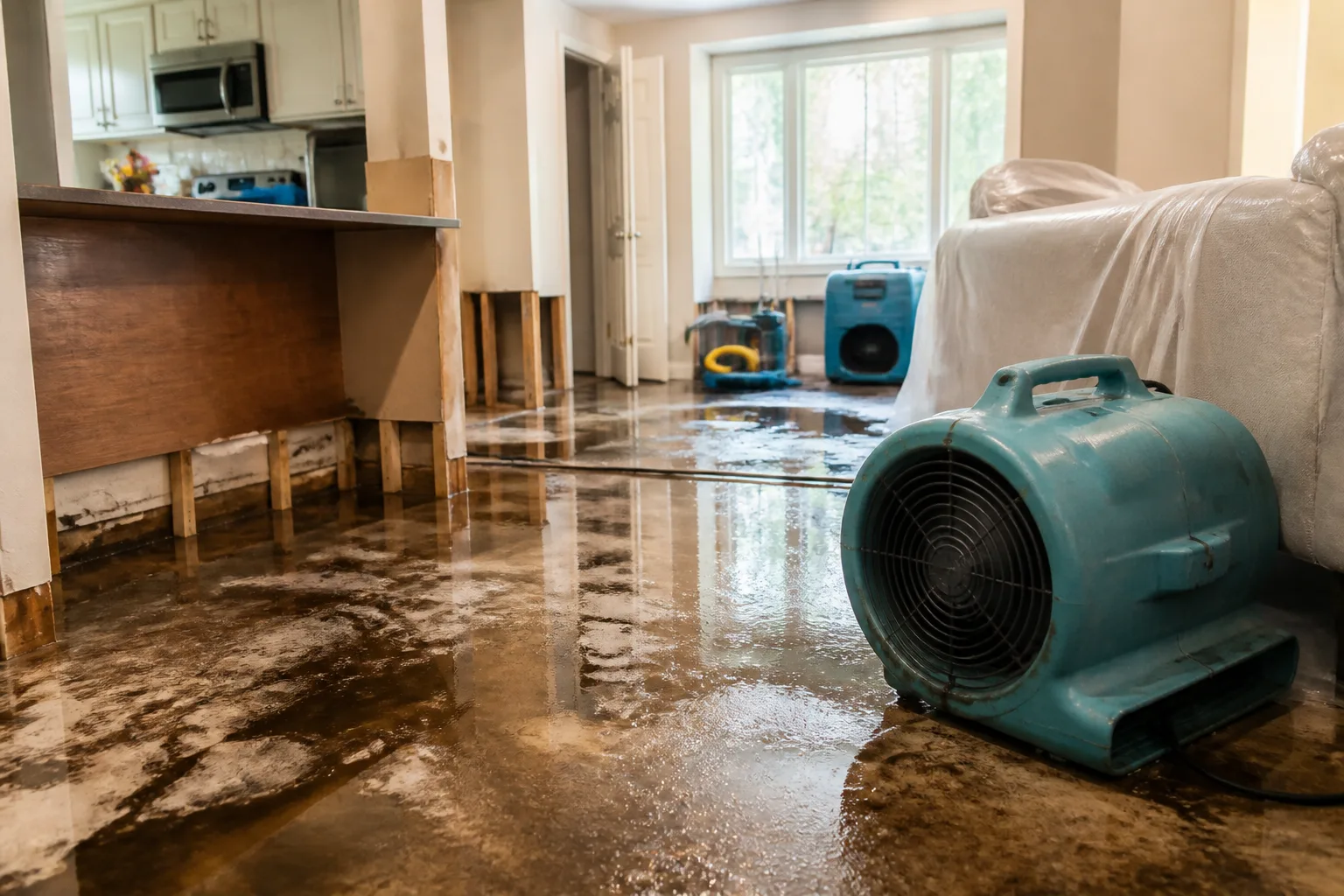
- Structural drying equipment: $1,200 to $2,500. Commercial dehueys, like the Dri-Eaz units we run, rent at $80 to $120 per day each. Air movers run $25 to $40 per day. A standard basement needs three to five air movers and a large-refer dehumidifier, running four to seven days. The line item covers delivery, setup, daily monitoring, and pickup.
- Antimicrobial treatment and air scrubbing: $600 to $1,400. This is non-negotiable in most borough homes because damp sheetrock and humid air can push spore counts up fast. We use air scrubbers, often XPOWER units, to filter the space while treating surfaces. This step protects the rest of the house.
- Moisture mapping and daily readings: $400 to $900. You’re paying for a technician to check dry standards every day, document the numbers, and log them. This matters because your insurer won’t sign off on a dry claim without a written record.
- Basic rebuild (drywall, insulation, paint, baseboard): $3,500 to $6,000. This is not restoration-grade cabinetry. It’s bare-minimum getting walls closed, sealed, and painted.
Total before rebuild: roughly $4,600 to $9,800. With basic rebuild: $8,000 to $14,000. That’s the range we see in Queens Village finished basements. If your flood is a sewage backup, expect 40 to 60 percent more because Category 3 water demands full PPE for the crew, more aggressive demo, and often subfloor or stud removal.
Category 1 vs. Category 3: Why the Category Actually Matters
We’ve had homeowners tell us, “It’s just water. Why does it cost so much?” The answer is the category. It changes everything about the job.
Category 1 is clean water from a supply line or a faucet left running. If you catch it fast, you might only need extraction and a few days of drying. Costs often stay under $4,000 in Queens Village.
Category 2 is gray water, water that’s been through a washing machine, a dishwasher, or has sat for more than 24 hours. It carries bacteria. It requires antimicrobial treatment, and in many cases, pad removal.
Category 3 is black water. Sewage, standing groundwater, or any flood that came in contact with feces or chemicals. Category 3 in Queens Village means removing flooring, cutting drywall up to the floodline, sometimes taking out lower cabinets, and running longer air-scrubber cycles. The line the water left is where we start, and the category is determined by where that water came from and how long it sat. Guess wrong and you’ve got a microbial problem hiding behind your new paint.
If you’re not sure what category your flood is, don’t guess. Call a certified restoration company. One call to us, and a technician will read the water and tell you straight what you’re dealing with.
What Insurers Routinely Underpay in Queens Village, and How Direct Billing Catches It
Here’s the part most blogs don’t tell you. Insurance adjusters use estimating software that’s built around national averages. Queens Village labor rates don’t always survive that software’s defaults. When we bill the carrier directly, we catch those gaps before the homeowner ever sees a short check.
The three line items adjusters most often undercut in our area:
- Drying equipment day rates. Adjusters sometimes authorize three days of drying because the software says “average drying time 3 to 5 days.” In a Queens Village basement with high humidity and outside drainage issues, five to seven days is far more common. We log readings daily and submit them so the extension is paid.
- Disposal and hauling. The software assumes a dumpster from a nearby facility. In reality, our trucks make multiple trips, and weight-based fees here are higher than the estimate allows. We document the receipts and the carrier adjusts.
- Demo labor. Removing wet drywall around built-ins, around old coal bins, around inherited wiring, that takes more time than the software’s square-foot formula allows. We photograph every step and submit time-stamped documentation.
A restoration company that bills your carrier directly and knows Queens Village job conditions can recover thousands you’d otherwise lose. That’s the square deal, and it’s why we built our process around direct insurance billing from day one in 2010.
The Hidden Cost of Splitting Mitigation from Rebuild
Many homeowners hire a mitigation firm to dry things out, then bring in a general contractor to rebuild. On paper, it seems fine. On the timeline, it’s a costly gap.
When a mitigation company finishes and leaves, the general contractor comes in, looks at the moisture logs, and often questions whether the drying was done right. Then the contractor writes his own scope. Then you wait for permits in Queens Village, which are backed up during peak storm seasons. Meanwhile, your basement sits open, and until the rebuild is done, you’re living in half a house.
We’ve seen delays of six to ten weeks between drying and rebuild when separate companies are involved. If you’re paying a temporary housing stipend or losing rental income, those weeks are real money.
Here’s what we do instead. Floodline Restoration Co. handles extraction, drying, and the rebuild with the same crew. The people who pull the wet drywall are the people who put up new drywall. No handoff, no arguing about whose moisture readings are right, no playing messenger between two crews and an insurance carrier. The Floodline Restoration Co. home process was built around that exact problem, because Curt Bowman started this company after seeing too many Queens Village homeowners left stranded between contractors.
What the 90-Day Guarantee Actually Protects Financially
Most homeowners don’t know what a guarantee on restoration work is worth until something goes wrong. Our 90-Day Done Right Promise, what we call the Keystone Standard, is in writing. Here’s what it covers in the real world.
Reappearing moisture: If a wall we dried and closed up starts showing elevated readings within 90 days, we open it back up and remediate. No charge.
Efflorescence: That white, chalky powder on concrete or masonry after a dry-out means salts were left behind. If it appears on surfaces we treated, we return and clean it properly.
Warped flooring: If a wood floor we saved cups or crowns within three months of our handoff, we address it. The Keystone Standard covers the callback because the drying wasn’t truly done right, and we stand behind the result, not the excuse.
Those specific callback scenarios are where cheap restoration companies disappear. They’ll tell you the water “came back” or the “house settled.” K.E.Y.S. stands for Krafted right, Every time, Your home first, Standing behind it. That’s not marketing copy. That’s the internal values code our crews work under. And it’s why we put the guarantee in writing before we touch your claim.
When to Call a Pro
If your water is rising, if you smell sewage, or if you’ve had standing water for more than 24 hours, don’t wait. Turn off the electricity if you can do it safely, shut the water source, and call a restoration company. We answer the phone with a live dispatcher at any hour, every day. A certified crew reaches your home the same visit, and extraction starts then.
And one honest note from the field: we pulled a washing machine flood out of a finished basement over in Queens Village near the LIRR tracks last month where the homeowner had tried to dry it with box fans for three days. By the time we arrived, the Category 2 water had become a microbial issue, and the job cost nearly double what it would have if we’d been called the first night. That’s not a sales pitch. That’s just what happens when Queens Village basements stay warm and wet.
The Bottom Line
Water damage restoration in Queens Village costs more than the national guides suggest, and for good reason. Local labor, older homes, real winters, and disposal logistics all push the numbers up. A standard finished basement flood runs $8,000 to $14,000. Category 3 sewage water runs 40 to 60 percent more. And the biggest hidden cost isn’t in any line item, it’s the delay from splitting mitigation and rebuild between two companies.
If you’re in Queens Village and need help with water damage, Floodline Restoration Co. offers free estimates and direct insurance billing. We’ve been serving local communities for over 42 years, and we answer the phone with a person, not a recording. Call (631) 557-5029 today for an honest assessment. You can also learn more about our full-cycle approach on our Water Damage Restoration in Queens Village page. For mold issues that follow water damage, see our Mold Remediation in Queens Village services. And if you’ve had a fire or smoke event in the same property, our Fire & Smoke Damage Restoration in Queens Village team handles that from first response to final coat of paint.
Frequently Asked Questions
A typical Category 2 basement flood with finished walls costs between $8,000 and $14,000 in Queens Village. Clean water floods caught quickly can stay under $4,000, while Category 3 sewage water typically runs 40 to 60 percent more. Call (631) 557-5029 for a free, exact quote.
Most homeowners policies cover sudden and accidental water damage, such as a burst pipe or appliance overflow. Gradual leaks and groundwater seepage are typically excluded unless you have a specific rider. We document everything, log moisture readings daily, and bill your carrier directly so you don’t have to play messenger. Call (631) 557-5029 and we’ll walk you through what your policy likely covers.
In Queens Village, we answer the phone with a live dispatcher 24/7, and our crews are on the road the same visit. Extraction starts the day you call. The sooner water is pulled out, the less demolition and microbial treatment you’ll need. Call (631) 557-5029 as soon as you see water.
If the water is clean and you catch it within hours, you might get away with a shop vac and fans. But if water has been sitting more than 24 hours, has touched anything other than a clean supply line, or has soaked into drywall, you need professional-grade equipment like the Dri-Eaz dehueys and XPOWER air movers we run. Our FREE estimate will tell you honestly which category you’re facing. Call (631) 557-5029 before you spend money on equipment that won’t do the job.
Written by Curt Bowman, Owner at Floodline Restoration Co., serving Queens Village since 2010.
Need Damage Restoration Help?
Call Floodline Restoration Co. - licensed & insured, here with fast after-hours help in Queens Village.
(631) 557-5029