
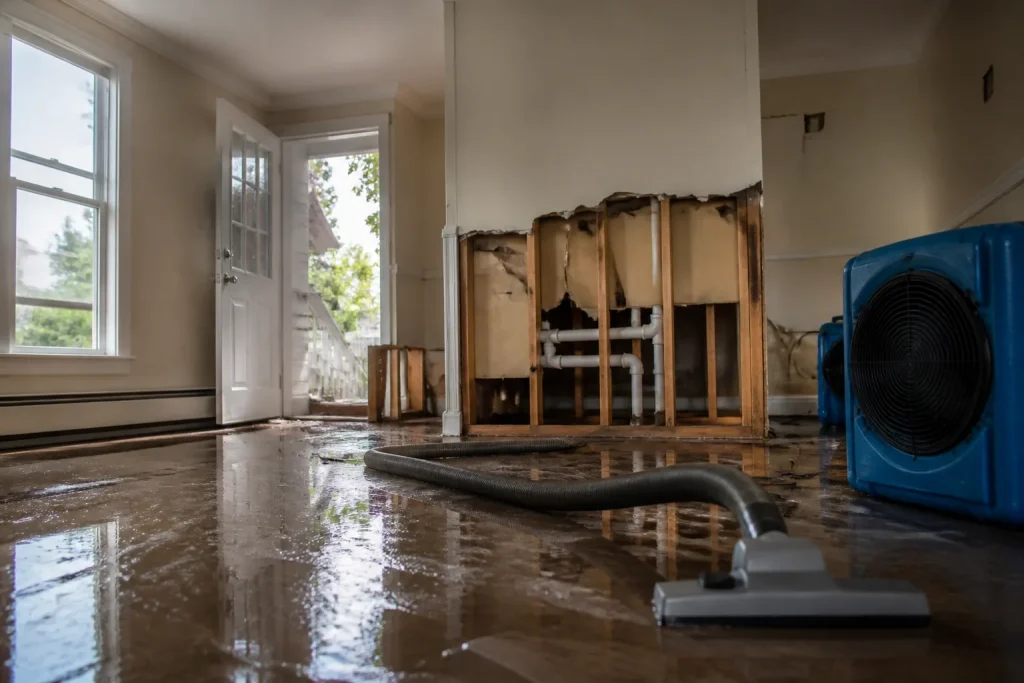
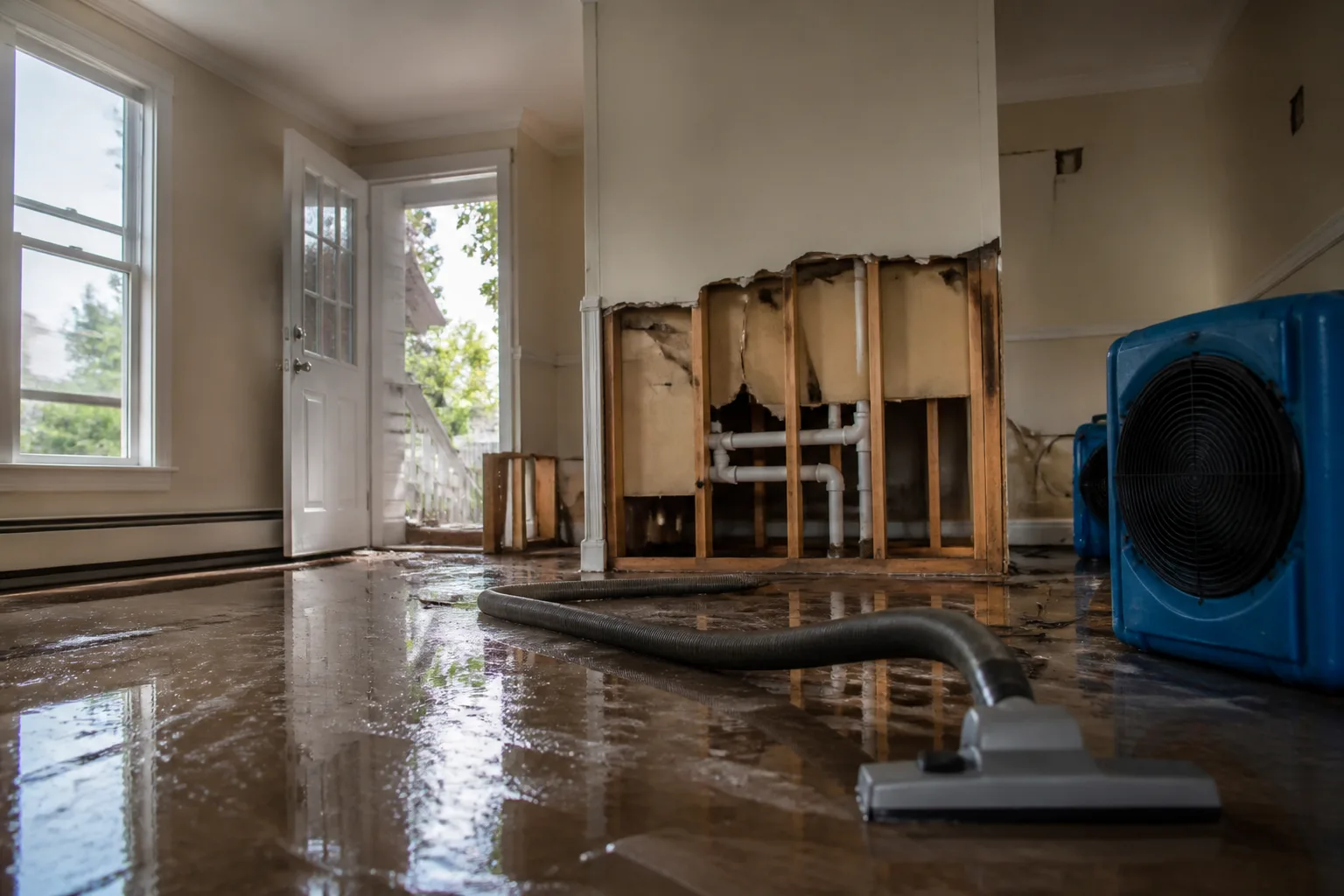
Emergency Water Damage Restoration Near Me: What Queens Village Homeowners Should Do First
If you’re searching “emergency water damage restoration near me Queens Village,” the most important thing to know is this: stop moving air, shut off the water source if you can do it safely, and start documenting. Then call a restoration company before your insurance carrier. Getting those four things right in the first 90 minutes changes the final repair bill more than anything else you’ll do all week.
If you’d rather not work through the sequence alone, call Floodline Restoration Co. at (631) 557-5029. A live dispatcher answers, and we’ll walk you through it on the phone.
The instinct to grab a box fan after a flood feels productive. In a Queens Village basement in August, it can raise ambient humidity enough to push moisture deeper into porous concrete block and cinderblock foundation walls. Our crews have watched a three-day drying job stretch to six because a well-meaning homeowner ran fans for twelve hours before we arrived. Before a moisture baseline is established, moving air is almost always the wrong move.
What to Do in the First 90 Minutes: A Minute-by-Minute Sequence
Here’s the sequence we train our technicians on, adapted for Queens Village home types. Whether you’re in an attached brick rowhouse near Springfield Boulevard, a detached colonial off Hillside Avenue, or a 1950s cap with a finished basement near Creedmoor, the order matters.
Minutes 0-10: Stop the water at its source. Turn off the main water valve if a supply line burst. If it’s a sump pump failure during a storm, the water will stop when power returns or the pump is replaced. Shut off the main water line if you’re in an attached rowhouse and you suspect the water is coming through a shared wall from the neighbor’s side. Do not enter standing water if the electrical panel is in or near the flooded area. Kill power to the affected zone at the breaker first, and only if the panel is dry and accessible. If you have any doubt, wait for a certified tech.
Minutes 10-30: Photograph everything before touching anything. Your phone is the single best tool in your house right now. Photograph the standing water from every angle, the waterline on drywall, the condition of flooring, and any items sitting in water. Open cabinets and photograph the base. Lift a corner of area rugs and shoot the pad. These photos become the foundation of your insurance claim. Without them, the adjuster works from educated guesses, and you lose leverage.
Minutes 30-60: Make the call to a restoration company. Call before the carrier, not after. We’ll explain why in the next section. While you’re on the phone, move only what’s necessary to prevent imminent damage: lift books and papers off wet floors, move electronics that are visibly at risk. Do not remove flooring, do not cut drywall, do not discard anything. Save samples for the adjuster.
Minutes 60-90: Write down the timeline. Note when you first saw water, where it came from, what it touched, and what you did. A simple notebook entry works. Three weeks later, when the carrier asks you to recount the sequence, you’ll have it in writing.
Why Calling Your Insurance Carrier First Is the Sequencing Mistake That Delays Queens Village Claims by 48-72 Hours
This runs counter to what most people assume. You’d think the carrier wants to hear from you immediately. In practice, calling your carrier first creates a delay loop. The carrier takes the claim, assigns an adjuster, and schedules a site visit. That’s often two to three days out in Queens, longer after a major storm event that’s flooded basements across Nassau County and eastern Queens at once. Meanwhile, water is sitting in your finished basement, wicking up drywall, soaking subfloor, and creating the exact conditions mold needs: moisture, organic material, and time.
We see it every month in Queens Village. A homeowner calls the carrier on Monday morning. The adjuster can’t get there until Thursday. By the time we’re invited in, extraction is more extensive, studs have been wet for four days, and the scope of work is dramatically larger. No one’s fault. It’s just sequencing.
The better sequence: call the restoration company first. We arrive, extract, set drying equipment, document everything, and create a moisture map. Then you call your carrier, and the adjuster walks into a job that’s already been stabilized and photographed. Your claim moves faster because the information is clean from day one. We bill your carrier directly, so you’re not fronting cash and waiting for reimbursement.
One footnote: if you live in an attached rowhouse and the water came through a shared wall, note the neighbor’s name and unit number in your timeline. Shared-wall claims in Queens Village have a specific set of questions around responsibility, and having that recorded helps.
Four Household Actions That Can Void Coverage or Complicate Your Claim
Homeowners in Queens Village regularly do these four things with good intentions, and each one either weakens a claim or creates a problem the restoration crew then has to undo.
- Running a shop vac on standing water. A standard wet/dry vac is rated for incidental water, not flood water from a failed sump pump or sewer backup. You’re also pulling moisture-laden air through an electric motor you’re standing next to. In a wet basement, that’s a shock hazard. And the vac’s exhaust blows humid air back into the space, which can push vapor into drywall cavities you thought you were saving.
- Using bleach on water-damaged surfaces, especially if mold is present or likely. Bleach kills surface mold but does not penetrate porous materials like drywall, subfloor, or unsealed concrete. It also adds liquid to a surface you’re trying to dry. If the carrier sees bleach applied before professional assessment, the claim can get messy. We carry professional-grade antimicrobials that work differently, and we log everything for the adjuster.
- Discarding flooring, carpet, or drywall before it’s been documented. This is the biggest one. The adjuster can’t see what’s gone. You’ve thrown away the evidence that justified the repair. Even if you’re certain a room of flooring needs to come out, photograph it first, wait for the restoration crew’s moisture readings, and let the documentation trail drive the decision.
- Signing an Assignment of Benefits (AOB) before reading every line. An AOB hands your insurance rights to a contractor who may then bill the carrier at inflated rates. Some are legitimate. Some are predatory. If a contractor pushes you to sign anything in the first hour, especially before a scope is written, slow down. A reputable company writes the scope first, explains the work, and answers your questions.
How to Verify a ’24/7 Emergency’ Restoration Company Actually Dispatches at 2 A.M.
Every restoration company in Queens says they’re available 24/7. Most mean they have an answering service that takes a message and queues the job for 8 a.m. Here’s the test: call the number at an odd hour and see who picks up.
At Floodline Restoration Co., a live dispatcher answers at 2 a.m. on a Tuesday. Not a recording, not a menu tree. A person who can send a certified crew to your house that same visit, with extraction running before sunrise. That’s the standard we built the company around, and it’s what Curt Bowman, our founder, set up back in 2010: a dispatch board, not a sales desk.
When you’re calling a company from a search result, ask these three questions on the first call:
- “Who am I speaking with, and is your crew in the field right now?” A real 24/7 operation has people working, not just a messaging service.
- “What equipment will your techs bring on the first visit?” The answer should be specific: extractors, air movers, dehumidifiers, moisture meters. If the answer is vague, the company is vague.
- “Do you handle the rebuild too, or do you hand it off to another contractor?” This is the full-cycle question, and it separates a company that owns the outcome from one that only owns the drying.
We use Dri-Eaz dehumidifiers, Phoenix air movers, and XPOWER equipment on nearly every water loss in Queens Village. The same crew that reads the moisture map on day one handles daily readings, hands the moisture log to you and your carrier, and rebuilds what needs rebuilding. No handoff, no inherited crew, no finger-pointing between a mitigation company and a separate contractor.
What Questions to Ask on the First Call to Spot a Full-Cycle Company vs. a Mitigation-Only Service
Most water damage companies in the Queens market only do mitigation: extraction, drying, and demolition. Then they hand you to a general contractor for the rebuild, and you’re suddenly managing two schedules, two invoices, and two quality standards. The homeowner becomes the project coordinator, which is precisely the job you’re supposed to be paying someone else to do.
A full-cycle restoration company does both. Same crew, same standards, one warranty. Here’s what to ask:
- “If my drywall needs to come out and be rebuilt, is that your crew or a subcontractor I coordinate with?”
- “Do you give me a written scope of work before you start, or do you discover costs as you go?”
- “Who writes the final drying certificate that my carrier will need to close the claim?”
- “Do you bill my insurance company directly?”
We answer those questions the same way every time. Same certified, background-checked, uniformed crew from extraction to rebuild. A written scope before work starts, not after. A moisture log updated daily until the dry standard is met, then handed to you and your carrier. Direct insurance billing with no surprises on the bill.
When to call a pro rather than trying to manage it yourself: if the water is deeper than a quarter inch, if it’s from a sewer backup or toilet overflow, if it’s soaked drywall or flooring, if it’s been sitting more than a few hours, or if you simply don’t want to be the person on the phone with the carrier at 11 p.m. That’s most water events, honestly. We’ve made the call for customers who later told us the phone call alone was worth the money.
We pulled one job out of a finished basement over near Oakland Gardens last fall where the homeowner had been running two rental fans for a day and half before calling us. The drywall felt dry to the touch. The moisture meter said 42% inside the wall cavity. He’d done everything a smart person would do, and he’d still have had mold inside those walls by spring. That’s not a knock on him. It’s a plug for moisture meters.
Related services in Queens Village: Water Damage Restoration in Queens Village covers full extraction and structural drying. If the water sat long enough for mold to take hold, Mold Remediation in Queens Village walks through what certified remediation looks like. And if the water came from a fire suppression effort, Fire & Smoke Damage Restoration in Queens Village handles the combined water, soot, and structural damage. You can always start at the Floodline Restoration Co. home page and work from there.
The Bottom Line
The first 90 minutes after a flood in Queens Village set the terms for everything that follows. Stop the source, photograph everything, call a restoration company before your carrier, and don’t run fans or shop vacs before a moisture baseline exists. Don’t use bleach, don’t discard damaged materials, and don’t sign an AOB you haven’t read.
If you’re in Queens Village and need a hand, call Floodline Restoration Co. at (631) 557-5029. A live person answers, any hour, any day. We’ll dispatch a certified crew, get extraction running the same visit, and walk you through the insurance sequence from there. Estimates are free, and we stand behind the work with the 90-Day Done Right Promise in writing.
Frequently Asked Questions
Floodline Restoration Co. dispatches crews around the clock from a live call floor, not an answering service. In most Queens Village neighborhoods, from Springfield Boulevard to Hillside Avenue to the Creedmoor area, we typically reach the door within 60 to 90 minutes of your call, and extraction is running the same visit. Call (631) 557-5029 and you’ll speak to a person who can tell you exactly when the crew will arrive.
Most standard policies cover sudden and accidental water damage from a burst pipe, including extraction and drying. The key word is sudden. A slow leak that’s been running for months is often treated differently. Document everything, keep your timeline notes, and let us work with your adjuster directly. We photograph the job, bill your carrier, and hand them a moisture log that makes the claim cleaner.
No. Waiting is the most expensive mistake in water restoration. A restoration company can stabilize the loss, extract water, set drying equipment, and document the damage before your adjuster ever arrives. That documentation becomes the basis of your claim, and it’s more reliable than whatever the adjuster can determine after the fact. Call the restoration company first, then your carrier.
Probably yes, if the water sat for more than 24 to 48 hours or if porous materials like drywall and carpet pad were soaked. Mold growth starts fast in the warm, humid conditions common in Queens Village basements from June through September. A professional moisture reading tells you the truth. If the walls are dry inside the cavity, you may be fine. If not, certified mold remediation now costs a fraction of what a full tear-out costs later. Call (631) 557-5029 for an assessment.
Written by Curt Bowman, Owner at Floodline Restoration Co., serving Queens Village since 2010.
Need Damage Restoration Help?
Call Floodline Restoration Co. - licensed & insured, here with fast after-hours help in Queens Village.
(631) 557-5029