
How to Choose the Right Damage Restoration Company in Queens Village
The right damage restoration company in Queens Village is one that can prove it will finish the job with its own crew, bill your insurance directly, and put its guarantee in writing before you sign anything. Most homeowners focus on how fast a truck arrives and how many five-star reviews a company collects. Neither tells you whether the crew that tears out your wet drywall on Tuesday is the same one that rebuilds your kitchen in March. If you’re dealing with water, fire, or mold damage right now and would rather skip the research, call (631) 557-5029 for a free estimate from a local Queens Village crew that handles every phase itself.
The Fastest Truck Isn’t the Company That Finishes the Job
Queens Village homeowners tend to hire on adrenaline. A pipe bursts at midnight, water is spreading across the basement floor, and whoever answers the phone first gets the job. That instinct is understandable, but it’s exactly where restoration disputes begin. In Queens Village and across the borough, it’s common for a mitigation crew to arrive fast, extract the water, set drying equipment, and collect a signed contract. Then the rebuild gets handed to a general contractor the homeowner never met. You hired one company and got two. The seam between them is where scope arguments, delays, and lien threats live.
When a company subcontracted work, every handoff created a new point of failure. The mitigation crew writes moisture readings. The general contractor disputes them. The insurance carrier stalls. The homeowner stands in the middle, holding a phone, playing messenger. A full-cycle restoration company eliminates that seam because the same certified crew that reads the moisture map on day one handles daily readings, hands the log to the homeowner and carrier, and rebuilds what needs rebuilding. There’s no handoff and no inherited crew. In our experience serving Queens Village since 2010, the jobs that finish cleanly are the ones where one company owns the whole outcome.
Five Contract Clauses to Read Before You Sign
Queens Village homeowners rarely read restoration contracts in the chaos of an emergency. That’s precisely why the paperwork is where companies protect themselves and where homeowners get burned. Before you sign anything, sit down and read these five clauses. A reputable company will hand you the contract and let you read it. One that balks is telling you something.
- Scope-of-work boundaries. The contract should list what’s included: extraction, drying, demolition, disposal, rebuild, finishing. Vague language like “mitigation services as needed” invites disputes later. Ask for a written scope before work starts. Every Floodline Restoration Co. job gets one, no exceptions.
- Subcontractor authorization language. If the contract says the company “may assign or delegate work to qualified subcontractors,” you need to know who those subcontractors are before a stranger walks into your home. A full-cycle company doesn’t need this clause because its own crews do the work.
- Assignment of Benefits terms. An AOB transfers your insurance claim rights to the contractor. In some states, signing an AOB means the contractor can bill your carrier at rates you never approved. Read the AOB language carefully. Ask whether you keep control of claim decisions. Direct insurance billing does not require an AOB, and a company that pushes one is a red flag.
- Dispute resolution. Does the contract require arbitration? A specific venue? Who pays legal fees? A fair contract uses plain language for disputes. A predatory one hides a clause that strips your right to court.
- The written guarantee language. Look for duration, what triggers a callback, and who performs the follow-up work. “Workmanship guaranteed” with no terms isn’t a guarantee. Floodline Restoration Co. puts the 90-Day Done Right Promise, our Keystone Standard, in writing with no paperwork battles and no arguing. That’s the kind of specificity a real guarantee requires.
What IICRC Certification Actually Means, and How to Verify It
The IICRC, the Institute of Inspection, Cleaning and Restoration Certification, is the closest thing the restoration industry has to a standard-setting body. Certified firms are supposed to follow documented procedures for water extraction, structural drying, and mold remediation. But here’s what Queens Village homeowners often don’t know: a company can advertise “IICRC certified” when only one technician on the payroll holds a credential, or when the company once used a certified subcontractor years ago. The phrase on a truck door does not mean the technician standing in your living room is certified.
Every IICRC certified technician has a credential number you can verify. Before anyone enters your home, ask for the technician’s name and IICRC certification number, then check it directly with the IICRC. A legitimate operation will hand the information over without hesitation. Floodline Restoration Co. technicians are background-checked, uniformed, and trained to IICRC, RIA, and IFA standards, and we can provide those credentials on request. If a company hedges or promises to “send the certification later,” send them away.
Certification matters because water damage in Queens Village follows a pattern. Basements in this neighborhood run high water tables and older foundations. A technician who doesn’t understand structural drying science will pull equipment too early, and six months later you’re calling about mold under the baseboards. Certification means the person reading the moisture meter understands what the numbers mean, not just what the machine says.
Direct Insurance Billing Is an Operational Advantage, Not a Slogan
“We bill your insurance directly” appears on nearly every restoration website in Queens Village. Most of the time it’s marketing fluff. The company still makes the homeowner submit the claim and chase the adjuster. Direct insurance billing, done properly, is a different operational model altogether, and it changes the financial math of your restoration.
A restoration company that negotiates directly with the adjuster produces higher-scope approvals because it speaks the carrier’s language. Adjusters work from specific line-item pricing, Xactimate estimates, and photographic documentation standards. A company that hands you an invoice and wishes you luck is outsourcing its own job. A company that coordinates directly with the adjuster, sending photo documentation, moisture logs, and line-item scopes, is doing the work you were never trained to do.
At Floodline Restoration Co., we never make the homeowner play messenger between us and the carrier. We document every phase with photos, we hand the adjuster the moisture log, and we get written scope approvals before moving forward. The homeowner sees a square deal: no surprises on the bill, and no phone tag with an insurance office in Albany. That’s the difference between billing as a verb and billing as a service.
How to Evaluate Equipment Inventory as a Proxy for Commitment
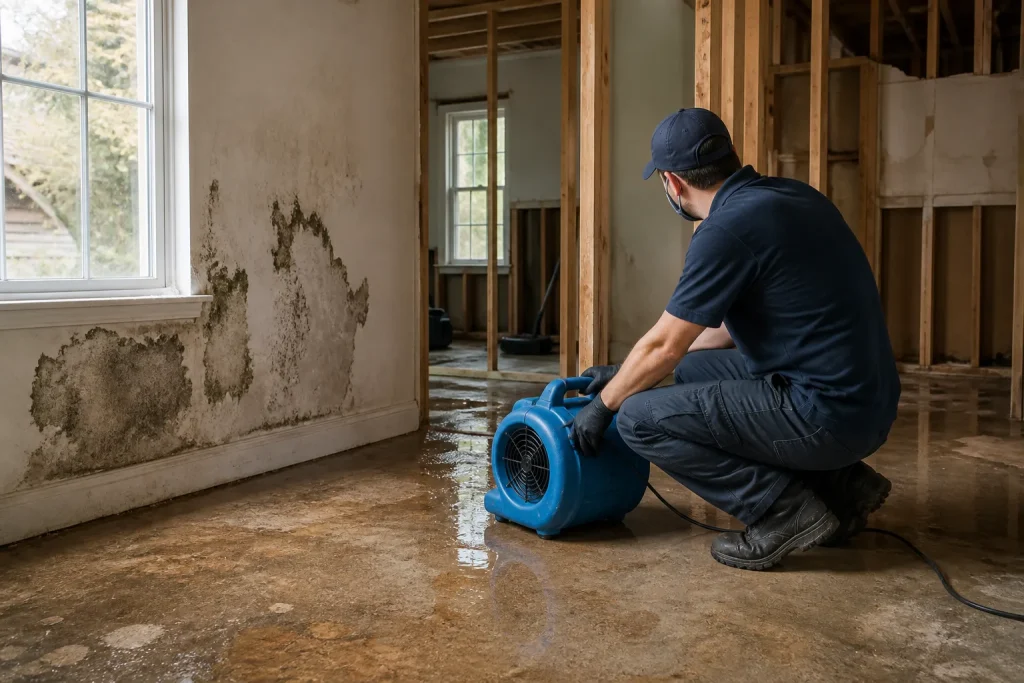
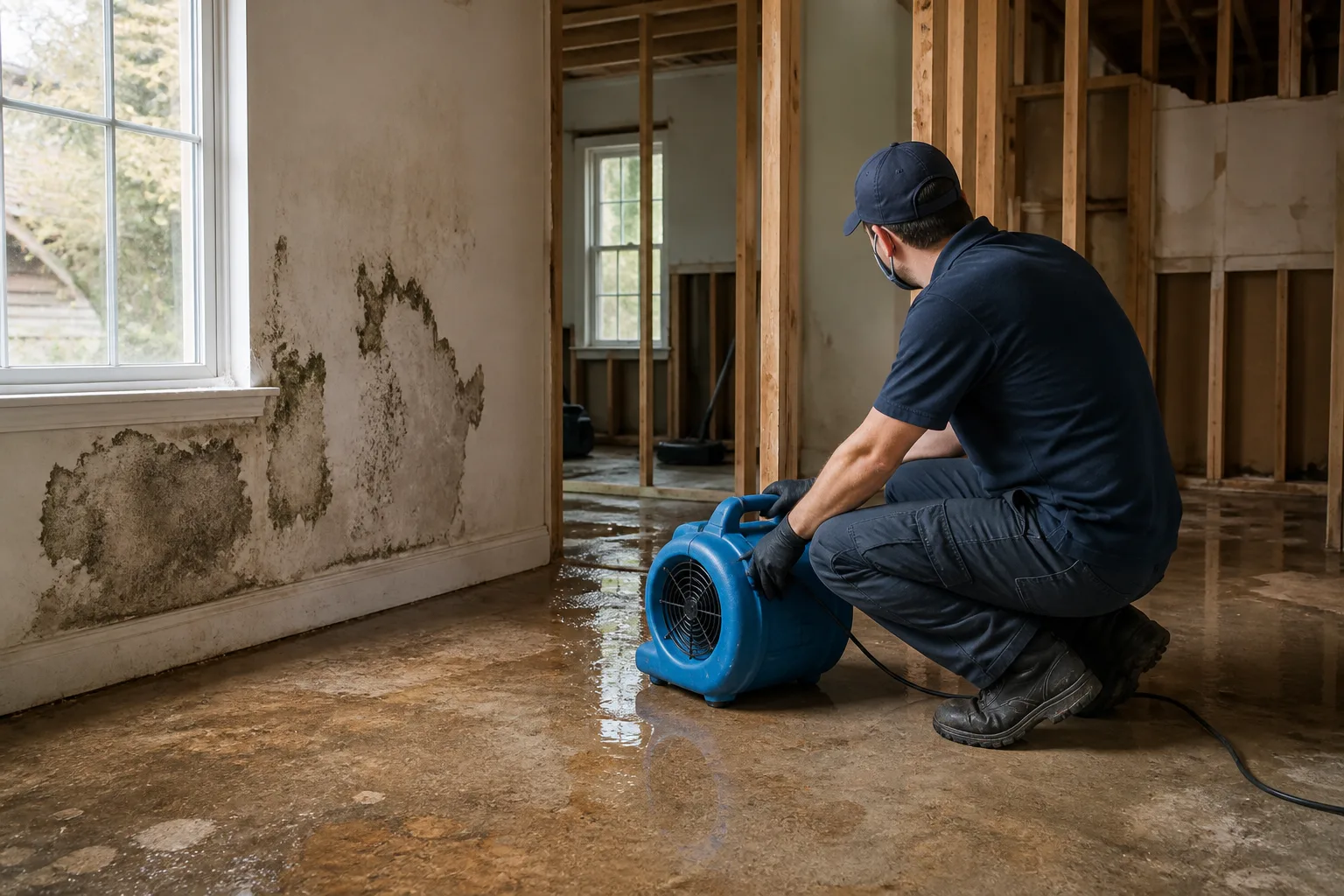
One underused way to vet a Queens Village restoration company is to ask what drying equipment it owns. It’s not a detail homeowners naturally consider, but it tells you a lot about how the company operates. A restoration company that owns its drying equipment has invested in its own capability. A company that rents from a national supply house per job is renting capability it hasn’t committed to. The distinction affects your timeline.
If equipment is rented, the company has a financial incentive to pull it early and return it. Daily rental charges accumulate. A company that owns professional-grade equipment such as Dri-Eaz, Phoenix, XPOWER, and B-Air air movers and dehumidifiers wants the job done right and the equipment back on the truck for the next emergency. That sounds counterintuitive, but it’s true: an owned equipment inventory means the daily readings and moisture log drive the schedule, not the rental bill.
There’s a second angle. A company with a real inventory can dispatch a crew with the right tooling the same day, because the gear is already in Queens Village, not waiting at a supply house across the river. That’s not speed for speed’s sake. That’s the difference between a mitigation that stops at the floodline and one that dries the structure to the industry standard, then rebuilds it.
Three Questions Every Queens Village Restoration Company Should Answer Immediately
If you narrow your list of candidates and want to separate a full-cycle, single-crew operation from a referral-based one, ask these three questions. A full-cycle company answers without pausing. A referral-based company will start explaining.
1. “Who performs the rebuild, and are they your W-2 employees or subcontractors?” The honest full-cycle company says, our crew. A referral shop says something about “our trusted partners” or “licensed subs we’ve worked with for years.” That’s a handoff, not an answer.
2. “Will the same technician who starts the job take the daily moisture readings?” This matters more than you’d think. A technician who follows a job from first extraction to final dry standard reading understands the structure. A different technician every day is guessing from a logbook. We pulled a basement dry in Hollis last month where three days of readings from a previous company missed a damp stud bay behind a finished wall. The same crew on the job every day caught it on day two because they could see the pattern.
3. “What does your guarantee say in writing, and who performs the callback work if something isn’t right?” If the answer is vague, walk away. If the answer is a specific duration, a specific trigger, and a specific crew, you’re talking to a company that stands behind its work. Floodline Restoration Co.’s 90-Day Done Right Promise, the Keystone Standard, says it plainly: if it’s not done right, we make it right, with no paperwork battles and no arguing. And the same crew that did the first job does the callback. We stand behind it.
When to Call a Pro
If you’re reading this before an emergency, good. Call a restoration company now, ask the questions above, and keep the number where you can find it at 2 a.m. because the phone doesn’t wait for business hours. If you’re reading this after water, fire, or mold has already hit a Queens Village home, don’t wait. Water spread in this neighborhood moves through older framing fast. Mold takes hold in 48 to 72 hours. A live person answers our phones 24/7, every day, and a certified crew reaches the job so extraction can run on the same visit.
For related help in Queens Village, see our detailed pages on Water Damage Restoration in Queens Village, Mold Remediation in Queens Village, and Fire & Smoke Damage Restoration in Queens Village. Each covers the specifics of that damage type with the same standard we’ve applied here: concrete details, no fluff.
The Bottom Line
Choosing the right damage restoration company in Queens Village comes down to contract terms, certification verification, and whether one crew owns the whole job from the floodline to the final coat of paint. Fast dispatch means nothing if the rebuild starts six weeks later with a crew you never approved. Direct insurance billing means something only if the company actually negotiates with the adjuster for you. A guarantee means something only if it’s written with real terms.
Floodline Restoration Co. has served Queens Village and the surrounding communities since 2010, founded by Curt Bowman with a dispatch board, not a sales desk. We answer the phone with a live person at all hours, our technicians are background-checked and credentialed, and every job is backed by the 90-Day Done Right Promise in writing. If you’re in Queens Village and need help choosing a company, call us at (631) 557-5029. You’ll get a straight answer and a free estimate, whether or not you hire us. That’s the square deal.
Frequently Asked Questions
Ask whether the rebuild is done by the company’s own W-2 employees or by subcontractors. A full-cycle company answers without hesitation: our crew does the work. A company that plans to hand off the rebuild will hedge. Get the answer in writing in the scope-of-work section before you sign. If you’re in Queens Village and want to check a company’s model, call (631) 557-5029 and ask us directly.
Not without reading it carefully. An AOB transfers your insurance claim rights to the contractor, which can leave you on the hook for charges you never approved. Direct insurance billing does not require an AOB. A reputable restoration company can bill your carrier directly while you keep control of the claim. Ask the company to explain its AOB policy in writing before any work begins. Estimates are free, including ours at (631) 557-5029.
Same-day response matters for water and sewage because damage compounds by the hour. But speed is only one variable. The more important question is whether the crew that responds is the same crew that finishes the job. A live dispatcher answering at 2 a.m. is useful; a company that hands off the rebuild later is not. Ask both questions before you call: who answers the phone, and who does the rebuild.
That depends on what the moisture meter and the structure say. A cleaning addresses surface residue. Restoration addresses what’s behind the wall, in the floor assembly, and in the framing. In Queens Village basements, where older construction and high water tables meet, surface drying often hides a damp cavity that will grow mold in eight weeks. A professional moisture map answers the question with data, not guesswork. If you’re not sure, call (631) 557-5029 and we’ll assess it for free.
Written by Curt Bowman, Owner at Floodline Restoration Co., serving Queens Village since 2010.
Need Damage Restoration Help?
Call Floodline Restoration Co. - licensed & insured, here with fast after-hours help in Queens Village.
(631) 557-5029